
History can be a problem. Too much of it, and the heavy hand of the past can hold back the future. Too little of it and everything feels thin, fake and temporary.
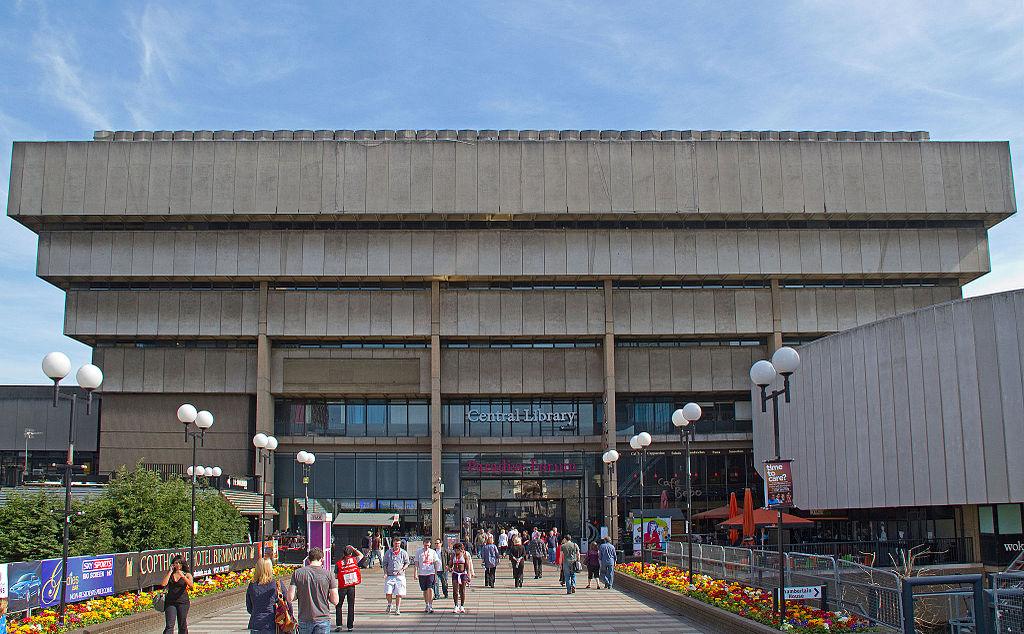
Birmingham has a fraught relationship with its history. No city has embraced tomorrow as readily as Birmingham, nor been as ready to turn its confidence into demolition, new roads and contemporary buildings. In the car-obsessed 1960s Birmingham turned itself into the ultimate auto city, full of four-lane highways, multi-storey car parking, and brutalist concrete blocks.
Unhappily, tomorrow has a habit of quickly turning into yesterday, and bold, up-to-the-minute ideas date fastest of all. By the 1990s it was agreed that the four-lane highways choked the city centre, that the brutalist blocks were unusable, and all were slowly and expensively deconstructed. The brutalist blocks that adorned them have been demolished. How long until their replacements also date, are disparaged and demolished?
Maybe Birmingham is in danger of repeating exactly the error it has just escaped from. Certainly concerns are rising about the demolition of older buildings in the rush to cash in on the latest trends.
New data from Historic England shows that 81 heritage sites across the West Midlands are at risk of being lost forever, with 29 of them in Birmingham.
They include the massive Grand Hotel on Colmore Row; the ornate Methodist Hall at Corporation Street, due for conversion into a hotel and apartments; Highbury Hall near Moseley, home of 19th century reformer Joseph Chamberlain; the church in Kings Norton whose curate Rev. W. Awdry created Thomas the Tank Engine; and the old Curzon Street Station due to be absorbed into the new HS2 terminal.
There have been some victories, including saving the Moseley School of Art, but overall the picture is grim. The full list of heritage at risk can be found here.
The Historic England data comes as Birmingham planners ponder development in the city’s few remaining pockets of historic buildings. Apsley House Capital and Galliard Homes' plans for 305 apartments on a 4-acre former manufacturing site in the Jewellery Quarter have become a focus for the debate.
The proposals, which go before planners on Thursday 24 October, have attracted hostile attention from Historic England. "Extensive demolition [will mean] the loss of much of what makes up the Jewellery Quarter’s typical historic building stock and development character," the agency said in a report to councillors.
“The impact [is] the loss of this character and its replacement with a more sanitised impression of the Jewellery Quarter townscape, lacking the authenticity of its historic fabric and tightly-knit, ad-hoc layout,” the agency added.
These concerns are echoed, often in strong language, by the Victorian Society, the British Council for Archaeology, local councillors, the Jewellery Quarter Development Trust and the council’s own advisory panel, which pointed out the scheme does not follow council policy. Despite the objections, council officials recommend the scheme for approval.
Faced with this opposition, it is fair to ask: Is Birmingham getting the heritage/development balance wrong?
City centre-based Claremont Property Group is working on half a dozen Birmingham residential schemes, including one in the Jewellery Quarter.
Founded by Manjit Deol and his sister Perm Saini in 1999, the company is based in a historic factory at Holloway Head, next to the super-modern Mailbox scheme. Claremont was involved in the well-known Rotunda project, which retained one of the city’s most iconic structures to create unique living spaces.
“We believe passionately in retaining historic buildings, it is hugely concerning to see so many of our city’s fabulous buildings being neglected and at risk of demolition,” Claremont Development Manager Andy Robinson said.
“Birmingham will certainly come to regret the loss of these buildings, which in many cases are irreplaceable — they just simply would not be able to be built in the same way again.
“From a developer’s perspective there are obvious commercial reasons for retaining an existing structure and it’s clearly more environmentally friendly to restore a building rather than to knock it down. In our experience the city’s historic buildings are more robust than new builds and have a character and personality that is more desirable and cannot be surpassed.”
Birmingham planners meet this week to decide the next phase of the city's redevelopment. Whether the old buildings, or the new, come out triumphant remains to be seen.
)
)
)
)
)
)
)
)
)
)
)
)