
There may be no clocks in casinos, but the deadline to submit bids to build one in New York has struck midnight.
Eight groups submitted proposals for three downstate casino licenses before the deadline Friday. The applications span four boroughs and Westchester County, each offering billions in private investment and a cadre of community benefits to win critical local support.
It has been 14 years since then-Gov. Andrew Cuomo's administration created seven new casino licenses and a decade since the first four were given to developments upstate. In 2022, the green flag was waved for the remaining three to be awarded to downstate projects.
Developers spent the following years going through tedious zoning and local approval procedures to ensure that their projects would be viable. The complexities of the processes previously led officials to push back the deadline, originally set for last year, and some teams even worried that they may not be able to get their bids in by Friday.
But those concerns never came to pass. In the weeks leading up to the deadline, developers have added millions of dollars of community benefits, pledges for unionized labor and commitments to build thousands of affordable housing units to their proposals, on-site and off, all in an attempt to build the key political support necessary for a winning bid.
The projects must promise at least $500M in private investment, and winners must pay a $500M license fee. In exchange, they are being awarded what will likely be a cash cow.
In the first four months of this year, New York brought in $1.8B in gaming revenue, according to the American Gaming Association. That’s without a casino close to New York City’s 8 million residents and its tens of millions of annual tourists. For comparison, Nevada — and the Las Vegas Strip — brought in more than $5B during that same period.
But the bidders still have to reckon with hesitancy from many officials to welcome a gambling facility into their districts. State Sen. Liz Krueger has adamantly opposed a Manhattan casino, stating that “it would be great if no one decided to apply for a license.”
Backlash has caused some to pull out of the race, even after years of negotiations. In May, Wynn Resorts withdrew from Related Cos. and Oxford Properties’ plan for a $12B development in Hudson Yards. It cited “persistent opposition” as the reason for exiting.
The parent company of Saks Fifth Avenue similarly abandoned its proposal to build a casino on top of its Midtown flagship store in April due to local criticism and its location across from the landmarked St. Patrick’s Cathedral.
The future of the remaining proposals is now in the hands of the New York Gaming Facility Location Board, which is expected to decide by the end of the year. Here is a breakdown of what they are:
Caesars Palace Times Square
Partners: SL Green, Caesars Entertainment and Roc Nation
Projected Investment: $5.4B
Neighborhood: Theater District, Manhattan
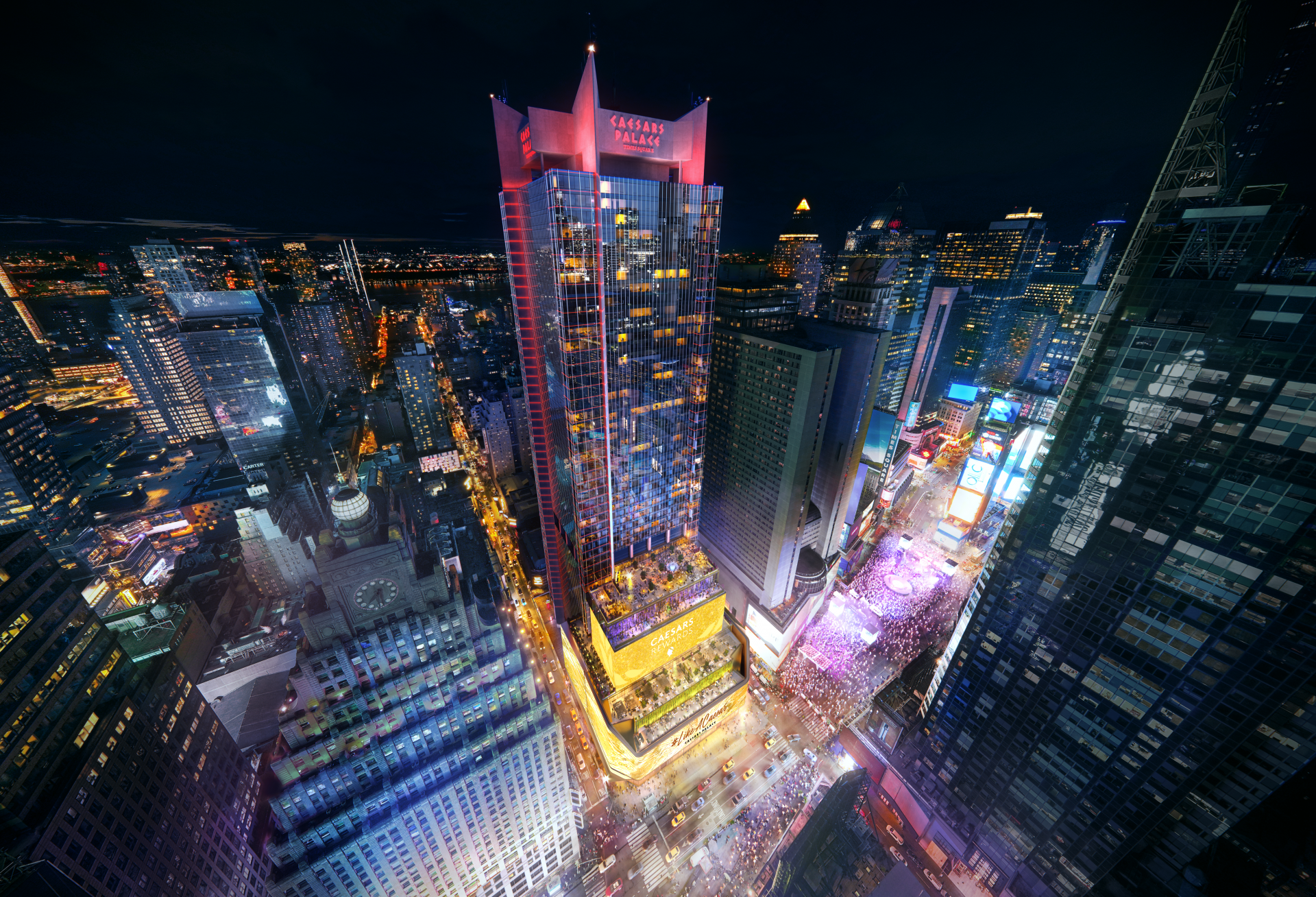
In the heart of New York City’s entertainment district, Caesars Palace Times Square would be a $5.4B skyscraper with a 150K SF casino. The proposal is among the flashiest of the contenders, featuring a 992-room Nobu-branded hotel, several restaurants, including from celebrity chefs Daniel Boulud, Gordon Ramsay and Bobby Flay, a Broadway theater and a nightclub, curated by Jay-Z’s company.
A 1.7M SF office building currently sits at the site at 1515 Broadway. The new development would create more than 3,000 construction jobs and more than 3,800 permanent jobs, the vast majority of which would be unionized, according to the proposal.
The joint venture has committed $250M to community projects, including an $81M public safety plan for the neighborhood, $15M for a new civil rights museum by the Civil Rights Foundation, the establishment of the Manhattan Plaza Capital Trust and $5M for the Callen-Lorde Center for Excellence in Sexual Health. It also said it would invest $32M in childcare, student and medical debt assistance, provide rent support for Broadway workers, and purchase $20M in Broadway tickets for underserved families.
The group last week announced a plan to allow residents to invest in the project, starting at $500, as part of a partnership with the Rev. Al Sharpton and Cadre CEO Ryan Williams. It aims to sell $15M in shares to everyday New Yorkers.
SL Green claims that the project would produce $7B in taxes over 10 years and drive $26.7B in revenue to local businesses.
The proposal originally faced backlash from a group called No Times Square Casino, which feared the casino would steal customers from local theaters and businesses. The developers responded by creating their own coalition of more than 200 organizations and businesses supporting the bid. In their application, the developers further stressed that the project is “outward facing,” unlike “traditional Vegas-styled casinos and all of the other proposals.”
Metropolitan Park
Partners: Steve Cohen and Hard Rock International
Projected Investment: $8B
Neighborhood: Flushing Meadows–Corona Park, Queens
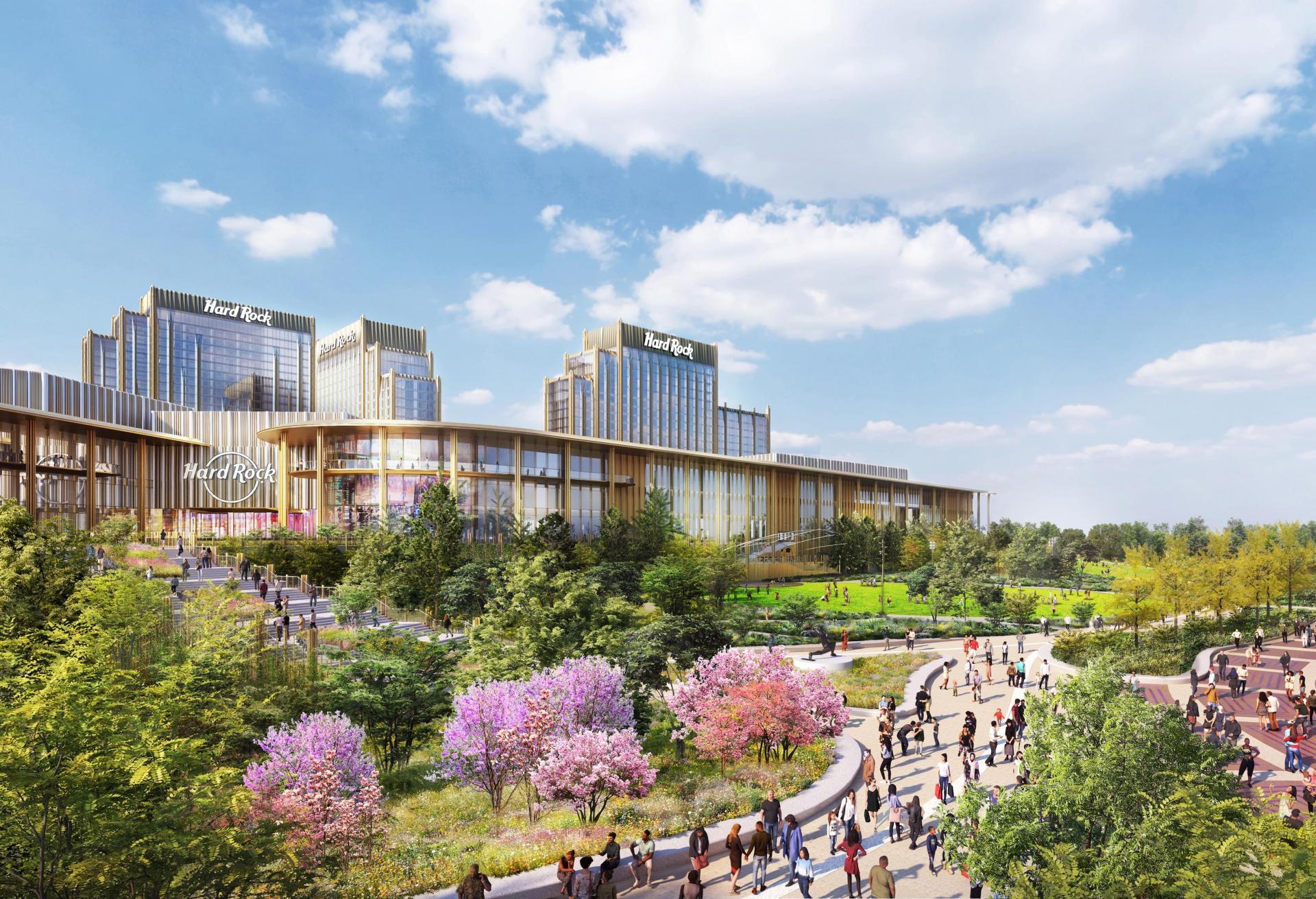
New York Mets owner Steve Cohen is pitching a plan to convert a 50-acre Citi Field parking lot into an $8B casino complex and park.
Green space totaling 25 acres would cover half of the new development and a third of the campus’s overall footprint. The proposal also includes a Hard Rock Hotel, a 5,650-person live music venue, conference space and various bars and restaurants, anchored by Mario Carbone and Major Food Group.
If awarded a license, the joint venture has agreed to finance the construction of 450 units of 100% affordable housing on a parking lot at 54-19 100th St., in partnership with Slate Property Group. It has also signed a community benefit agreement that exceeds $1B.
Cohen's team estimates Metropolitan Park would generate $33.5B in tax revenue and create 23,000 union jobs between construction and permanent workers. The Hard Rock added that it expects to spend $100M to $150M with local vendors each year.
The project originally struggled due to opposition from state Sen. Jessica Ramos, whose district includes the area and who refused to sponsor legislation to allow the site to be used for commercial purposes. However, Cohen bypassed Ramos in April when state Sen. John Liu took it upon himself to introduce the bill. The plan received approval in May.
Resorts World New York City
Partners: Genting Group
Projected Investment: $5.5B
Neighborhood: Jamaica, Queens
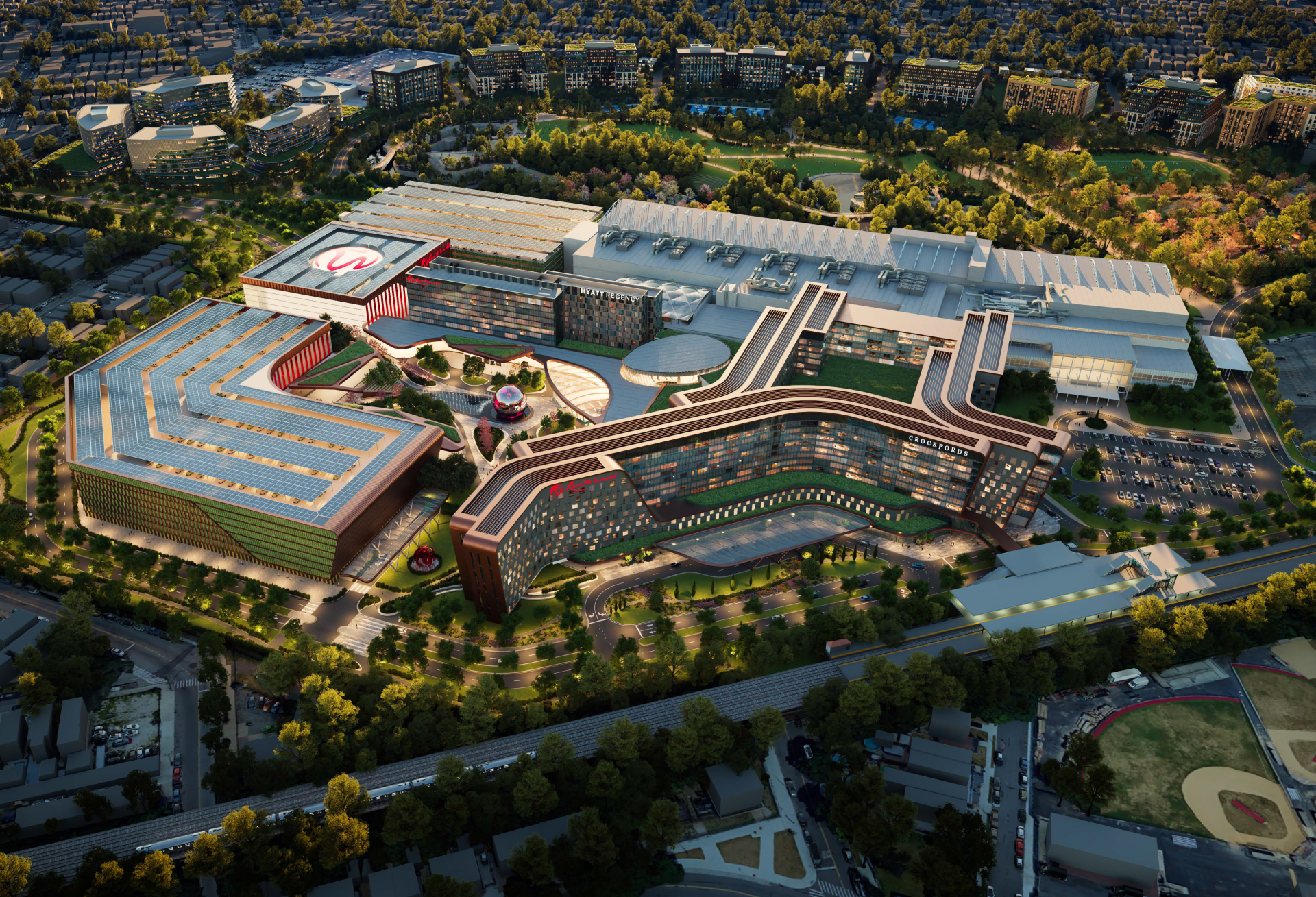
Malaysian gambling giant Genting Group is among the veterans in the group. It is proposing a $5.5B addition to its existing gaming complex next to the Aqueduct horse racing track.
The developer claims that the 5.6M SF proposal in Southeast Queens could launch its table game and full-casino slot machine operations within six months of receiving a license.
If it receives a license — and it has long been a favorite, along with the next project on this list, because of its track record operating the racino — the project would be the largest integrated resort in the country.
Genting would build a 500K SF gaming floor, 2,000 hotel rooms, a 7,000-seat entertainment venue, more than 30 restaurants, 7,000 parking spaces, a meeting space and other resort amenities, alongside more than 10 acres of community green space. The project would span 73 acres.
In its pitch, Genting is flexing that it has already invested more than $1.1B into Southeast Queens and contributed $4.5B to the state’s public education fund since 2011. It said the new resort would expand its workforce from 1,000 employees to 5,000, as well as create 5,000 union construction jobs.
It has formed a partnership with Cirrus Workforce Housing to build up to 50,000 residential units across New York City for households making 80% to 140% of the area median income, according to its bid.
Additionally, Genting claims that the project would provide the Metropolitan Transportation Authority with more than $1B from fees and revenues in the first five years of receiving a license.
Empire City Casino
Partners: MGM Resorts
Projected Investment: $2.3B
Neighborhood: Yonkers, Westchester County
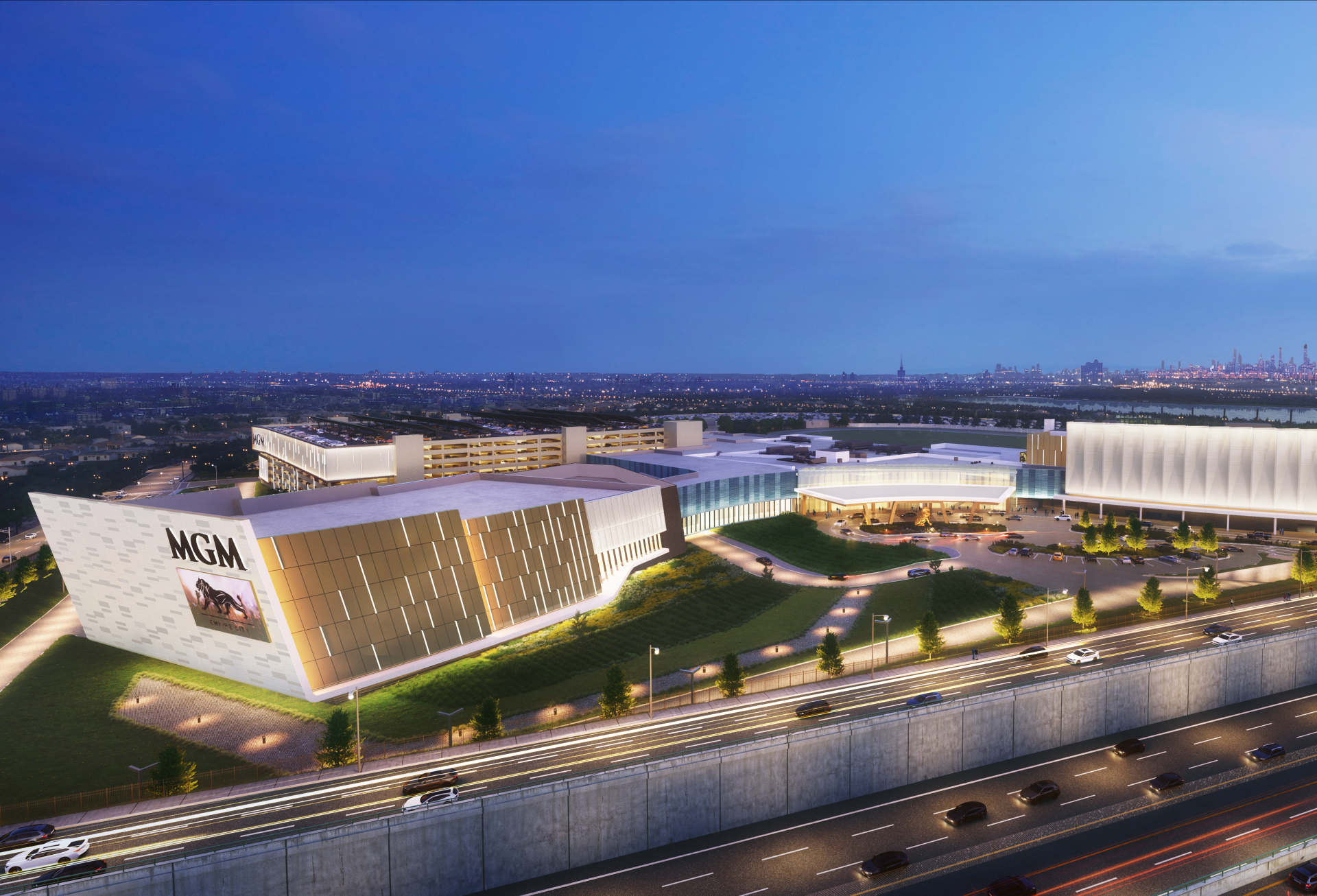
Similar to Genting, international hospitality behemoth MGM Resorts has operated the Empire City Casino, which opened in 1899 as Yonkers Raceway, since 2006.
If awarded a license, it has a $2.3B plan to renovate and expand the existing facility’s gaming, restaurant and lounge areas, as well as adding three new restaurants, a parking garage and a 5,000-person entertainment venue and meeting space. It would complete the redevelopment by mid-2029.
In a press release, MGM boasted that Empire City Casino has generated more than $5B for New York state education, including $1.6B since the Las Vegas-based company assumed ownership in 2019. Under its revenue share formula, 20% of the project’s generated tax revenue would be distributed to the local region, with 10% going to Yonkers, 5% to Westchester and 5% divided between Rockland and Putnam counties.
Though it didn't highlight any commitments to housing, MGM said its application includes investments to support public infrastructure in Yonkers, including improvements to roads, water lines and traffic technology.
“Empire City Casino and Yonkers Raceway have anchored the entertainment and tourism culture in downstate New York for more than a century,” MGM President and CEO Bill Hornbuckle said in a statement. “Achieving a full casino license will ensure this site will continue to be a cultural and economic force for generations to come.”
Ferry Point
Partners: Bally’s Corp.
Projected Investment: $4B
Neighborhood: Ferry Point, Bronx
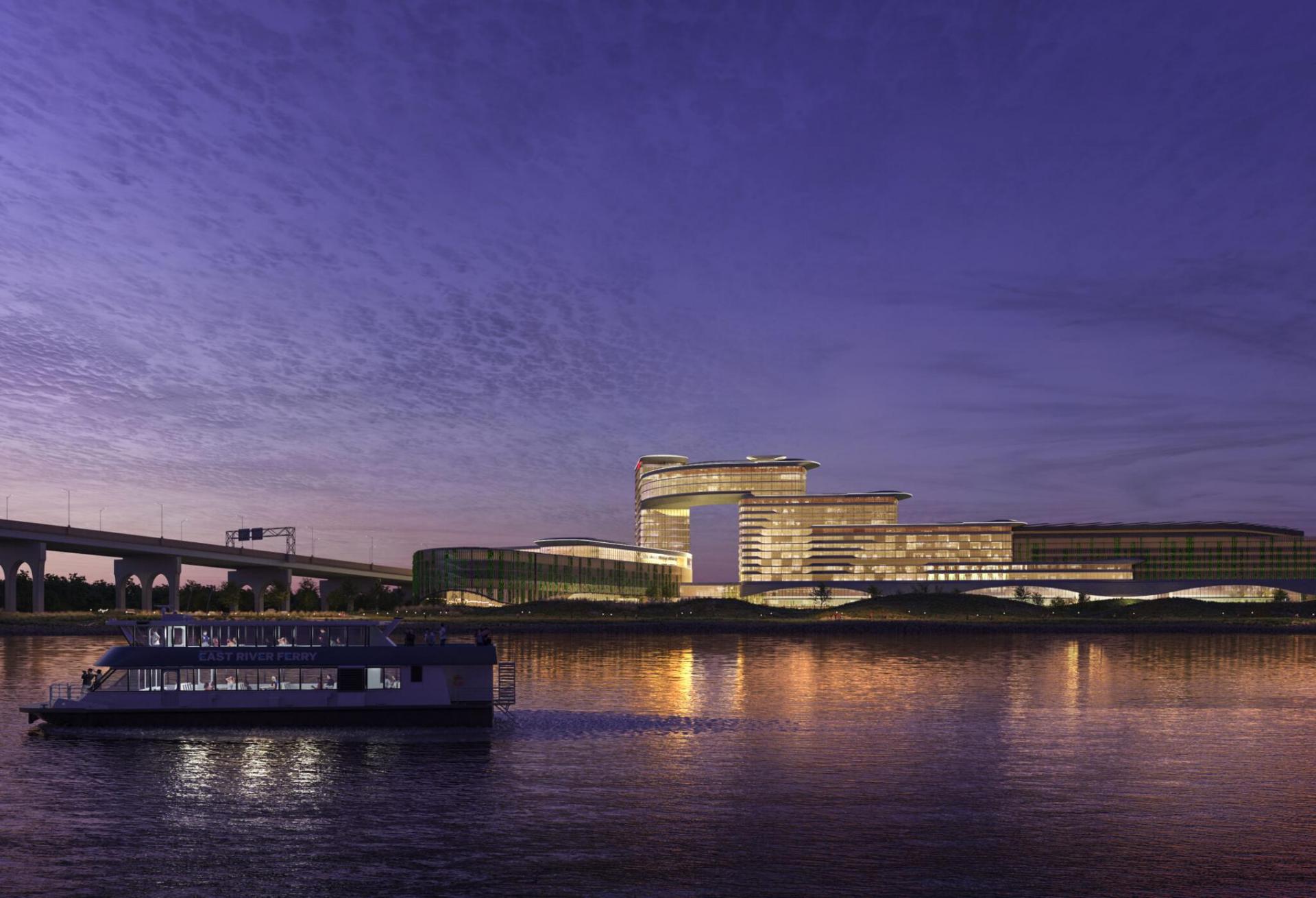
Another entertainment giant, Rhode Island-based Bally’s Corp., plans to expand its Bronx golf course into a $4B mixed-use complex with a 500-room hotel, 2,000-person entertainment center, casino and spa.
If it received a license, it would be the largest private development in the history of the borough, according to Bally’s. The company expects to create 15,000 union construction jobs and 4,000 permanent union jobs.
The project was the first among its competitors to offer New Yorkers equity ownership, up to 9%. Its community benefits agreement totals $625M in value, including $75M upfront in capital improvements for traffic and transit, $100M for parklands and $10M for public safety, plus a commitment to make future contributions.
Bally’s bought the site from The Trump Organization in 2023 and removed the first family's branding from the golf course shortly thereafter. If Bally's is awarded the license, it agreed as part of the sale contract to pay Trump $115M, The New York Times reported.
Though Bronx Community Board 10 previously voted against a zoning change for the casino and Council Member Kristy Marmorato criticized the proposal, Gov. Kathy Hochul and Mayor Eric Adams have both signed off on the project.
The Coney
Partners: Thor Equities, Chickasaw Nation, Saratoga Casino Holdings and Legends
Projected Investment: $3.4B
Neighborhood: Coney Island, Brooklyn
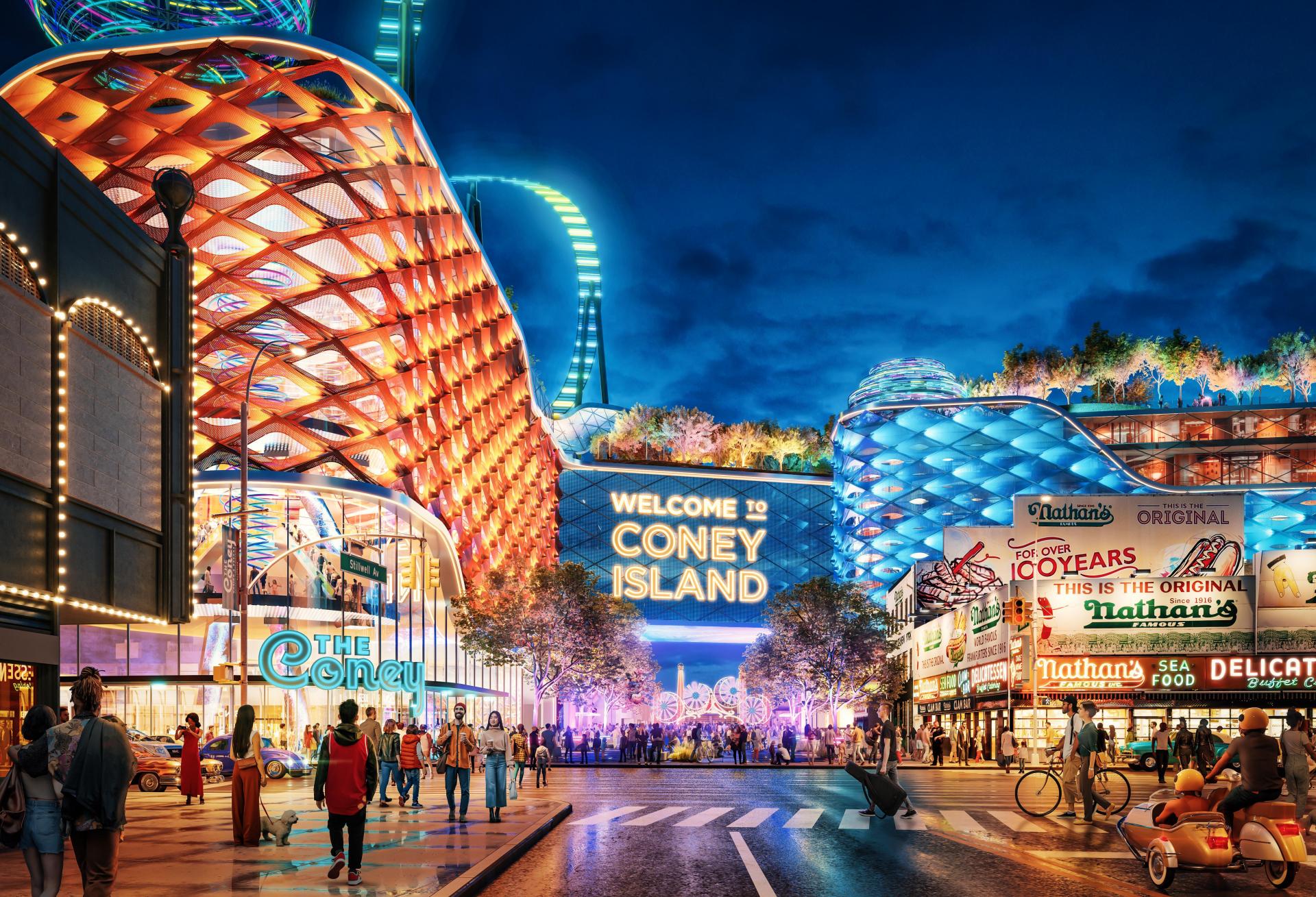
Pitched as a way to revitalize Coney Island, Thor's 1.4M SF proposal is the only contender from Brooklyn. The plan includes a 500-room hotel, 20 restaurants, a 2,400-seat entertainment venue, a 92K SF convention center and an acre of open space.
If awarded the license, casino REIT Gaming and Leisure Properties has committed $2.3B of development financing for the project.
The joint venture expects the project to create 4,000 union construction and more than 4,500 permanent jobs. The group projects its total economic impact at nearly $1.3B annually, with $1.1B of that accruing to Brooklyn. It has also promised to create a $200M community trust for public improvements and a $15M annual fund to enhance police, fire and emergency medical services.
Like most of the other proposals, The Coney faced opposition from Brooklyn's Community Board 13, which voted against the project in January, as well as Borough President Antonio Reynoso, who has called for more community benefits. It received approval from the City Council Committee on Zoning last week.
In a statement, the developers said they have held more than 500 meetings with stakeholders, businesses and residents to solicit feedback, as well as sponsored community events and summer basketball camps. They said they have collected more than 10,000 signatures supporting the project and received more than 50 letters of support from neighboring business owners and 600 letters of support from local public housing residents.
“This is the moment Coney Island has been waiting for,” Thor Equities Chief Operating Officer Melissa Gliatta said in the statement. “The Coney brings transformative investment to a neighborhood that shaped New York’s identity but hasn’t shared in its growth. Our mission is to revitalize this iconic destination that’s always belonged at the forefront of entertainment and innovation.”
The Avenir
Partners: Silverstein Properties, Rush Street Gaming and Greenwood Gaming and Entertainment
Projected Investment: $7B
Neighborhood: Far West Side, Manhattan
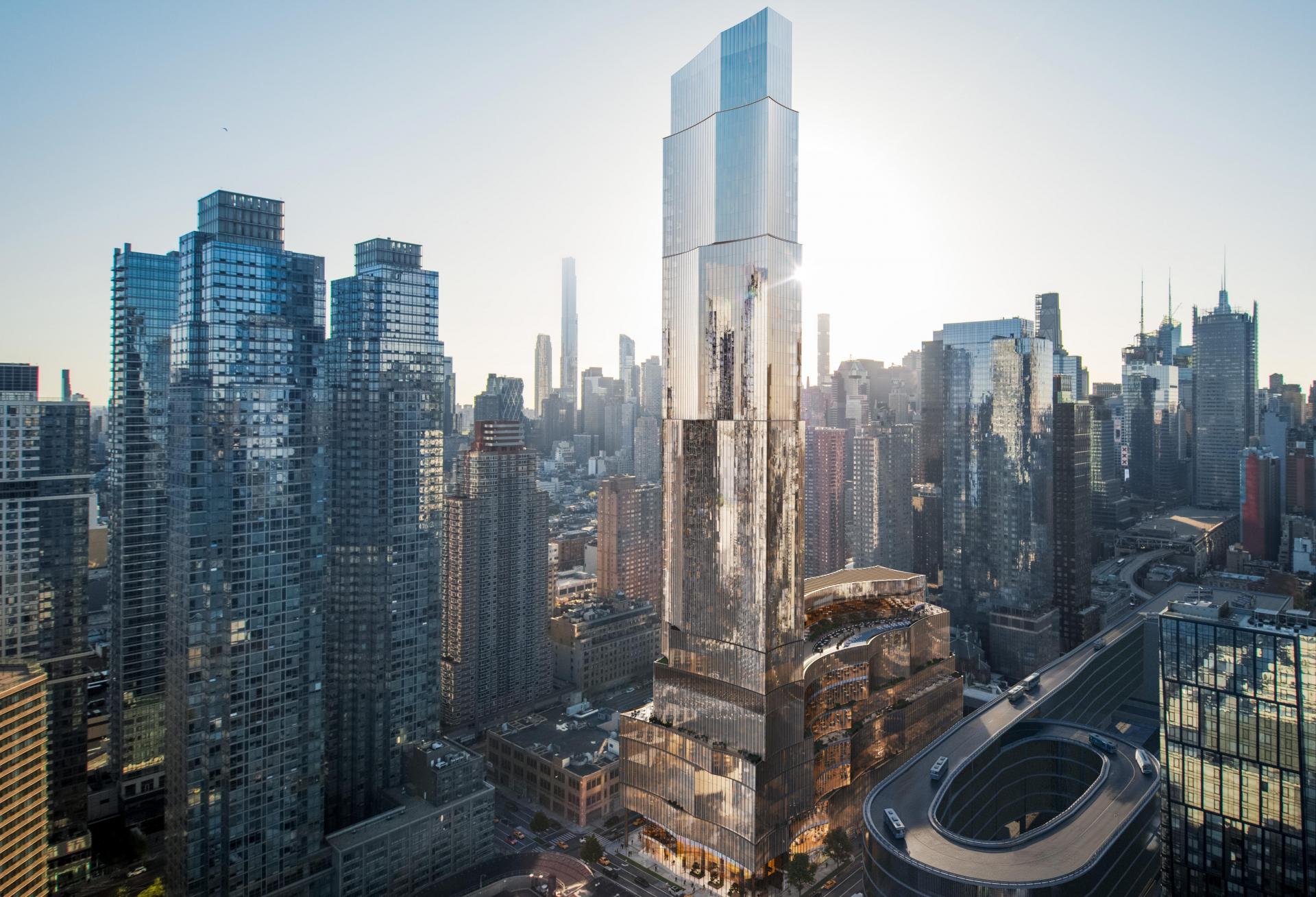
Several tweaks have been made to The Avenir in the weeks leading up to submission. In its final form, it would be a $7B, 785-foot mixed-use tower, housing a casino, a 1,000-key Hyatt-branded hotel, more than a dozen restaurants, a 150-seat entertainment venue and a public art gallery.
Among the last-minute additions is Silverstein’s promise to partner with Nathan Berman's Metro Loft Developers to deliver more than 2,000 apartments, 500 of which would be affordable, via office-to-residential conversions.
The developers have shaped their pitch around the neighborhood, with promises to bulk-buy theater tickets, provide customers with millions of dollars of gift certificates to local retailers, and bring local restaurateurs, including Don Antonio, Empanada Mama and Sarge’s Deli, into its food hall.
The developers expect the project to create 4,000 union construction jobs, in addition to approximately 4,000 full-time and 1,000 part-time permanent jobs.
Freedom Plaza
Partners: Soloviev Group and Mohegan
Projected Investment: $11.1B
Neighborhood: Murray Hill, Manhattan
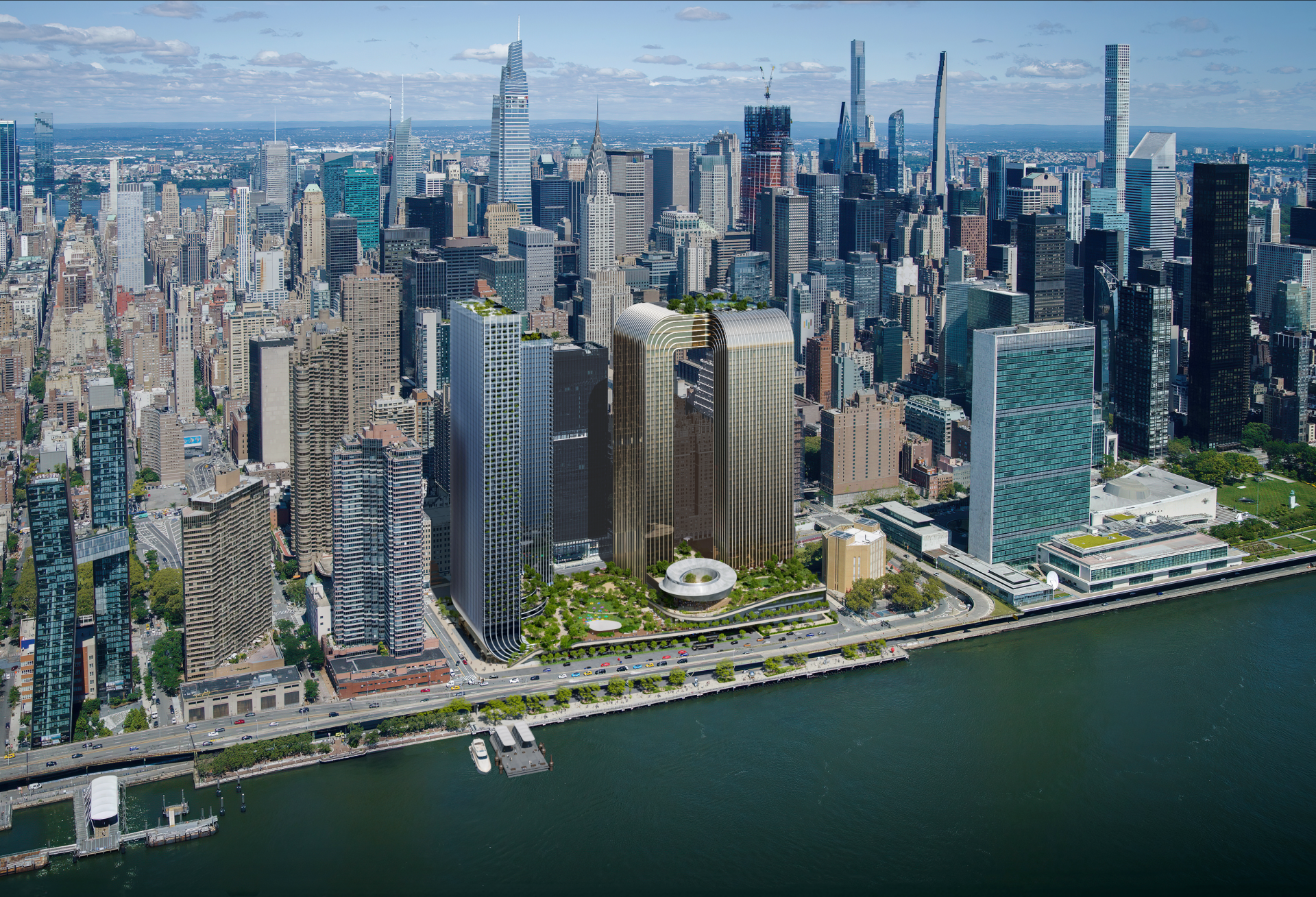
Soloviev Group’s proposal for the largest remaining undeveloped site in Manhattan, just south of the United Nations, would require an estimated $11.1B investment, making it the most expensive among the bids.
On 6.3 acres, the developer is proposing a 295K SF gaming facility, more than 1,200 hotel rooms, 56K SF of conference space, a 22K SF multistory food hall, a 41K SF spa center, an art gallery and more than 1,400 parking spaces. Additionally, the group would build more than 1,000 apartments, half of which would be permanently affordable, and a nearly 5-acre public park on the site.
The mixed-use development is projected to create 17,000 full- and part-time union jobs, 8,000 of which would be permanent. It could generate $3.2B in annual economic output, according to Soloviev.
To garner community support, the development is among those allowing the general public to own a stake in the project. Residents would be able to buy as much as 12% of the initial equity in the project. Additionally, New York state and city employee-related pension funds will receive preferential access to investment opportunities, according to the developer.
Soloviev has also promised to establish a community reinvestment fund that could provide at least $200M in local housing programs, workforce development and other services, decided upon by a local board.
Those commitments aim to quell opposition, including from Manhattan Community Board 6's Land Use and Waterfront Committee, which voted in June to require “exceptional scrutiny” of the project due to its location. The lot was previously home to Con Edison's Waterside Plant, which was demolished in 2007.
CORRECTION, JUNE 30, 9:30 A.M. ET: A previous version of this story referred to the partnership behind The Coney as Global Gaming Solutions. GGS is the commercial arm of the Chickasaw Nation. It also incorrectly noted that a zoning committee decision could limit the size of the project. The story has been updated.
)
)
)
)
)
)
)
)
)
)
)
)