
As Judge Krzysztof Lach and his clerks shuffle through paperwork, more than a dozen Bronx residents sit in silence, waiting to see whose fate will be decided next.
It’s 10 a.m. on a Thursday, and Lach has 58 cases to get through. A continuous buzz can be heard through the walls as lawyers, many meeting clients for the first time, discuss settlements. Outside the courthouse, a line of people spills outside of security and into the bitter February cold.
This is the place where tenants and landlords battle over one of the scarcest resources in the city: housing court. And the Bronx is the state’s most bruising arena — approximately 3% of the population faces eviction filings in any given year.
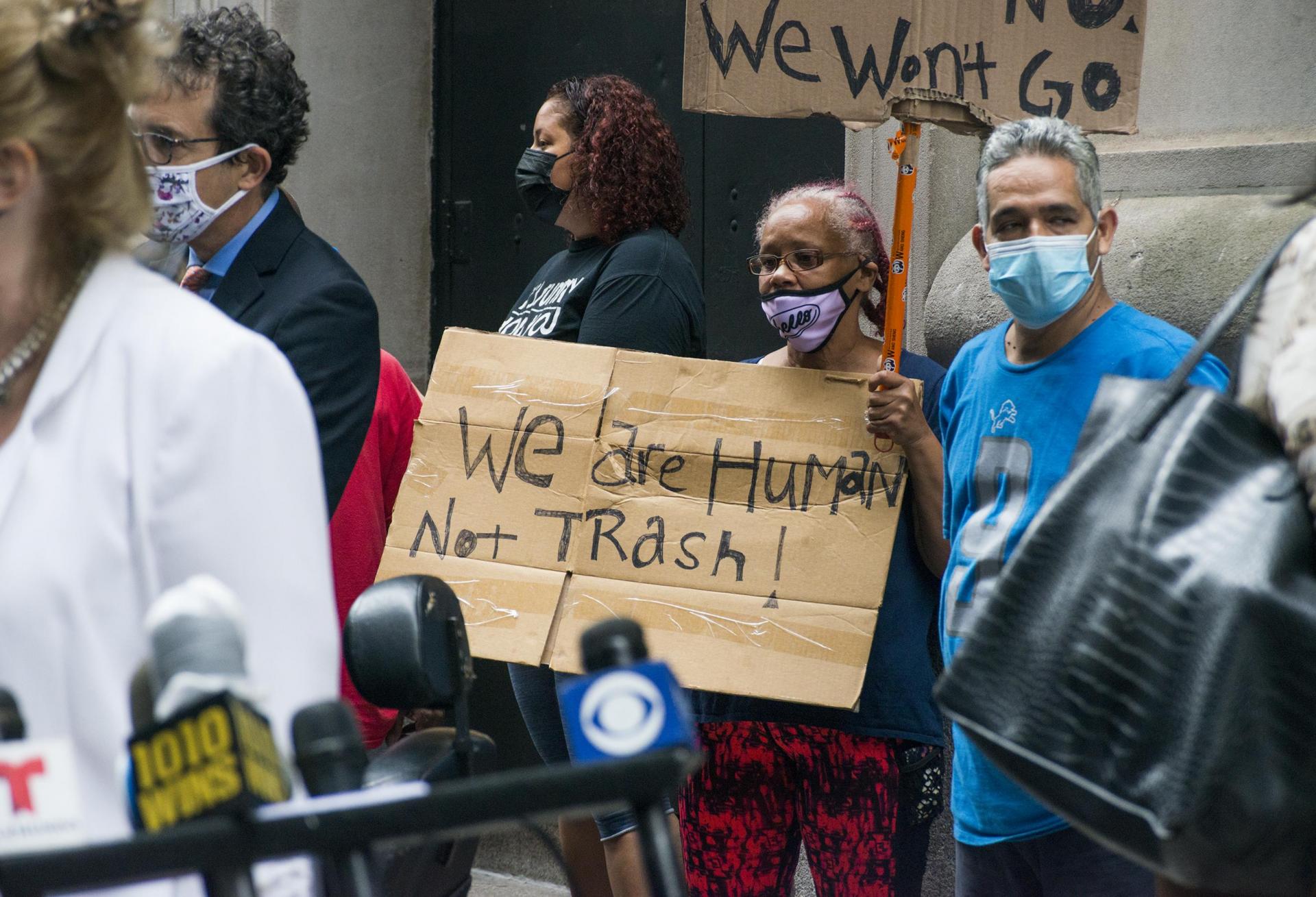
Housing court is notoriously slow, but in recent years, procedural changes, combined with ongoing pandemic fallout, have put increased pressure on the bureaucratic system. As a result, it has become common for years to go by before negligent landlords are forced to make repairs or delinquent tenants may be evicted.
“It's not just a landlord-versus-tenant problem. We all have this problem collectively,” Kucker Marino Winiarsky & Bittens partner Craig Gambardella said. “There's one fix: make the system run better.”
Gambardella is representing a coalition of property owners suing the Office of Court Administration over housing court delays. New York state law declares that eviction cases should be resolved in approximately a month, but in some parts of the city, the average case drags on for 15 months.
Although enforcement cases brought by the New York City Department of Housing Preservation and Development are triaged and processed through a separate courtroom, those, too, can take more than a year before a landlord is fined.
Legal protections passed in recent years have evened the playing field between large landlords and tenants, who often have little experience in courtrooms, and have reduced the number of frivolous cases that get filed. But continued economic recovery, paired with surging housing distress, means the courts have remained weighed down.
In the meantime, cases get dropped, landlords fall behind on mortgages and tenants are forced to live in unsafe housing conditions. All while New York City's average rents are close to record highs and vacancy is near an all-time low.
“The number of filings has definitely trended towards the high side,” Legal Aid Society Director of Housing Matthew Tropp said. “I don't see that getting any better, because people are just still struggling.”
Compounding Backlogs
After shuffling through security at 1118 Grand Concourse, Bronxites approach the bench as their names get called out.
One case, first filed in September 2023, has finally reached its end. The tenant owes more than $60K, and the judge declares he has until Feb. 22 to move out.
In another, the tenant owes $11,900 and is in the process of getting approved for a payment from a “one-shot deal,” an emergency assistance program. In a different case, the tenant assures the judge she just made a $2,500 payment — on a $40K bill.
“Keep trying. It’s a lot of money,” Lach, the judge overseeing the case, tells her.
Lach is one of 55 judges serving in New York City Housing Court. To move the calendars along, each must process more than 60 cases a day on average.
In an April report, the New York State Bar Association’s Housing Court Subcommittee called the process “cattle-call justice,” where cases receive little individualized attention and pressure builds for settlements or for cases to be dropped.
Processing times depend on the courts, according to the subcommittee report. In the Bronx, it is an average of five months between the initial filing and when parties make their first court appearance. In Brooklyn, which has the largest housing stock among the five boroughs and where roughly 1.3% of the population faces eviction, it may be almost seven months before a case goes in front of a judge.
The process has three major phases: a precourt notice served to the tenant, a housing court hearing and, if ordered by a judge, eviction by a city marshal.
By law, in a nonpayment case, rent demands are made in writing 14 days before a court case starts. If rent remains unpaid, a petition can be served and the tenant must appear in front of the court within 10 days. A trial date should be set three to eight days after the initial appearance.
For holdover cases, when the landlord seeks an eviction for a reason other than nonpayment of rent, the landlord must first notify the tenant of the issue for 30 to 90 days — depending on how long the tenant has occupied the unit or whether it is rent-regulated. Afterward, a petition can be served and a court date must be assigned at least 10 but not more than 17 days after.
For a settlement to be reached or an outcome to be determined, timing varies by location. In Brooklyn, landlords wait almost 10 months for holdover cases to be heard and eight months for nonpayment.
Staten Island, which has the lowest share of renters, is the fastest, taking four months for holdover cases and just over five months for nonpayment, despite having just two housing court judges.
Then there are the community courts. The institutions aim to resolve cases faster than the traditional courts, but that doesn’t seem to be the case when it comes to housing. At the Red Hook Community Justice Center, holdover cases take 15 months on average and 11 months for nonpayment. At the Harlem Community Justice Center, it’s eight and seven months, respectively.
Cases are often prolonged due to adjournments — after New York City passed its right-to-counsel law in 2017, judges often have to adjourn hearings until a lawyer is secured.
The legislation guaranteed low-income tenants, many of whom are unfamiliar with the legal system, representation in eviction proceedings. In 2024, 89% of individuals represented by an attorney remained stably housed, according to a May report by the New York City Comptroller’s Office.
But finding an attorney has become increasingly difficult in recent years.
Following the expiration of the pandemic eviction moratorium, eviction cases surged 440% in New York City. Landlords and tenants flooded the courts.
A lack of funding, along with high levels of burnout, caused legal service organizations to lose between 20% and 55% of their staff in the first two years of RTC rollout, the Comptroller's Office found. Although the Office of Court Administration has determined that full-time attorneys should be assigned a maximum of 48 cases per year, caseloads can be as high as 80.
The staffing shortages have caused the monthly rate of representation for tenants to fall to 30% as of March, after hovering at 50% the three years prior, according to the report.
Similarly, staffing at the Department of Social Services was slashed 17% between 2020 and 2025. As a result, the processing of rental assistance applications, like the one-shot deal, has slowed dramatically. Before the pandemic, it took between 30 and 60 days for an applicant to receive funds. Now, it takes 10 to 12 months, according to the comptroller.
And while the Housing Stability and Tenant Protection Act of 2019 is known more for its changes to rent stabilization laws, it also increased the length of housing court adjournments from 10 days to 14 and provided more flexibility for judges to approve tenant requests for additional time.
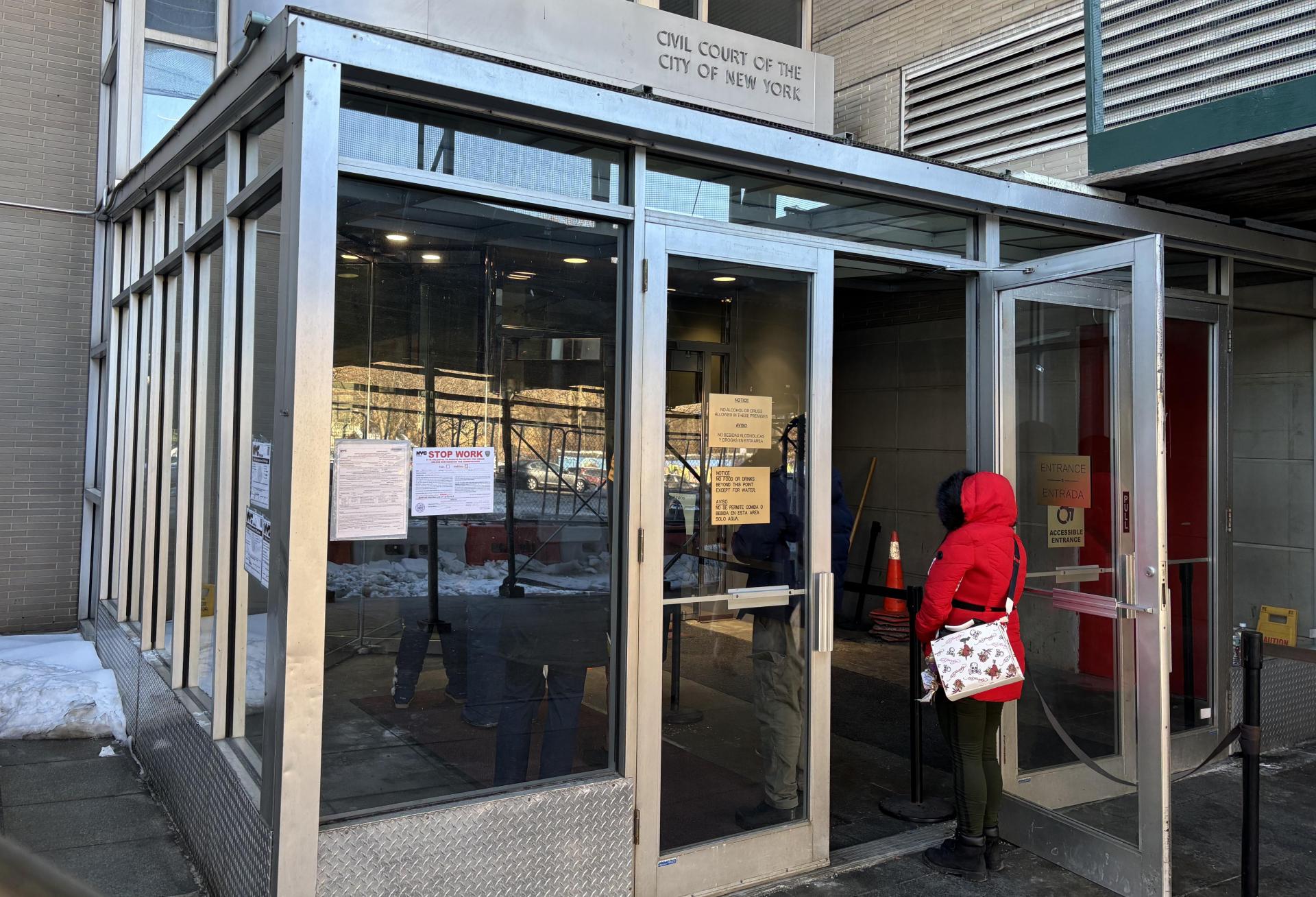
In many cases, tenants need that extra time to access available funding to stay in their homes, Housing Court Answers Executive Director Jenny Laurie said. The group educates tenants and small landlords on the housing court process and provides eviction prevention training to community groups, unions and elected officials.
Tenants in Lach's court lamented car crashes, work accidents or the death of a breadwinner whose name happened to be on the lease. Finding a new job or getting approved for a rental assistance program takes time and can be out of tenants’ control.
“The expectation that a housing court eviction case should go quickly in two or three weeks or two or three months is, I don't think, a rational expectation,” Laurie said. “It's not the way the courts work, and no other court is held up to that standard.”
The Bronx has the highest concentration of rent-stabilized housing in the city, and when the HSTPA upended rent-stabilized housing economics, it left many owners owing more on their mortgages than their properties are worth. It also closed loopholes that incentivized some landlords to harass, evict and deregulate apartments.
In 2019, the year HSTPA passed and right-to-counsel implementation began, eviction filings fell by 22% as landlords could no longer pursue unfair cases with little resistance, according to the comptroller report.
“If you have a case with two attorneys, that is going to slow the case down, for sure,” Laurie said. “But that's going to slow the case down because now the tenant has representation and is able to assert their rights.”
Mounting Costs
The number of cases working through the courts, by and against landlords, hasn’t yet exceeded pre-pandemic levels, but both are on the rise. Evictions have gotten closer to the baseline as the moratorium backlog works its way through the courts.
It is unlikely that those numbers will go down, experts say.
Historically, affordable housing lenders and owners have assumed they will miss out on 5% of rent payments. Starting in 2020, rent collections began to drop amid widespread simultaneous job losses followed by yearslong eviction moratoriums during the pandemic.
Collections never recovered, especially for those renting apartments to the most economically vulnerable. Affordable housing landlords only collected rent on 90% of their units in 2024 and 89% in 2023, according to a study by nonprofit affordable housing organizations National Equity Fund and Enterprise Community Providers. That equates to an average loss of more than $6K per month or $75K per year.
For 11% of the buildings in the study, which surveyed owners of more than 37,000 affordable homes across the state, economic occupancy was below 80%.
At the same time, 1 in 5 New York renters are severely rent-burdened, spending more than half of their income on housing, according to the study. About 30% of people fall into arrears following an unexpected expense, such as a health issue, Enterprise Director of Housing Access and Opportunity Michelle Mulcahy said.
More nonpaying tenants eventually result in more eviction proceedings. Less revenue and growing costs lead to deferred maintenance and increasing mortgage defaults — and more cases against landlords who fail to make repairs. Already, nearly 60% of buildings in the Enterprise-National Equity Fund study reported negative cash flow after expenses and debt service are paid. Before 2019, that proportion hovered around 25%.
Enterprise, which owns and manages housing as well as provides resources to other landlords and tenants, offers programs focused on eviction prevention. Among them is Home 4 Good, which connects tenants with short-term rental assistance, longer-term subsidy programs and financial coaching.
The pilot program launched in 2021, helping 112 tenants access more than $1M in assistance and avoid eviction proceedings. It is expected to scale to 2,500 tenants over the next year.
“To access the current system of eviction prevention resources in the city, namely one-shot deal and Homebase, it really relies on the tenant,” Mulcahy said. “The housing providers we work with, they want to be partners, but they're not able to apply for these resources on behalf of their tenants.”
The proactive approach can reduce the time it takes to secure assistance and jump-start conversations before things get heated. Court delays and navigating a complex system for assistance often cause rent arrears to stack up.
The bar association’s subcommittee similarly recommended integrating DSS’ Human Resources Administration staffers in the initial court appearance to provide tenants with financial assistance, children’s services and mental health treatment early in the process.
“If the systems were designed to make [access] easier, maybe some landlords would get less frustrated with waiting for their tenant or whoever to go through the process to obtain the arrears,” Tropp said.
But there are other ways to move the system along. Increasing housing court personnel and physical spaces for courtrooms would help, the subcommittee found.
So would increasing what is known as the Small Property Part. Established in 2022, the program created a fast track for small landlords with three or fewer units. The subcommittee recommended increasing the threshold to six.
But overall, it will require taking a harsh look at unsustainable record rents and the viability of operating housing in New York City, Mulcahy said.
“There are conversations to be had around — and this is big picture — how we can address the mismatch in underwritten budgets and the reality with midcycle financial tools and deeper subsidies,” Mulcahy said.
It is unlikely those conversations will be held in the courtroom. There simply aren’t enough hours in the day.
One of the dozens of cases Lach heard on this particular day in Bronx Housing Court was of a woman who lost her job and has fallen behind on more than $25K in rent. He decides to adjourn her case. She will be summoned back to court on March 23. If she doesn’t pay the sum and doesn't return to request more time, the earliest she can be evicted would be April, he tells her.
He sighs, flipping through the pages in front of him.
“I get it. Life happens,” Lach said. “All you have to do is ask for time.”
)
)
)
)
)
)
)
)
)
)
)
)