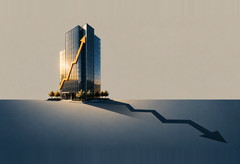
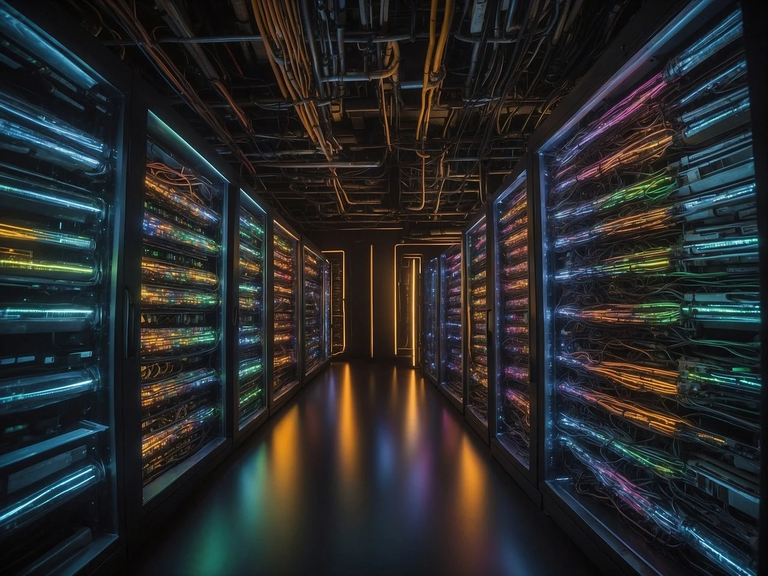
The West Coast is seeing major data center capacity expansion, especially in Northern California, where the market is projected to increase to nearly 1,948 megawatts by 2029, up from 993 MW in 2022.
One of the caveats of this massive data center growth is the vast amount of power consumed. With tech giants like Amazon and Microsoft adopting energy-demanding tools like artificial intelligence to store and process vast amounts of data, there is a need to pivot to more sustainable methods.
Global energy management company Schneider Electric, which operates in Northern and Southern California, has seen data center owners prioritize lowering their environmental impact.
“With California leading the way in environmental regulations, West Coast data centers are increasingly focusing on energy efficiency, renewable energy sources and reducing carbon footprints,” said Vance Peterson, solutions architect at Schneider Electric. “At Schneider, we're doing our part to help data center operators meet their sustainability goals.”
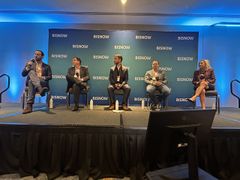
Peterson will speak at Bisnow’s DICE West event at the Santa Clara Marriott in Santa Clara, California, on Dec. 3. He and other panelists will discuss data center rack management, cooling high densities and cooler facilities in data centers. Click here to register.
Bisnow spoke with Peterson about data center trends on the West Coast, the role of AI and how Schneider will forge ahead in this rapidly changing market.
Bisnow: What data center trends are you seeing on the West Coast?
Peterson: I'm seeing more of a focus on edge computing as companies demand lower latency for real-time applications — Internet of Things, gaming and AI-driven services. Smaller, distributed data centers closer to end users are becoming more common.
We’re also seeing a lot of activity on hybrid adoption, combining on-premise data centers with public cloud platforms and multicloud adoption. It offers flexibility and redundancy by leveraging different cloud providers, especially in tech-driven regions like Silicon Valley, Portland and Seattle.
Bisnow: What do you think will be the hot topics covered at Bisnow’s DICE West event?
Peterson: Some of the key topics I think will be discussed at this event are critical issues impacting the data center industry, particularly on power and cooling solutions, which are becoming increasingly vital due to the growing density and complexity of operations. Innovations in these areas, like liquid cooling and high-performance computing infrastructure, or HPC, will be front and center, particularly as AI-driven applications continue to push power and cooling demands higher.
Other significant discussions will include data center infrastructure management, DCIM, tools for reducing operational costs and site selection for new data centers, especially in power-limited regions like Northern California.
Bisnow: What does the demand for higher power rack densities look like on the West Coast?
Peterson: I am seeing a significant rise in demand for higher power rack densities across data centers, driven primarily by advancements in technologies like AI, machine learning and HPC. These applications require more computational power, which leads to a denser deployment of servers, graphics processing units and other specialized hardware in data centers.
The demand for higher power densities is expected to continue, especially as edge computing and IoT networks grow and more advanced applications require real-time data processing capabilities. This means data centers will need to continually innovate in power and cooling solutions to keep up with the increasing computational and energy requirements.
Bisnow: How will AI continue to support these new architectures, and what are some strategies that Schneider Electric has to manage these innovations?
Peterson: AI will continue to play a transformative role in supporting the new architectures needed for higher power densities in data centers. AI is being used to monitor and manage power consumption in real time. By predicting power usage patterns, AI can optimize cooling and power distribution, reducing waste and improving energy efficiency in high-density environments.
It can also adjust cooling systems to prevent overheating in specific areas, lowering operational costs. AI-driven tools enable predictive maintenance by analyzing performance data to detect potential equipment failures before they occur, which helps minimize downtime, especially in high-demand environments where servers are running intensive AI and HPC workloads. Also, it’s an effective tool for workload distribution across servers to help allocate resources properly to prevent overloading in different areas of the data center.
Schneider Electric’s EcoStruxure IT platform is a comprehensive solution that leverages AI and machine learning to monitor, analyze and optimize data center infrastructure. This cloud-based solution helps in managing power consumption, cooling and overall IT infrastructure performance. AI-driven insights enable real-time decision-making to keep data centers running efficiently even as power densities increase.
Bisnow: What advice do you have for data center owners and operators who are thinking of more effective rack management and cooling in daily operations?
Peterson: For data center owners and operators looking to improve rack management and cooling efficiency in their daily operations, there are several actionable strategies to consider, including implementing dynamic rack and cooling monitoring, adopting liquid cooling for high-density racks, using hot and cold aisle containment, and leveraging AI for predictive cooling adjustments.
By integrating these strategies into daily operations, data center owners and operators can achieve better rack management, more efficient cooling and lower operational costs while maintaining the performance required for modern, high-density workloads.
Bisnow: How will Schneider continue to stay ahead in this rapidly changing sector?
Peterson: Schneider Electric is positioning itself to stay ahead in this evolving sector with its EcoStruxure IT platform, offering tools for optimizing energy use, improving efficiency and integrating renewable energy sources into data center operations. This will also help optimize edge data center operations as edge computing becomes more prevalent.
Schneider continues to partner with manufacturers, hyperscalers, colocation providers and enterprises to help them adopt more scalable and flexible architectures. We can support a wide variety of data center designs — ranging from hyperscale facilities to micro edge deployments — allowing us to remain a top player in the rapidly evolving data center market.
Click here for more information about the event.
This article was produced in collaboration between Studio B and Schneider Electric. Bisnow news staff was not involved in the production of this content.
Studio B is Bisnow’s in-house content and design studio. To learn more about how Studio B can help your team, reach out to studio@bisnow.com.