Michael Malone is on a mission to save the historical facades of the city’s architectural past, one building at a time.
A passionate advocate of preserving the city's older buildings, he believes these facade features tell a story about our city that shouldn’t be erased. They add character, charm and a sense of presence to their neighborhoods. They also anchor urban villages, attracting residents and encouraging people to congregate.
“Pre-war buildings are part of our heritage,” said Malone, who is the chairman and owner of Hunters Capital and one of the featured speakers at Bisnow’s Repositioning and Adaptive Reuse Event Oct. 10. “But unfortunately, it’s often easier to scrap the building and start from new.”
Urban villages are popping up all over Seattle, Malone said.
“In Ballard, Lower Queen Anne, Pike-Pine, Capital City, historical structures are part of the magnetism of these neighborhoods,” he said. “It’s all part of the experience of Seattle.”
Though some argue that newer buildings are more energy efficient, Malone disagrees.
“Research shows it is more energy efficient to retain an old building and upgrade it than it is to use the energy to tear it down and then dispose of the materials,” he said.
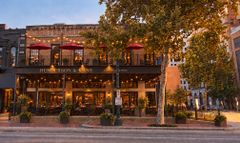
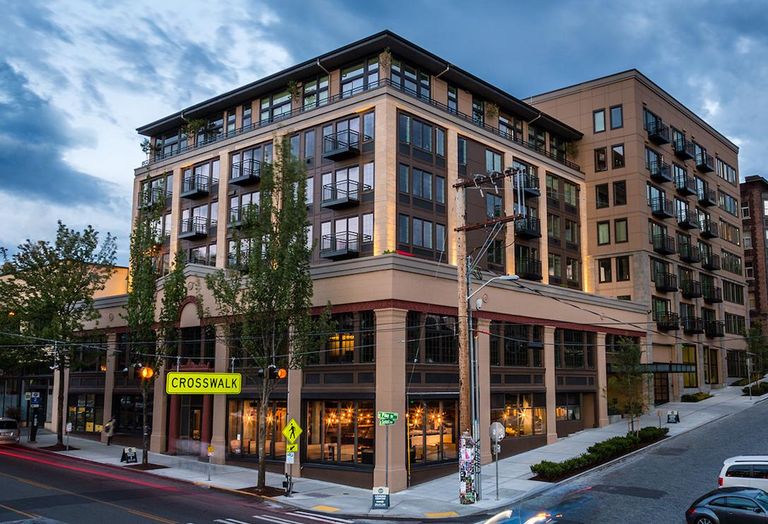
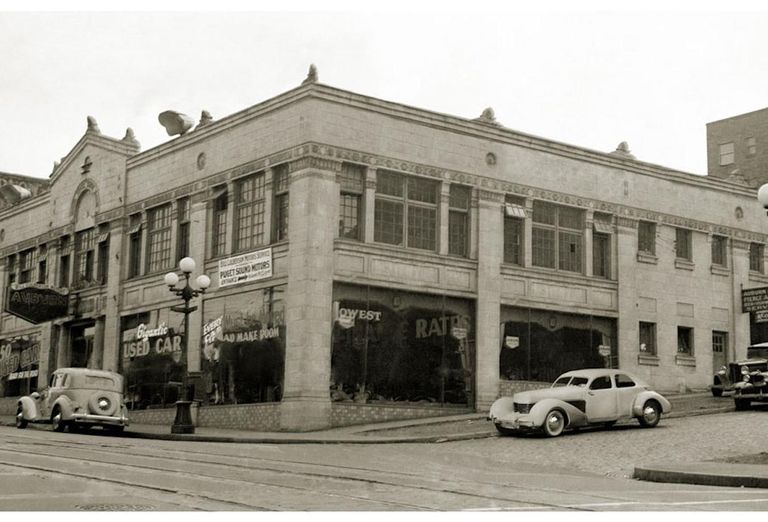
The Dunn Automotive Building — on Capitol Hill in the area known as Auto Row — is a project of which Malone is particularly proud.
“In the 1900s this is where people came to buy cars and there are all these beautiful buildings with big windows,” he said. “There are still 47 unique Auto Row original buildings. Our interest is to save these.”
The Pike-Pine District is represented by the Pike/Pine Urban Neighborhood Council, which helped to put together a 40-block conservation overlay district. Through that group, the members submitted a historical facade easement that allows developers to build an extra floor if the original facade is preserved and two sides are set back 15 feet.
“From street level you see the old wood or brick,” Malone said. “As it rises it up, the new material is set back 15 feet. It allows us to retain the heritage of the old buildings and the streetscape while still providing the density for housing.”
More housing density is important because many argue that historical building preservation runs counter to providing more affordable housing. Sightline Institute cited a case where Seattle’s historical preservation board rejected a proposed 200-unit apartment building because it was taller than the nearby historic building.
Redeveloping historical buildings to be taller and larger meets the higher-density goal that can aid the development of affordable housing.
The historical facade easement allowed Hunters Capital to preserve the Dunn building’s facade and increase its size from 20K SF to 100K SF of commercial and residential space.
The program is not restrictive, it is an incentive, he said.
Saving the facade is expensive, but if you can gain extra square footage from an additional floor, developers can recoup that cost within about five years, Malone said.
“With an extra floor, the building will generate an extra 12% to 13% income per year,” he said.
In a similar program, Seattle’s Retail Core Height Provision in the Downtown Land Use Code allows buildings to exceed 85 feet high if the facades of these buildings are preserved.
Malone believes if these programs were available in more Seattle districts, there would be more historical preservation in the city.
“We are in a business, but we live a passion,” Malone said. “We do have some new buildings, but we like to preserve facades whenever possible.”