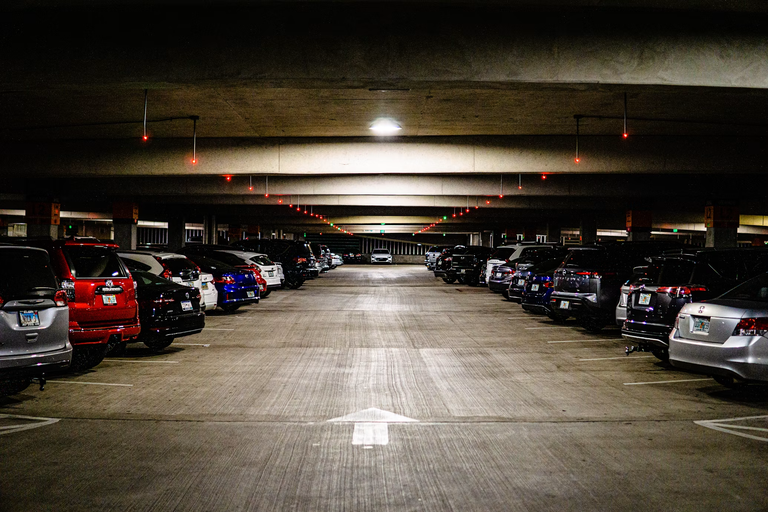
Parking is one of the few pieces of physical infrastructure at a commercial property that generates revenue every day. Yet for many owners, it remains difficult to measure, benchmark or optimize with the same precision applied to other parts of the asset.
That is beginning to change. As owners put greater pressure on net operating income, modernizing the tenant experience and demanding better visibility into property performance, parking is increasingly being viewed not simply as an operational necessity but as a performance asset.
Flash is helping drive that shift. Its technology connects parking infrastructure, software, payments, demand and data in one unified platform, giving owners and operators the tools to improve both the parking experience and the economics behind it.
Flash Chief Digital Officer Dan Roarty wanted to turn parking from a frustrating afterthought into a premium digital experience.
“For 15 years, we’ve focused on bringing parking infrastructure onto a modern, digital-first technology stack to make it easier for operators to manage, owners to monetize and drivers to enjoy,” he said.
Miami Becomes A Proven Ground For Frictionless Parking
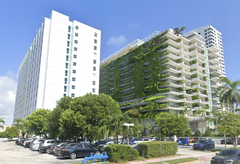
In dense urban neighborhoods like Miami Design District and Wynwood, visitors frequently waste time “circling the block” to find parking.
Flash is building density around Express Pay, its automated, ticketless parking experience. Built in partnership with Arrive, the parent company of ParkMobile, Express Pay combines Flash's parking infrastructure and Vision license plate recognition, or LPR, camera technology with consumer platforms drivers already use, including ParkMobile and ParkWhiz.
Once enrolled, a driver's license plate becomes the credential. The vehicle is recognized at entry and exit, and the parking session is automatically charged to the driver's saved payment method.
There is no ticket to pull or payment step at the gate.
“A simple way to think about it is E-ZPass for parking, but across a connected network of drive-in, drive-out garages,” Roarty said. “Instead of having a separate experience at every garage, the same enrolled vehicle can be recognized across all Express Pay locations.”
Express Pay seamlessly connects cameras, gates, access control and transaction payments into an established network of active drivers. Drivers can conveniently enroll and pay through ParkMobile or ParkWhiz. For property owners and operators, this means utilizing a much larger ecosystem rather than relying on a standalone, isolated piece of hardware.
The Power Of Flash's Network Effect
The model becomes more valuable as both sides of the network grow.
Every new Express Pay location gives existing users another place where their vehicle can be recognized automatically. As more drivers enroll, participating properties gain access to a larger pool of consumers who already understand and trust the experience.
“In Miami, that is especially meaningful because the combined ParkMobile and ParkWhiz footprint represents more than 3 million drivers in the market,” Roarty said. “This gives participating properties a built-in audience from Day 1. As both sides grow, the network becomes more useful for drivers and more valuable for every participating property.”
Unlocking The Hidden Value Of Parking
There is also a larger financial opportunity, Roarty said.
The opportunity extends beyond a faster parking experience. For owners, parking is a high-frequency transaction occurring inside an asset they already own, but performance can be difficult to see and optimize.
Better vehicle identification can improve transaction matching and reduce revenue leakage. Digital payments can increase successful payment capture. Reservations and connected demand channels can help bring incremental parkers to the asset.
Most importantly, better data gives owners and operators a clearer picture of how the facility is performing.
“The opportunity is to manage parking with the same performance mindset owners apply to other revenue-producing parts of the property,” Roarty said. “When you can better understand demand, capture more transactions and see how the asset is performing, parking becomes more than infrastructure. It becomes something you can actively optimize.”
First And Last Impressions Matter
A property’s parking garage is almost always the first impression and the last impression a guest receives, Roarty said, adding that even a great experience with a property “can be undercut” if someone has to wait in line at the parking lot gate or scramble to find a lost paper ticket.
At Miami Design District, Flash has demonstrated that improving that experience can also improve financial performance, Roarty said.
The results include a 17% increase in revenue from improved plate recognition accuracy and revenue capture, better traffic flow and better analytics to support long-term planning for large-scale global events like Art Basel and Formula 1.
Purpose-Built, Secure Tech
For an automated experience to work, the underlying technology has to be accurate and reliable across very different parking environments. Flash’s Vision LPR cameras are purpose-built for harsh environments, where lighting changes dramatically between entrances and ramps and vehicles approach at different angles and speeds.
The cameras use high-resolution optical sensors, dual illumination, multiple sensors and artificial intelligence processing directly on the device.
“The recognition models have been trained on hundreds of thousands of North American vehicles and plates, including temporary tags, vanity plates and stacked characters,” Roarty said. “That gives us more control over accuracy and reliability than simply connecting an off-the-shelf camera to a parking system.”
Security and privacy have become critical as more of the parking experience becomes digital, he added.
Flash maintains formal policies governing the collection, access, use, retention and sharing of license plate data. At the broader platform level, Flash has also earned HITrust certification for data security and privacy practices.
From Individual Garages To A Connected Parking Network
Flash's long-term vision is for parking to become increasingly invisible to the driver and increasingly measurable to the owner, Roarty said.
For drivers, that means enrolling once and experiencing frictionless transit wherever they go. For owners and operators, Flash wants that network to translate into measurable business value: faster lanes, higher digital payment adoption, stronger transaction capture and access to a growing pool of drivers.
Roarty is excited to build on the foundation of the Miami network across key hubs like Miami Design District, Wynwood Garage, Jungle Island and Miami Worldcenter.
Over the next few years, he said the goal is to connect those individual locations into a more consistent, citywide parking experience that fades seamlessly into the background.
“When a driver pulls into a participating property, the technology should recognize them, handle the transaction and keep them moving,” Roarty said. “For an owner, that same experience should create better data, stronger revenue performance and a more valuable parking asset.”
This article was produced in collaboration between Flash and Studio B. Bisnow news staff was not involved in the production of this content.
Studio B is Bisnow’s in-house content and design studio. To learn more about how Studio B can help your team, reach out to studio@bisnow.com.