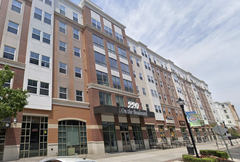
The Philadelphia life sciences market is still struggling with high vacancy after some developers made speculative bets on lab space during the sector's pandemic-era boom.
The situation could be worse, as life sciences landlords have less empty space to fill in Philly than in some other major markets. Local real estate players remain somewhat optimistic about the industry’s future, especially if a recent uptick in venture capital funding can be sustained and if the commonwealth commits more funds to the industry.
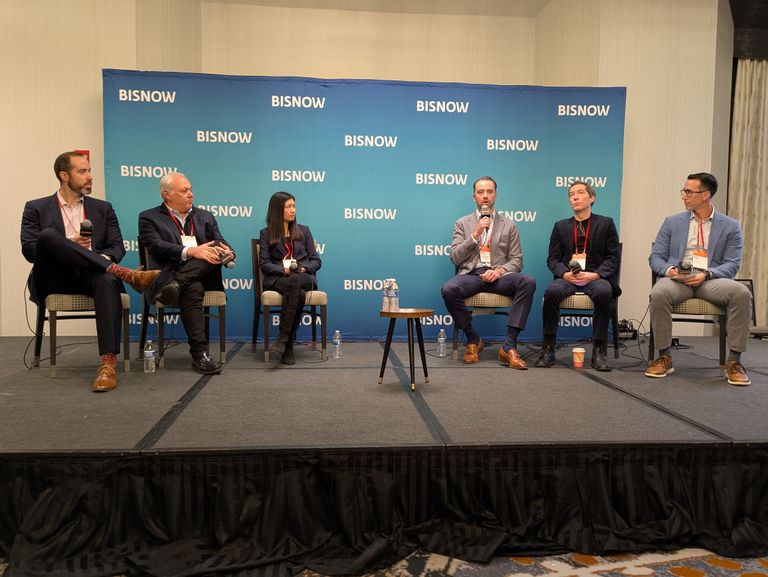
“For it to get better, this region really has to focus on the growth of VC funds,” Brandywine Realty Trust Senior Managing Director of Life Science Jeff DeVuono said Wednesday during Bisnow’s Philadelphia Life Sciences and Innovation Summit, held at the DoubleTree by Hilton Hotel Philadelphia Center City.
“The governor's office has done a phenomenal job,” he added. “They brought more new companies into the commonwealth of Pennsylvania in the last four years than the state has done in the last 20. It's an incredible leadership team. Hopefully, they still have some fuel in the tank.”
Greater Philly's 8.7M SF life sciences market had a 27% total vacancy rate for the first quarter of 2026, which was down just 0.2% year-over-year, according to a JLL report.
The amount of unoccupied square footage pales in comparison to metro Boston, which had 33% vacancy across more than 51M SF over the same period.
“Philadelphia is strong, particularly compared to Boston,” Wexford Science & Technology Vice President of Development Pete Cramer said.
He said the roughly 30% rent discount that tenants can get in Philly compared to Boston is a major draw and that the general cost-of-living savings are even greater.
“That’s a huge competitive advantage,” Cramer said.
Philly life sciences saw about $400M in venture capital funding in Q3 2026, which was up about 25% from the same period last year, according to a Savills report. Over the first nine months of this year, the brokerage calculated $2.2B worth of VC investment in the region, already more than double the $1B total in 2025.
A large chunk of that came from the roughly $800M that Wilmington-based biotech firm Earendil Labs fielded in the first quarter to scale its artificial intelligence program.
But leasing demand in the Philly life sciences space remains muted.
“We have to approach with caution,” DeVuono said.
Brandywine started tracking life sciences leasing inquiries in 2021 and found that about 80 firms were interested in the market, he said. Since then, the number has dropped to about a dozen.
The industry in Philly is heavily focused on gene and cell therapy, which isn’t fielding much investment these days, DeVuono added.
Much of the region's recent activity has come from biomanufacturing facilities, rather than life sciences labs.
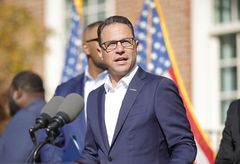
That is an area Gov. Josh Shapiro has sought to boost in Eastern Pennsylvania. He scored a series of wins on that front this year, including the $3.5B facility Eli Lilly & Co. broke ground on this month in the Lehigh Valley and the upcoming Johnson & Johnson plant in Montgomery County.
“Gov. Shapiro is looking for wins, and he's gotten a lot of them,” Cushman & Wakefield Senior Director Brian Young said. “Hopefully, we can ride that wave as long as we can.”
Both of those projects came with state incentives, but panelists said Pennsylvania needs to dole out more on that front to compete with Massachusetts and California.
“As much as the cost of living is lower, there's a perception that there just aren't incentives,” Young said.
There was some optimism about Innovate 2.0, a $125M fund for life sciences set aside in the commonwealth’s 2026-2027 budget.
“It’s a start,” Pennsylvania Biotechnology Center CEO Lou Kassa said. “I don't know if it’s going to move the needle a whole lot.”
It will be important to track the impact of that funding so the industry can effectively stump for more going forward, said Children’s Hospital of Philadelphia Vice President, Technology Transfer, Commercialization, and Research Contracts Zev Sunleaf.
DeVuono predicted that up-and-coming robotics, engineering and radiopharmacology firms will soon be considering Pennsylvania.
“In the next five years, you’re going to see more VC investment in Philadelphia in early-stage companies,” he said.