As the healthcare sector in New York City looks toward the coronavirus pandemic’s end, healthcare providers are changing their pre-pandemic plans for the built environment, investing in the medical needs of the city in a new era.
A focus on high bed counts in hospitals and new outpatient office design that allows for hybrid in-person and virtual care are among the priorities for medical space coming out of the pandemic, according to officials from medical institutions and healthcare real estate experts.
“The changes that we've made in existing space and our plans for future space are really driven by all of the things that we've experienced in the last year and a half,” Westmed Medical Group Chief Operating Officer Karen Dolman said on a Bisnow webinar on the future of healthcare real estate in New York City. “You can define it as pre-pandemic, during pandemic, we'd like to say maybe post-pandemic now.”
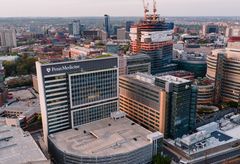
The pandemic led Mount Sinai Health System to scrap plans to sell the building that 799-bed hospital Mount Sinai Beth Israel is located at on 281 First Ave., Mount Sinai Health System Vice President of the Real Estate Division Tom Ahn said on the webinar.
“We were in the crosshairs of a pandemic, we cared for thousands and thousands of people, we were pitching tents in Central Park, we had trailers on the street,” he said.
“It did change how we look at healthcare," he added.
Before the crisis, the hospital system planned to move Mount Sinai Beth Israel a few blocks downtown to the current location of its New York Eye and Ear Infirmary at 310 East 14th St. while downsizing the bed count to 70 and building a high-tech emergency room focused on cardiac imaging, he said.
“We looked at our plan for this … transformation and said, look, you know what, we really need beds. We need to be prepared if there's another pandemic in the future,” Ahn said. “So we kind of rewound and we relooked at our main campus at Beth Israel.”
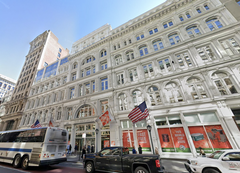
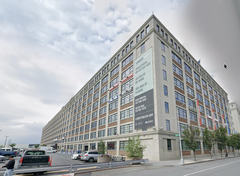
Mount Sinai now plans to renovate the emergency room and increase bed capacity at the Beth Israel campus's Dazian Building, which borders Nathan D. Perlman Place, and the adjacent Silver Building along 17th Street, he said.

They will move their behavioral health unit from the Bernstein building, which sits between 16th Street and 15th Street along Nathan D. Perlman Place, according to Ahn.
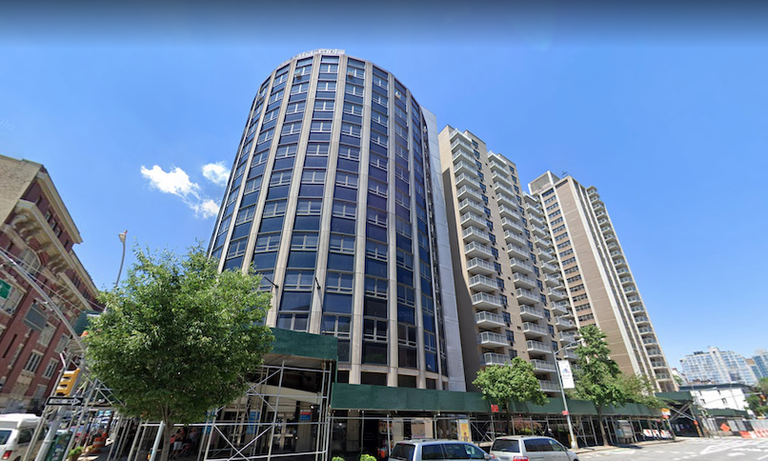
After renovating the campus, the health system still plans to eventually sell the two buildings furthest east on the campus — the Linsky Building and Baird Hall, which border First Avenue between 16th Street and 17th Street, he said.
For primary care and other specialties that work outside a hospital setting, the widespread and rapid adoption of telemedicine has led health providers to rethink their footprint.
Some health providers are looking to share space or downsize their existing footprint while others have found they need the same amount of space as before, Bisnow previously reported.
Westmed Medical Group is looking at ways to change office layout to meet the needs of in-person outpatient appointments and virtual outpatient appointments.
“Now we're looking towards the future with modifying our spaces to allow all of the patients that we need to see on a daily basis to come back, but yet still have that dual purpose or hybrid exam room that serves the purpose of both an office visit or a virtual visit,” she said.
Architects are planning on designing waiting rooms in all types of settings to look more like cubicles instead of the open, shared space, Simone Healthcare Development President Guy Leibler said.
Each of these cubicle-like waiting rooms could hold a family or a couple of patients. Patient rooms may be larger too, he added.
“I think the next generation of space will certainly be designed differently,” Liebler said.