There could be better moments to take over one of the Netherlands' best-known office developers.
But having taken the reins in June, new Edge CEO Boudewijn Ruitenburg has seen tougher markets. Joining Edge, which has a €5.3B portfolio across Europe, some 18 years ago as commercial manager, back when it was still called OVG, he was there when the 2008 financial crisis hit, when developers were going bust left, right and center.
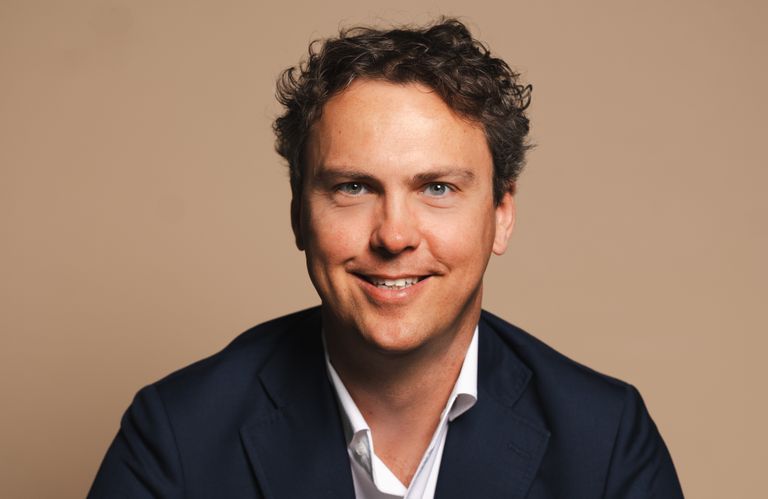
Foreseeing the return of core capital to quality offices once interest rates have stabilised, Ruitenburg said the market will ultimately be divided into “winners and losers.”
Keynote speaker at the Netherlands State of the Market event on Nov. 17, the CEO and avid cyclist talked Bisnow through his vision for Edge, including a push into asset management, his outlook for Dutch offices and how AI will affect the future of offices.
Bisnow: What have been your main priorities during the first 120 days or so?
Boudewijn Ruitenburg: Focusing on what we are good at, delivering results for clients, and sustainability. So no big change there. But I’ve focused on being a bit more precise, because as a developer it’s all about risk management. You take on risky positions, and from Day 1 we try to de-risk the product as quickly as possible.
I’ve also been strengthening our teams in our key markets. In the past, we looked at expanding into new markets, but we truly believe our current core markets, where we have teams on the ground, are where we can make a difference and create alpha, because we have the market knowledge and skilled teams there.
On a personal level, I’ve focused on keeping the company’s DNA and philosophy intact and staying entrepreneurial. We are developers, so we are risk-takers, but in rocky times, it’s important not to make mistakes. If you don’t make big mistakes, you’re automatically doing a good job. We are fortunate that we don’t have legacy issues, and that’s why we’re still doing new transactions.
Bisnow: Edge highlighted that your appointment reflects a “strategic reset.” What has changed in the market or the business that led the shareholders to change course?
Ruitenburg: The Iran war. There was a sort of momentum prewar that the economy was about to pick up quickly, and we were preparing ourselves to benefit from that new wave. But that wave didn't come. So we had to adjust.
We still have the same ambitions. We have capital available from our own balance sheet, and we are continuously trying to attract capital from others. There’s still capital available, but perhaps not as much as we previously thought.
Bisnow: Is ground-up development viable for Dutch offices right now, given where costs, rents and capital values are? How about retrofits?
Ruitenburg: It's still possible, although you don't see it as often, as there's no land available and there's no power available. But what I see is that the bigger tenants don’t have options to move. So in the future, we predict that larger tenants will reach out to the few developers that are left and start partnerships in order to create alternatives, rather than risking ending up in a brown building.
Over time, we will see more build-to-suit solutions, and not completely new builds but rather redevelopments or smaller buildings converted into bigger ones, and the small grid connection will be utilized for that.
Bisnow: Where do you see best prospects for development right now: the Netherlands, Germany or London?
Ruitenburg: We see different opportunities and different challenges in our core markets. London is a very solid market for us. We have a million square feet of offices committed in our pipeline, and we don’t see much new development coming, so those assets will help us expand our business and benefit from the rental growth there.
We have been a market leader in the Dutch office sector for many years, and we also buy standing assets there. One challenge we face is grid congestion, but we try to anticipate it and overcome it with innovative solutions.
It’s still early days, but Germany is a big market. The German economy has been suffering for a couple of years, but it is restructuring and reinventing itself, and we see interesting momentum to start new projects. There are a lot of brown office buildings and undermanaged portfolios that need love, care, attention and capex. So we are applying the brown-to-green strategy we’ve deployed multiple times in the Netherlands, including conversions and whatever else is needed to redevelop or reposition an existing building.
We’re seeing the first signs of recovery and positioning ourselves for that phase. We have also shifted a bit towards resi and entered into a couple of asset management mandates. We are developers at heart, but we are growing our focus on investment and asset management. We truly believe in the power of Germany.
Bisnow: How much of Edge is dedicated to asset management versus development at the moment?
Ruitenburg: We have more than $1B AUM in terms of asset management. Our development pipeline is also roughly $3.5B, so one-third of our employees are busy with asset management, and that group is growing. We are rather consistent in terms of employment, and the number of people that we have in the company is pretty stable, but a part of it is shifting towards asset management.
Bisnow: Edge built its reputation on smart, data-driven buildings. With construction and financing costs still high, does the technology still pay for itself, and how has the technology you put into buildings changed over the past decade?
Ruitenburg: It's paying for itself. The whole world has become smart, and I think the building environment was behind for many years. The first smart building we launched was the Edge, which was completed and delivered in 2014. Looking back, it was a pretty simplistic version of what is available now, but there was an app, and there were 40,000 sensors in the building.
Now we can talk to buildings through building management systems that can be connected to AI tools. Next Sense, one of our daughter companies, is active in that area, and you can literally ask how the building is performing and ask things like, “How can I save energy costs? Where can I reduce cooling or reduce heating? Can you analyze patterns?” And AI can provide suggestions on how to optimize employee comfort levels and building efficiency.
I think this will become the new standard. A lot of buildings are still a little bit what we call analogue. But the new-generation buildings, they're high-tech and high-performance. And that evolution is going fast.
Bisnow: Dutch CRE investment is recovering, and much of it has been driven by domestic capital. Are international investors coming back, or are owner-occupiers and domestic funds still your main buyers?
Ruitenburg: The demand for good-quality offices is still there, so we still see rental growth. There’s also a definite need for fresh capital to be invested in brown offices and standing assets to prepare them for the future. From a demand and occupancy perspective, the outlook is great.
But capital is scarce because a lot of big international investors are rebalancing their portfolios. It’s not an office problem. They are overweight in real estate. And AI is probably asking for a lot of capital as well. I’ve never seen this kind of imbalance, because the fundamentals for good-quality offices are pretty good, and offices are also a good inflation hedge. So it’s a temporary problem.
Domestic investors are very committed and keep investing, while there’s less appetite from foreign investors. Value-add and opportunistic investors are coming back, but what is lacking is core investors. We are quite sure they will return, but core investors need a stable interest rate environment, and that is not in place yet.
I believe interest rates will go up, which is not good news for capital values in the short term, but we are preparing ourselves for this. But once things stabilise, I think we will see very attractive direct returns, and an interesting total return forecast if you include the inflation correction.
Bisnow: In your opinion, what will entice core investors back to the Dutch office market?
Ruitenburg: A balanced risk-return proposition. If interest rates go up, I expect the direct return, the net rent divided by the value, to become attractive, and adjusted for risk, that will be an attractive proposition.
The fundamental point is that the replacement cost of a new building will be much higher in the future, because construction costs are rising quickly.
So as an investor, you are pretty well protected, because it will take awhile before new developments start or are completed. That means there is enormous rental growth potential there.
Bisnow: How is grid congestion affecting Edge’s development pipeline?
Ruitenburg: It's a problem we have to overcome, but that’s why we have to think creatively. Even with a small grid connection, we can use it to serve a bigger redevelopment or larger buildings in the future, with cable pooling, for example.
I potentially see a power plant in every location. If you have a roof, land or a facade, it can help generate energy, and in existing buildings, you can also reduce energy consumption with all kinds of measures. So we can help solve the grid problem by delivering more efficient buildings and being very efficient with our grid connections.
In a way, I like the challenge, although it’s a sad situation. The real danger is that governments' focus is on resi, and they tend to prioritise it over workplaces. That could harm our business environment, because companies also need power. I understand housing is politicians’ highest priority, but a bit more balance would be good advice to them.
In the future, we will also do more redevelopment and especially repositioning, particularly of buildings between 20 and 30 years old in good locations. Their structure and facade are often still good, so we can optimize or partly replace them and bring in new amenities, design, tenants and smart software.
That’s exactly what we’re doing with Crossed Towers in Zuidas, Amsterdam, a high-quality office building, where we are investing heavily in the facade, insulation, entrance and amenities. Energy efficiency is key, because energy costs are high and lower operating costs benefit both landlords and tenants.
We have business cases where tenants who move to these buildings can keep the same number of people in fewer square meters, with more amenities and a lower cost per desk. We are currently in a period where focus on cost is stronger than focus on growth, and hopefully that will change. But until then, we are providing clients with solutions for these situations.
Bisnow: Where would you want to see Edge in three years?
Ruitenburg: I think we are shifting towards becoming a fully vertically integrated real estate company. We will manage more than we do today, but we will keep on developing. Edge will be a house where investors can deploy their money. We develop, we can manage portfolios, and we will still co-invest a bit so that we are aligned. Hopefully we continue to grow organically, but that also depends on where the economy goes.
I do see a massive opportunity to expand the business in the coming years. Tenants will ask for solutions, and there won’t be enough high-quality supply. At the same time, there is a massive amount of existing stock that is undermanaged and not prepared for the future. That’s where our growth sits.
A lot of parties see us as an office specialist, and that is in our DNA. But by doing more resi, we are better positioned to provide solutions for inner-city locations, because many areas are transforming from single-function into mixed-use areas. Zuidas in Amsterdam used to be a pure office location. Now it’s more mixed. That will happen in other CBDs and central locations as well.
It’s also our duty to attract capital. We have a big team talking to institutional investors and family offices about these investment opportunities, because we strongly believe in the fundamentals of the office market. That goes a bit against the current wave, as offices are seen as old-fashioned and not a growth market, but we try to educate investors, and that’s really working out. Only time will tell whether allocating a lot of money was the right decision.
Bisnow: And lastly, what main message do you share about the current state of the Dutch CRE market?
Ruitenburg: The Dutch CRE market is probably not going to grow quickly in terms of square meters, but we have to invest in quality, because there’s a real lack of it.
There have been negative people in the commercial real estate market saying, “AI will change everything.” But what we see is that business environments are changing so rapidly that many companies have to reinvent themselves, because their old strategies are being disrupted. For that, people need to come to the office. If everybody is at home, you cannot change your company. Especially for young people and newcomers, companies have to bring people together, inspire them, and figure out how to move forward.
Remember, AI is a tool. It will not replace office workers, but it will have a big impact on the workforce. I see it like the introduction of the computer. Everybody was afraid of it, but it was a tool that helped productivity. AI may have a bigger impact than the computer at first, but a lot of decisions are driven by emotion, and AI is not strong in emotions and the human side. Entrepreneurship and good, new ideas are born in people’s heads, and AI can’t do that yet.
So companies need to create a very attractive place to bring people together. The battle for talent will not stop, and it will concentrate on the very best locations in the leading cities, which is exactly where we are focused. It will be a world of winners and losers, and you have to make sure you are among the winners.