Eco-friendly features are cropping up on buildings around the country. In addition to green roofs and solar panels, private-public partnerships are increasingly building more efficient and cost-effective stormwater systems. And owners are reaping major monetary rewards for their efforts.
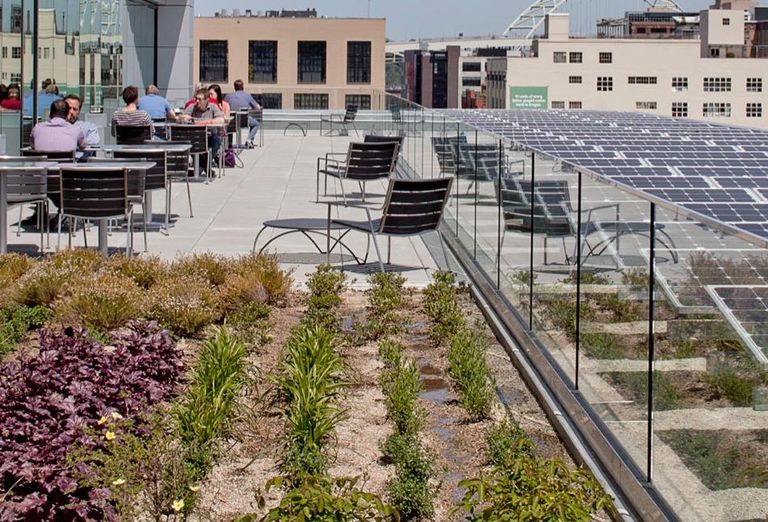
Green infrastructure is an umbrella term for anything that helps manage stormwater naturally and often includes rain gardens, green roofs, cisterns and rainwater recycling. Stormwater runoff, which often contains oil, grease and fertilizer, is among the most consistent pollutants of local waterways, according to the U.S. National Research Council. With more development in urban areas consisting of concrete and other impervious surfaces, stormwater often has no place to go other than down the local sewage channel. Without mitigation, the stormwater can overflow channels, flooding streets.
With this in mind, local governments are starting to require some kind of green infrastructure within commercial development and are creating coordinated green infrastructure networks that include public and private sites.
The Urban Land Institute, which reviewed several water management and green infrastructure systems in a recent report, found in addition to benefiting the city, green infrastructure is adding value for property owners.
“We found that green infrastructure was capable of creating value,” ULI Senior Director of Urban Resilience Katharine Burgess said. “It created an enhanced user experience, improved placemaking opportunity and improved development yield of land to be used more efficiently.”
These additional amenities, such as green roofs, parks and water features, will often lead to rental increases. A 200-unit apartment complex at 1330 Boylston in Boston garnered an additional $300 to $500/month in rent for units that overlooked the green roof. The green roof cost $113K to build and the extra rent nets $120K/year, according to the ULI report.
Savings Initiative

Partnering with private developers creates a more affordable way for cities to address green infrastructure, which studies show is more cost-effective than implementing graywater infrastructure (where sewage mains and tunnels collect and treat stormwater and sewage before discharging). New York City estimates gray strategy would cost $6.8B compared to a green strategy that would cost $5.3B to implement. Burgess said she expects stormwater management and green infrastructure to become increasingly more prominent until one day it is part of business as usual.
"Real estate developers are taking really effective approaches on requirements or desires to achieve sustainability practices,” Burgess said.
Several developers have already noticed savings in building costs since implementing various green infrastructure.
In 2016, Gerling Edlen was able to harvest rainwater at its 180K SF Meier & Frank building in Portland, Oregon, that met 93% of the building’s non-potable water needs. The company saved more money than it paid the city. Annual savings equaled 107% on the building’s total annual water cost, according to Gerling Edlen Director of Sustainability Renee Loveland. The building owner also uses the stormwater system as a marketing tool with tenants. The renovation benefited from a local green investment fund grant.
This historic building, which is LEED Platinum certified, has an underground rainwater collection tank, a 12K SF green roof, a 112-kilowatt solar array and bioswales at grade.
Retail Owners Follow The Trend
The retail center Market at Colennade in Raleigh, North Carolina, uses three cisterns and a water reuse system, bioretention swales, an efficient irrigation system and a detention basin as part of its water management system. It is so efficient that of the 30.6 inches of rainfall captured in one year, only 0.6 inches flowed out of the system, according to Regency Centers Vice President of Investments Chris Widmayer.
Among the biggest benefits of this project was its ability to partner with anchor tenant Whole Foods, which uses the cistern to help market the grocery store’s green culture, Widmayer said.
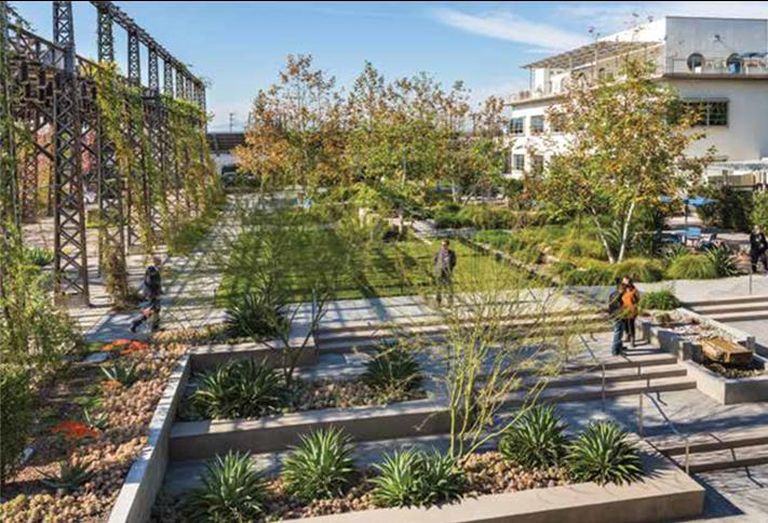
For Burbank Water and Power, the green infrastructure helped attract younger employees to the company's campus, Burgess said. The campus, which was renovated in 2000, operates on 100% recycled water, using green roofs that absorb 70% of rainwater and save the facility about $14K/year, according to ULI’s report.