Even as the retail industry has faced a steady stream of bad news in recent years, it had provided some reasons for optimism. But in one area, the worst may be yet to come.
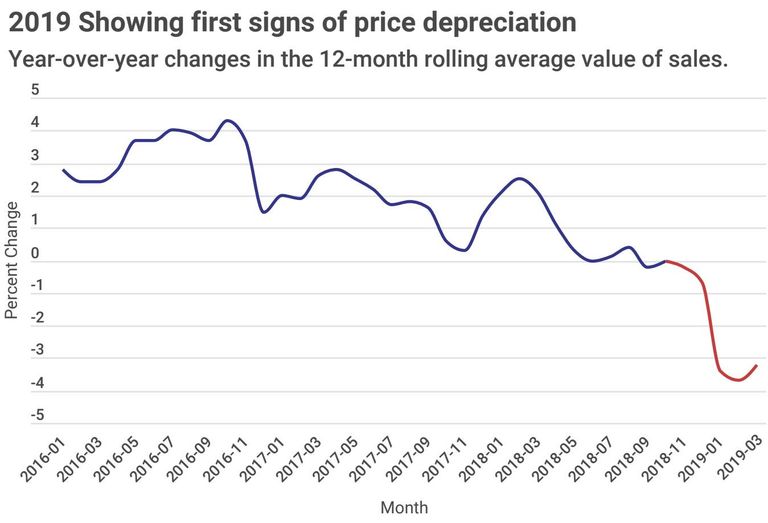
After years of slowing price appreciation for retail real estate assets, values started to decline year over year in December for the first time since at least 2015, according to a Reonomy study provided to Bisnow. By the month of February, the 1.4 million retail-only properties in Reonomy's database had declined in sales value almost 4% year over year.
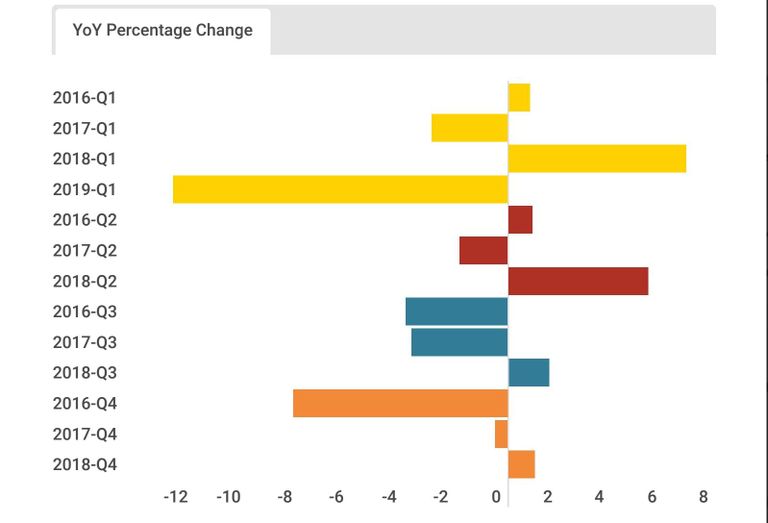
The first quarter also saw the largest year-over-year decline in sales volume since the beginning of 2016, with 12% fewer transactions than in Q1 2018. The study did not include mixed-use properties, but accounted for every type of retail-only property, from grocery-anchored shopping centers and malls to gas stations and car dealerships.
The report didn't analyze sale prices from before 2015, but Reonomy Director of Data Science and Engineering Maureen Teyssier said it wouldn't be surprising if it had been more than four years since prices depreciated year over year or traded at such a low rate.
“What this suggests to us is that retail properties for sale are becoming less liquid unless you’re willing to take a much lower price,” Teyssier said.
Investment volumes have fluctuated in the past three years, but that they would hit a nadir even as sale prices have dropped suggests that the market has not yet hit its bottom.
Seasonal trends suggest that the first quarter tends to be the weakest for retail, Teyssier said, but the quarter-to-quarter drop in both price and volume was the steepest it has been since at least 2015.
Sale price and transaction volume are two of the leading indicators for a real estate market's overall strength, so even if occupancy numbers in certain markets have remained strong, landlords have other issues to face.
Retailers and suppliers have not yet had a chance to react to the newly introduced 25% tariff on $200B worth of goods imported from China, but if it hurts the sales for those stores, their real estate will look even less appetizing to potential investors.