Unlike its chicken sandwiches, many of the 150 new restaurants Chick-fil-A will open by the end of this year aren't being cooked up on-site.
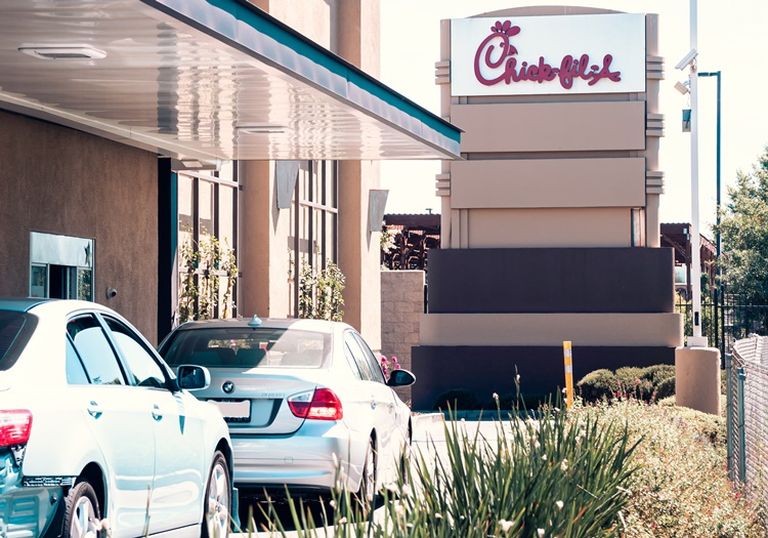
One-third of the Atlanta-based fast-food chain's new restaurants are being constructed using a prefabrication method in which some components of each building get built in a factory to be shipped and assembled, Chick-fil-A Development and Construction Manager Jeff Shaw said on a Bisnow webinar Tuesday. The shift to modular construction this year has helped Chick-fil-A double its construction productivity with shorter development schedules and better quality control, Shaw said.
“It's really been an unbelievable boost to our efficiency and reliability and predictability in the field,” Shaw said. “When you can fabricate off-site and really control that material and control that design and deliver it to the job site, [new store construction is] less affected by weather and wind and rain.”
Chick-fil-A debuted its first modular-constructed restaurant in October at Roswell Town Center, a Big Lots-anchored shopping center in the northern suburb of Atlanta. The new restaurant, which replaced an older store at the same site, was completed six weeks faster than had it been built in a traditional manner, the fast-food chain told The Atlanta Journal-Constitution. At that location, the kitchen, drive-thru and serving areas were built by Frey-Moss Structures' facility in Conyers, Georgia, the AJC reported.
Chick-fil-A, the third-largest fast-food chain in the U.S. by sales in 2019, revealed in October that it was planning to use modular construction more often as it grows, citing a number of benefits, including better cost controls, reduced construction waste and alleviating some of the pain in finding construction workers.
“Every single job site is feeling that pressure,” Shaw said. “We're trying to grow [modular] as quickly as we can.”

Shaw also cited other changes to new Chick-fil-A stores moving forward, including reducing the number of discarded bricks by 20%, using virtual platforms to communicate without having to physically visit the site and using automated drive-thru windows. Those are among the changes that are creating better experiences for employees and customers, he said.
“We increased the size of our canopy. That's not going to sell more sandwiches,” Shaw said. “We're doing that to have a better customer experience, a better team-member experience. Anybody who pulls in the parking lot, you want to have a positive influence on them.”
AHS Residential Director of Asset Management Alex Ballina said on the webinar that modular construction also benefits corporate branding through consistent design. Ballina said AHS has a critical need to control construction costs since its apartment communities are geared toward middle-income households.
“I don't think you lose much because you can still do a lot on the facade,” Ballina said. “That modular design also does bring a uniqueness because it does help you preserve a brand.”
Shaw added that to the average customer, a prefabricated Chick-fil-A location won't appear different from one built from the ground-up on-site, dispelling critique misconception that modular construction — which is prevalent in China — would appear utilitarian.
“Everybody thinks in their mind it's an either-or. Either I build a snowflake and it's custom and it's beautiful, or I get this modular box and it's going to be ugly,” he said. “We have been able to do it in such a way I would challenge anybody to be able to go to any of those locations and look at them side by side; you should not be able to tell a difference.”