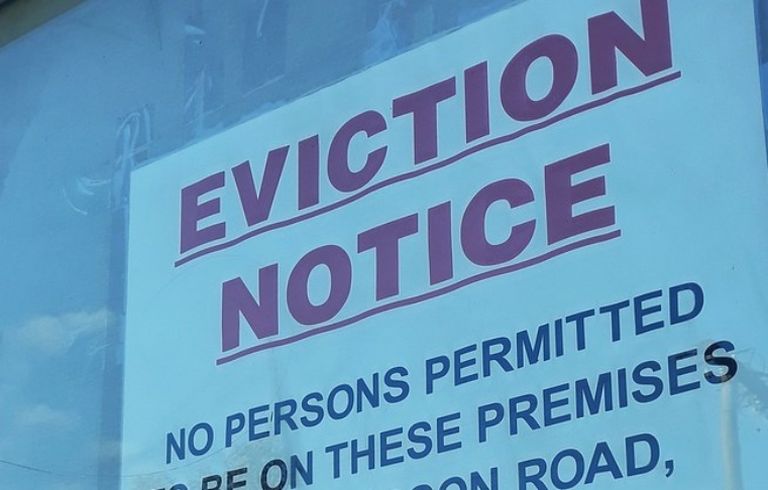
Many state residential eviction moratoriums enacted to help renters crushed by the coronavirus fallout expire this summer, some in only a week or two, raising the possibility of a mass of evictions nationwide.
“We sort of expect this to be more of a renter crisis than a homeownership crisis,” Elora Lee Raymond, an assistant professor at Georgia Tech who focuses on affordable housing and real estate, told the New York Times.
That is because renters have been more likely to lose their jobs than homeowners their houses during the pandemic.
Some state moratoriums on evictions, or in some cases, judicial actions postponing eviction proceedings, have already expired in Arkansas, Montana, North Dakota, Oklahoma and Utah. One state, South Dakota, never had a moratorium or judicial relief at all.
Many other state moratoriums are set to expire in late May or early June, including some in populous states such as Colorado, Florida, Indiana, Virginia and Washington state, though each of those states have extended their deadlines at one time or another, and may do so again.
Other expiration dates fall in July or August (such as New York, on Aug. 20), and a number of states have specified that their moratoriums are for the duration of the state of emergency, or a specified period (such as 30 days) after the emergency ends. In this class of states are Illinois, Minnesota and New Jersey.
Many of the millions of jobs lost since March are among lower-wage workers, who tend to be renters. According to the Federal Reserve, 39% of adults working in February with a household income below $40K/year suffered a job loss in March, while another 6% had their hours cut or took unpaid leave.
According to the Bureau of Labor Statistics data released on Thursday, there have been nearly 41 million new jobless claims since mid-March, when the economy began contracting.
Separately, the Commerce Department reported on Thursday that U.S. gross domestic product contracted an at annualized rate of 5% during the first quarter of 2020. The second quarter is forecast to be a much stronger contraction, perhaps as much as an annualized 40%, Kiplinger reports.
The CARES Act payment and beefed up unemployment insurance have helped tide renters over the last few months, but that support isn't meant to be indefinite.
As of May 20, 90.8% of apartment households made a full or partial rent payment, according to the National Multifamily Housing Council’s Rent Payment Tracker. That is a 2.2 percentage point drop compared with a year ago, and up from the 89.2% who had paid as of April 20 this year.
Still, that number reflects only part of the U.S. renter population, those who live in 11.4 million units of professionally managed apartments. All together, about 43 million U.S. households are renters.