There are big opportunities in the smaller life sciences research space.
Growing demand for leases smaller than 10K SF, shared research space that can accommodate a multiplying number of biologics, and flexible real estate options to help startups preserve capital have put pressure on lab operators to evolve. Broadly speaking, just 15 years ago, the industry relied on three types of treatments: enzymes, protein therapeutics and monoclonal antibodies. With the advent of cell and gene therapy and mRNA technology, there are now 10 treatments — and more room to grow.
“Historically, when you change to another therapeutic modality, you actually have to completely rebuild your lab environment, because a different type of infrastructure is required,” said Brian Taylor, interim CEO of Boston-based SmartLabs, which provides flexible lab space in Boston and San Francisco.
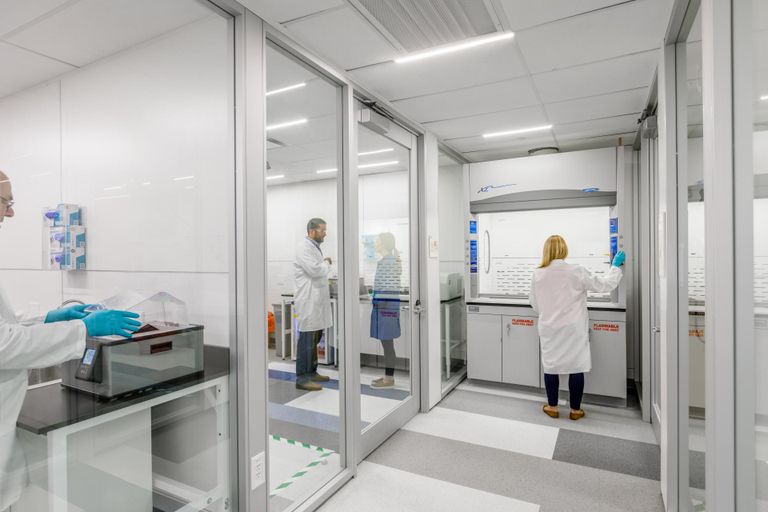
The multiplication of technologies is creating an opportunity for landlords and space providers that can rapidly shift their lab offerings to meet evolving technology. SmartLabs, which announced a $48M Series C funding round, says that by providing smaller, modular research space that it regularly updates with new machines and technology, it offers a space solution for startups and Big Pharma.
The new funding suggests a positive sign about investment in lab space, Newmark Head of National Life Science Research Elizabeth Berthelette said.
“There's still capital in the current environment that wants to invest in the real estate that supports this industry,” she said.
Rising demand for smaller biomanufacturing sites offers another opportunity for smaller lab developments. The development process for new cell and gene therapy startups requires frequent testing and closer manufacturing and research collaboration.
Companies realized the time, cost and complexity of developing large-scale biomanufacturing facilities was too much for startups and developing companies to bear, said Audrey Greenberg, co-founder of the Center for Breakthrough Medicines. It makes sense to look at smaller biomanufacturing spaces that became easier to locate near the urban areas where research and development space proliferated.
With the expected flood of new lab supply coming to the market, Taylor said contractors and developers will try to fit a new generation of technology into spaces planned months or years ago — a workable but far from ideal situation. It simply won’t be as effective as more up-to-date offerings.
“I would kind of think about this like a car,” Taylor said. “I'm not going to take a Pinto and go try to run the Indianapolis 500. You’ve got to make sure you have the right car for what you need to do.”
In addition to those newer technologies, lab tenants want spaces that are more modular and adaptable to adjust to their fast-changing needs, as well as ergonomic and more eco-friendly, Greenberg said. Demand will also increase for spaces built to utilize artificial intelligence and automation to make discoveries or run trials, and running cables and wires behind walls after development can become expensive.
Much of the desire for better, smaller lab spaces stems from simple economics. Startups, focused on capital preservation amid a more difficult fundraising environment, seek to stay in smaller, less expensive spaces longer than they would have in past years.
“With companies looking to preserve capital instead of expanding rapidly, there’s greater need for small spaces,” Berthelette said.
But renting this smaller, furnished space isn’t just for startups. Big Pharma has also been a consistent SmartLabs client, Taylor said, fueled in part by a recent rise in M&A activity. Larger firms can integrate new acquisitions more quickly via smaller, temporary space, testing out new bets or scaling up therapeutics trials without the time and cost of more permanent capital expenditure investments. It also keeps research in-house, not relying on outsourcing via contract research organizations.
“If you need flexible laboratory environments, you don't actually have to spend $100M to build your own space,” Taylor said. “You can work in our spaces for a year or two years, make progress and rethink what you want to do next.”