Beleaguered coworking specialist WeWork has obtained $1.1B in new financing from SoftBank Group, which is already the company's majority owner. That comes on top of the $10B or so the Japanese conglomerate has invested in WeWork in recent years.
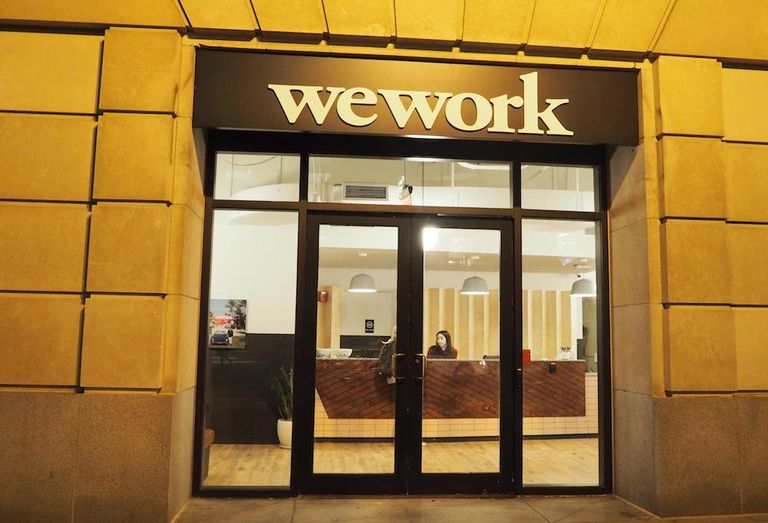
WeWork's revenue for Q2 2020 came in at $882M, a 9% increase from a year earlier, according to a memo by Chief Financial Officer Kimberly Ross that Reuters obtained. In Q1, WeWork took in revenue of $1.1B, with a cash burn of $482M for the quarter. The second-quarter cash burn was $671M.
The financing is structured as senior secured debt, the Financial Times reports, citing anonymous sources. The coworking giant has a year to access the financing but hasn't yet.
Only a year ago, in mid-August 2019 and under previous management, WeWork filed paperwork with the Securities and Exchange Commission as an important step toward an initial public offering.
Investors cast a cold eye on the prospect of providing WeWork with a capital infusion since the filing revealed plans for aggressive expansion in the face of billions in persistent losses and little in the way of plans to address the hemorrhaging of money.
The IPO was canceled, and WeWork's charismatic former CEO was shown the door as the company stumbled on until the coronavirus pandemic further slapped its business model.
Since the beginning of its troubles, WeWork has taken a number of cost-cutting steps, including pulling out of large lease deals, such as 115K SF at 149 Madison Ave. in Manhattan, considering an end to its WeLive subsidiary, selling various noncore businesses and laying off employees.
Among other challenges for WeWork is a flattened demand for coworking space, as would-be renters remain leery of shared space during the pandemic. In New York, for instance, WeWork has about 1.9M SF that is available or about to be, or roughly 20% of its total square footage, the Daily Beat reports. That compares with a Manhattan office availability rate of around 12%.
Despite the current turmoil in the shared office space business, some observers still predict growth for the model over a longer haul. In July, JLL posited that the rapid growth of the shared-space industry during the 2010s has been only temporarily slowed.
Diminished demand will prove transitory, JLL predicted. By 2030, according to the company, some 30% of all office space will be leased in a flexible format.
"Although freelancers are more likely to shed coworking space as the COVID-19 outbreak stalls business, 67% of CRE decision makers are increasing workplace mobility programs and incorporating flexible space as a central element of their agile work strategies," according to the JLL report.