As head of Kaiser Permanente’s real estate division, Ethan Sullivan receives phone calls on a daily basis from developers, landowners and retail strip owners about wanting a Kaiser medical facility to anchor their properties.
But before those anxious owners get too excited, Sullivan immediately lets it be known that bringing in a Kaiser Permanente medical office or any kind of medical facility as a cornerstone of a retail strip or shopping mall is a serious commitment.
“When we make a decision to go somewhere, it is a lifetime decision,” said Sullivan, who serves as the executive director of real estate, national facilities services at Kaiser Foundation Health Plan.
“We are making a commitment to that community to be in that location,” he said.
Much has been made about healthcare being the new retail that could eventually replace many of the big-box stores that have been struggling and closing. Trends influencing healthcare facilities will be discussed at Bisnow's National Healthcare West event on June 7.
The U.S. healthcare industry is a $3.5 trillion business, said JLL Managing Director of Healthcare Solutions Chad Pinnell.
In 10 years, that number is expected to grow to $6 trillion, Pinnell said. He said the healthcare industry has moved toward preventive care, which can mean more visits to the doctor's office.
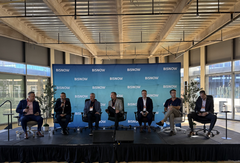
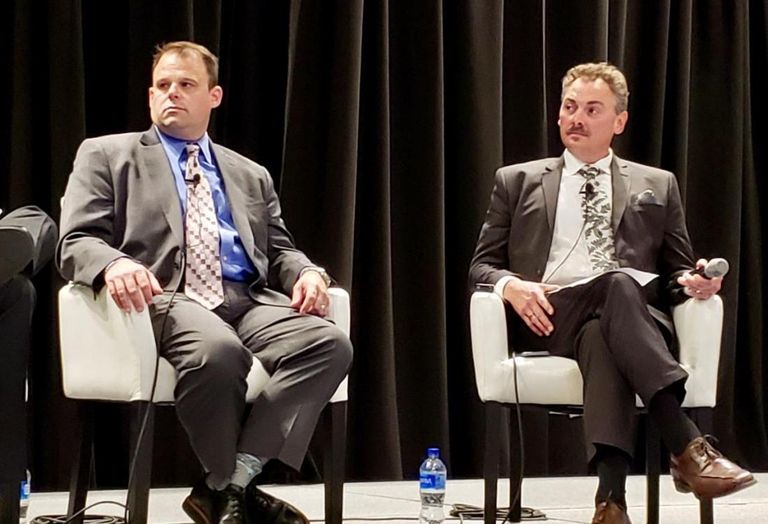
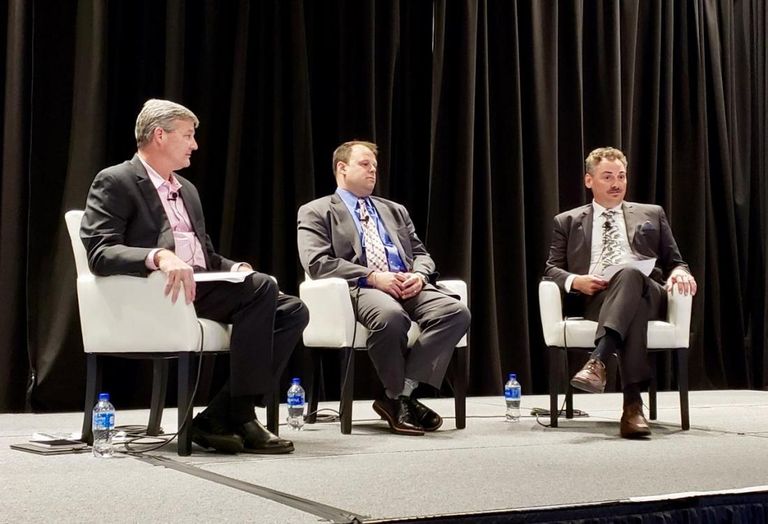
Pinnell and Sullivan were part of a panel at the International Council of Shopping Centers' RECon convention last week.
Over the past several years, there have been cases of big-box stores closing and being replaced with medical facilities. In 2010, when Blockbuster went out of business, Johns Hopkins Medical Management Corp. and Patient First opened four urgent care facilities in Maryland at locations the video store once occupied.
In New York, a Mount Sinai Urgent Care facility replaced a closed McDonald’s.
“They are a bigger industry than retail,” Pinnell said. “They touch more people. There are 300 million people in the U.S. and they all have healthcare needs.”
Pinnell said the biggest challenge healthcare providers have is distribution. Many networks are scattered, he said.
“In the next five to 10 years, what you are going to see are partnerships with retail centers and healthcare companies,” he said.
But for Kaiser Permanente, partnering with a landowner or developer to build a medical facility is not as easy as it seems, Sullivan said.
With 12 million members and rising, Kaiser Permanente operates a 71M SF real estate portfolio that includes nearly 40 hospitals and 700 medical facilities across eight states. The company owns 80% of its real estate and almost never sells, he said.
Sullivan said the healthcare company has plans to open 20 to 25 more medical facilities, averaging about 50K to 60K SF, within the next two years.
When it comes to choosing a site, Kaiser Permanente is very particular about the location.
He said much like retailers the healthcare company looks for areas where there is a heavy concentration of its members. Kaiser also looks at drive time — how long it is going to take members to get there, the parking situation and what retail stores are in that development or nearby.
“We love visibility,” Sullivan said. “We want people to be able to see us from the freeway, the corner, so our members know where we are in this town.”
Other challenges include getting city approvals and getting the right design for the facility. The average lease the company signs is for 10 years, but Kaiser builds facilities that could last for 50 to 100 years.
“My first question [to developers and landowners] is: Have you actually ever built a medical office building before?” he said. “It’s incredibly hard if you have never done it before. It is a significant investment.”
He said building a medical facility is not like developing a Toys R Us.
“You need to have an understanding of the right mechanical systems, know the intricacies of the machines we use and the lab usage,” he said, adding that the company's design guideline is 132 pages long.
The type of services the medical facility offers will also dictate Kaiser's demands.
“Primary care or specialty care or oncology all have a different set of walk-throughs with the city and design,” he said.
But if Kaiser Permanente does choose a property owner’s site, it can be a fruitful relationship.
Kaiser Permanente is a multibillion-dollar company and it is a good credit tenant. Having a medical facility anchor a place could drive people into the retail property, benefiting the surrounding businesses, Sullivan said.
“It’s a partnership. It’s a collaboration,” he said. “You are going to help bring our vision to life but you’re going to know early on what you are getting into.”
Find out more about the future of healthcare offices at Bisnow's National Healthcare West event on June 7 at JW Marriott/LA Live.