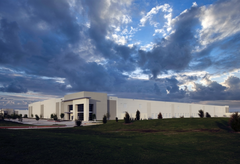
Industrial developers in Charlotte are vying for power.
Small-bay industrial projects and some build-to-suit sites in the region are competing for energy against data centers, large advanced manufacturers and other big power users, panelists said at Bisnow’s Charlotte State of the Market event. But demand is surpassing availability.
“There’s a lot of users that need smaller buildings that still have an amazing power demand,” Kirk Matthews, vice president for Frampton Construction, said at the event, held at The Westin Charlotte. “We’re seeing small product … 100K [SF], 150K [SF] that still need 10 megawatts, and they’re not data centers.”
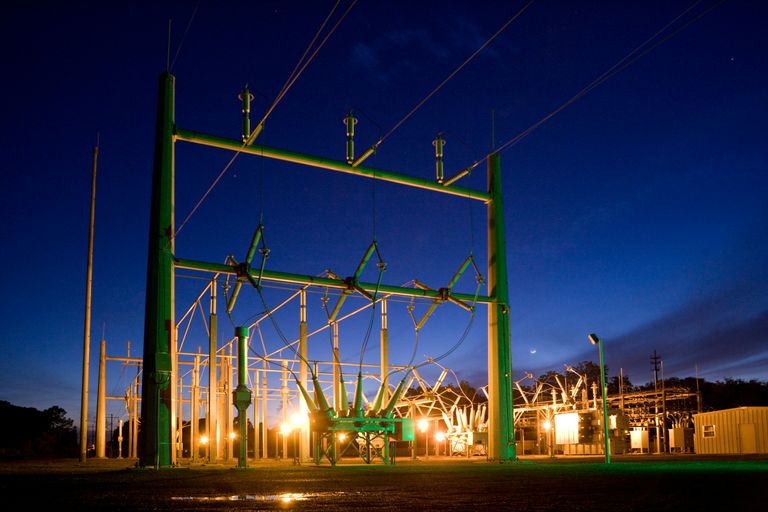
Duke Energy, the primary power supplier in the Carolinas, predicted last year that through 2040, electricity demand across its two Carolina systems would rise 16% to nearly 60%, according to a report from the North Carolina Energy Policy Task Force.
The increased demand stems from a surge in population growth in Charlotte, which added more than 20,000 people last year and is nearing 1 million residents. The region’s energy grid is aging but is taking on additional load growth as the data center boom continues, Axios reported.
That demand could delay or cancel projects as regulators weigh how to balance energy needs, panelists said.
“Our electrical grid is nowhere near what it needs to be,” Alan Lewis, managing partner at The Keith Corp., said at the Sept. 30 event.

The rise in data center development across the U.S. is driving electricity demand, which is expected to more than double from 31 gigawatts in 2025 to 66 GW by 2027, according to Goldman Sachs Commodities Research. Access to power is becoming a key driver of where companies decide to build capital-intensive real estate projects in the U.S.
Charlotte's industrial market faces other hurdles, including skyrocketing costs of materials like steel and concrete. But panelists cited power constraints as the most imminent problem.
“It's everything,” Lewis said. “I mean, No. 1 on the list almost every single time is, ‘How much power do you have?’”
Data Center Construction Is 'A Big Drain'
Charlotte’s industrial market is experiencing strong leasing activity and stable rent growth, according to a CBRE report from the third quarter. The metro “remains attractive for industrial expansion,” with leasing activity at 3.2M SF, up 55.6% from the same period in 2025. Vacancy in the third quarter was 7.1%, down from 7.9% the previous year.
But power availability is a primary challenge for the growing market.
A single hyperscale data center facility can consume 20 MW to more than 100 MW of power, equal to powering 15,000 to 75,000 homes, according to IAEI Magazine. More than 100 data centers are operational across North Carolina, with around 40 of them in Charlotte, according to Data Center Map.
Last month, Charlotte extended its 150-day moratorium on data center development by 11 months to give the city more time to develop policies and regulations around the digital infrastructure. Key concerns among data center opponents include power demands and rising utility costs.
But data centers aren’t the only developments consuming energy from Charlotte’s grid.
“The massive amount of data center construction, and all the reshoring and direct investment here in new industrial facilities, is a big drain,” Lewis said.
He added that the mass conversion to electric vehicles in the area is putting even more “stress on the system.”
At least one planned industrial project in the area was halted over electrical demands. In September, North Carolina regulators rejected Duke Energy’s proposal to build a $584M natural gas power plant near Hamlet that would generate about 255 MW by 2030, citing concerns over how residents would be protected from the project’s costs.
“There are real challenges in accommodating the amount of demand for these larger, big investment-type projects that want to be in the Carolinas,” said Jordan Quinn, a partner at Trinity Capital Advisors who leads the firm’s industrial platform.
Other industrial projects in the area are underway. Red Bull broke ground on a new $1.7B facility in Concord in September 2025, and Eli Lilly announced a $77M expansion to its manufacturing campus earlier this year.
Allocating Megawatts

Charlotte’s small-bay development pipeline remains active, with approximately 1.5M SF expected to deliver this year and another 2.2M SF under construction, according to a Matthews report.
These properties typically have an easier time securing power than larger sites due to their size limitations. But because of the increased energy demand, “the requirements for smaller manufacturers have just gotten more intense,” Lewis said.
“Every park we have, every site we have, we try to get the best information we can on how much power we have available,” he said.
When a developer plans to build out multiple buildings within an industrial park, it can be difficult to divide up megawatts.
“You often find yourself saying, ‘Well, gosh, if I do this deal, I'm going to lose two-thirds of my power that I have for everything else,’” he said.
Sometimes a site will end up requiring more power than developers initially predicted.
In a 50K SF deal, a tenant may need 10K SF of office space for 50 people, Quinn said. Air-conditioning that space to bring those people in could require 10,000 amps of power.
“It's just this incredible challenge as an owner of industrial real estate in the market to accommodate not only the tenants' needs but to get them in quickly, when [tenants] actually need the space,” Quinn said. “It's very, very, very tough.”
Duke Energy executives are expecting a power surge next year, as 5.2 gigawatts for data centers will hit the grid beginning in the second half of 2027, according to The Charlotte Ledger.
Some panelists said it will be up to Duke Energy to prioritize which companies get the power and how to distribute it.
“Obviously, policy and legislation has a hand in that, and public outcry has a hand in that,” said Jordan Myller, director of leasing at Leon Industrial. “But all of those things are going to affect the overall availability of what we're able to offer.”