As valuations for office buildings across the country continue to decline, new assessment data from Boston shows the largest buildings collectively losing hundreds of millions of dollars in value.
This week, residential and commercial properties in the city received preliminary property assessments for the fiscal year 2025, with finalized figures set to come out in the upcoming weeks.
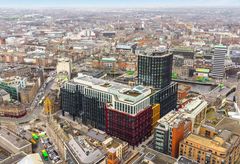
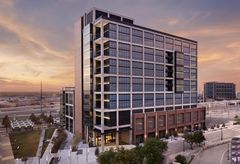
The 20 largest office towers in Boston were assessed at a combined $450M below their prior values, according to an analysis of the FY2025 data from the Boston Business Journal. The combined asset value of these office buildings is set to drop by 4.1%.
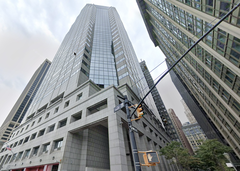
Notable buildings that saw a drop in value include BXP's 20 Clarendon St., which had its assessed value drop 6.3% annually to $860.5M. It has fallen 11.3% in the last two years.
The largest drop seen was 245 Summer St., which had its assessment fall 9.6% from $419.9M in FY24 to $379.4M. The next largest was 100 Summer St., which saw a 7.6% drop from $529M to $488.6M.
Only one of the 20 largest office buildings saw its value increase: National Real Estate Advisors and Carr Properties' One Congress. The building is fully leased to tenants, including State Street Corp. and software company Intersystems.
However, the assessed value is different from what office buildings could trade for on the market.
All of these buildings haven't traded hands in the last couple of years, the BBJ reported. However, smaller deals have traded at discounts significantly steeper than the drops in assessed values.
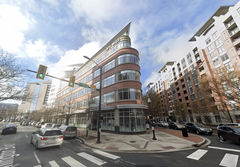
In October 2023, a downtown office building at 33-41 West St. sold for 74% less than what the previous owner paid in 2016. Synergy acquired 101 Arch St. in March for $78M, down from its 2005 sale of $121.7M.
With these price drops, there have been concerns surrounding the amount of tax revenue the city can generate from these buildings. Commercial property tax revenue makes up roughly one-third of Boston's budget.
A Tufts report from February projected that Boston's office values would fall 30% by 2029, leading the city to lose $1.5B in revenues.
Mayor Michelle Wu has sought to increase the commercial property tax rate to counteract these losses in value. She made a compromise with Boston business leaders last week to increase the tax burden for commercial property owners to 181.5% of that of residential property owners, down from the 200% she had previously proposed.