With cities rushing to meet today’s Amazon HQ2 bid deadline, New England leaders are showing they will not take a regional approach in landing the $5B headquarters. Instead, some are using their bid to insult neighboring competition.
“Make the predictable choice. Choose Boston and next year when you leave your tiny $4,000-a-month apartment only to sit in 2 hours of traffic trying to make your way to an overburdened airport, you’ll be wishing you were in New Hampshire,” New Hampshire’s Amazon HQ2 bid document, released Wednesday, reads.
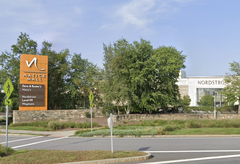
The Granite State’s bid, which leads with the tagline “All The Benefits Of Boston Without All The Headaches,” spends a lot of ink lambasting its neighbor to the south, widely seen as a leading contender to land the mammoth office project. The state is pushing the 603-acre Woodmont Commons in Londonderry as the ideal site for HQ2 while still heckling Massachusetts for what it sees as business-unfriendly development conditions.
“If Amazon builds its new facility in Massachusetts, every brick, board, drywall, server, and desk would be subject to the 6.25% sales and use tax. If Amazon plans to spend $5B on these capital expenditures, it would owe over $300M in sales and use tax,” the bid reads. “In contrast, if Amazon selects the New Hampshire campus, Amazon will owe nothing on these capital expenditures.”
The criticism was not limited to tax structures and congestion. Along with chiding Boston for its crowded trains, New Hampshire reminded Amazon of how the city fumbled the last time it was awarded a mammoth development opportunity.
“It has grown beyond capacity to the point where Boston actually had to withdraw from Olympic consideration because of the citizen’s fury over current untenable traffic congestion,” the bid reads.
Boston Mayor Martin Walsh decided to keep the fight a one-sided one.

“I don’t want to have Amazon come to Boston by tearing down another city,” Walsh said to Boston.com. “That’s not my style.”
Instead, the Walsh administration’s style is fighting to bring Amazon to East Boston. The mayor was on Boston radio station WBUR Wednesday and said the city’s bid is focused around one location in Eastie. Although he did not specify Suffolk Downs, the soon-to-close horse track is widely seen as the best tract of open land within city limits for HQ2, the Boston Globe reports.
HYM Investment Group bought the 161-acre Suffolk Downs for $155M in May and originally envisioned a mixed-use development similar to Somerville’s Assembly Row with housing, retail, restaurants and eventually offices. When Amazon issued its request for proposals for the second headquarters, offices suddenly led the conversation around the track.
Massachusetts House Speaker Robert DeLeo has publicly voiced support for the site, and, while mainly quiet on the bid, HYM Managing Director and founding partner Tom O’Brien said at a September Revere council meeting his team was going to fight for HQ2.