Boston, now America’s No. 3 most walkable city, may soon be No. 1 (the record industry calls that No. 3 with a bullet), attracting a rapidly growing share of development and capital. The hub’s riding a sea change as big as the ‘50s rise of suburbs: the predominance of walkable urban places and the end of sprawl, according to a study released yesterday.
Offices in walkable urban places (WalkUPs) command 74% more rent than the US market as a whole (these boots are made for rentin'), says Chris Leinberger, director of the George Washington University Center for Real Estate and Urban Analysis and prez of Locus, a developer affiliate of Smart Growth America, which did the study. Of 558 walkable places in 30 major metro areas, DC is the most successful, New York is No. 2 and Boston No. 3. But in a few years, Boston is forecast to take the top spot. Why? It has a well-educated, young workforce; high GDP growth per capita and public policy—cumbersome though it may be sometimes—that focuses on urban planning (aka “place making”).
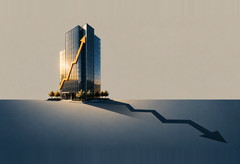
In Boston, now a young person’s city, there’s strong demand for WalkUPs, where office rents are nearly triple those in suburban drivable locations—and the gap is quickly widening. Developers and public officials are responding; walkable offices are leasing 20% faster than the market as a whole, Chris tells Bisnow. In the future, more than 80% of commercial development will target 10% of the land. (It'll be the most intense game of musical chairs ever played.) Such urban activity will boost growth in the overall US economy beyond the lackluster 2% annual rise in GDP, he adds.
Some prime locations: the South End, Back Bay, Downtown, the Seaport, Kendall Square, of course. But also think Somerville, the "next Cambridge", Chris says. Mayor John Curtatone is “phenomenal,” he says, by putting in place the zoning, rapid transit and other infrastructure. Assembly Row, Federal Realty’s retail, office, and housing development, is the first of many WalkUPs to come. Union Square is next. All told, they’ll shift Somerville’s tax base toward commercial real estate rather than residential, Chris says.
Arlington, Va., with spots like the Clarendon neighborhood (above), is the US’ best example of an urbanizing suburb, Chris says. The 10% of the land there that’s urbanized generates 55% of the tax base. In the DC metro, 80% of the $15B/year in office rent is generated by buildings in walkable places. (Including the HQ of a certain real estate e-newsletter.) Twenty years ago, 70% of the rent came from the car-dependent ’burbs. With higher net income, cap rates for WalkUP properties average 4% to 5%, and for suburban assets they’re 6% to 8%, Chris tells us. The problem that accompanies this premium: It’s extremely difficult to produce affordable housing unless there’s a public/private partnership.