
Investors and operators across the build-to-rent sector were surprised when President Donald Trump posted on his social media platform that he was “immediately taking steps to ban large institutional investors from buying more single-family homes.”
The characteristically thin-on-details post on Truth Social on Jan. 7 set off two weeks of handwringing among single-family rental investors and build-to-rent developers.
The two sides of the rental housing space got different treatment two weeks later when the developer-turned-president signed an executive order targeting large corporate owners while creating an exception for BTR projects.
“The fact that they put a carve-out for BTR in the EO tells me that they understand that the rental market is very important to the country,” said Chris Funk, CEO of build-to-rent developer Southern Impression Homes. “So, you know, I sleep pretty well at night after I read the executive order.”
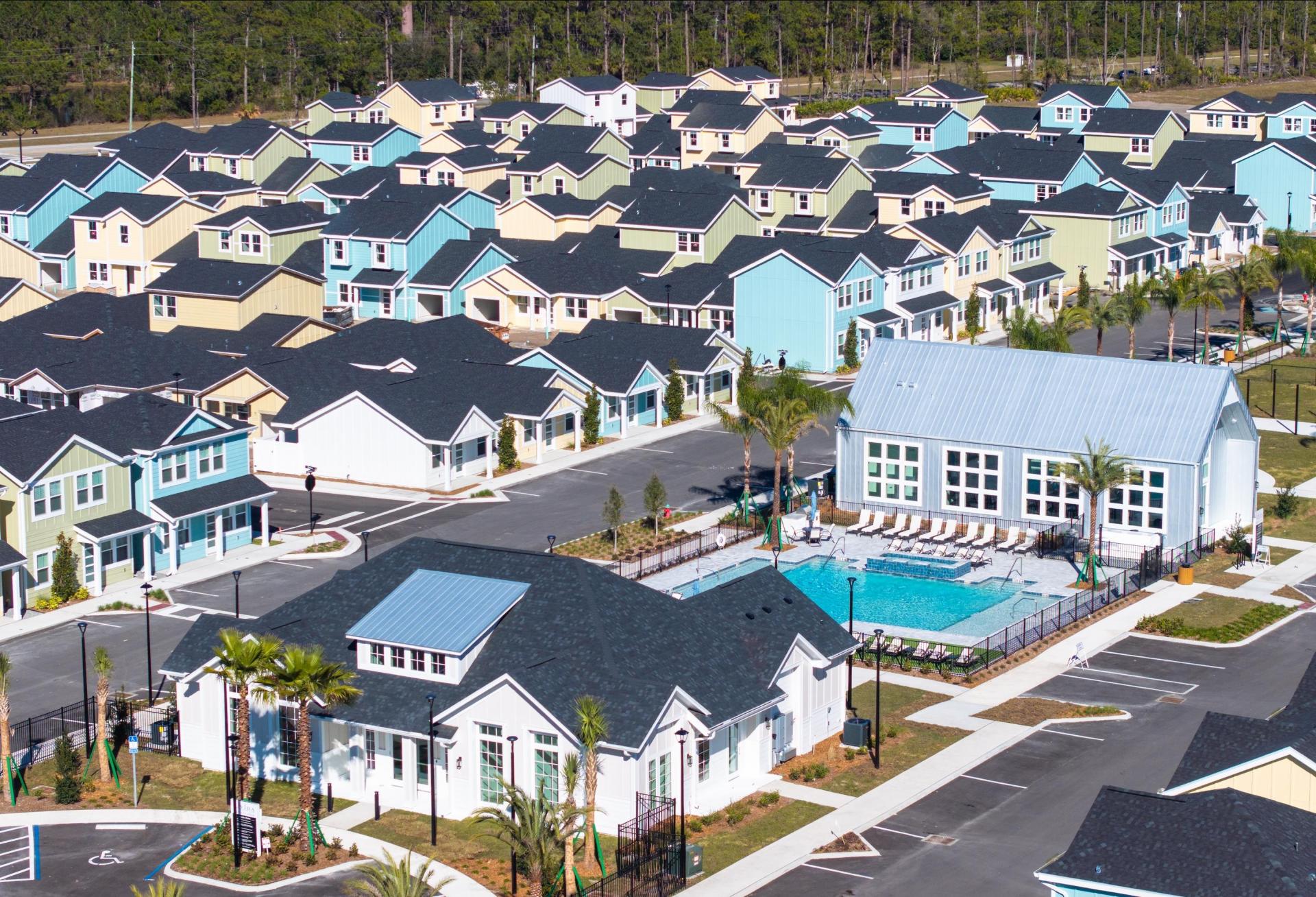
Questions around the new policy's implementation and enforcement remain unanswered, and private equity investors are likely to face new headwinds. But the exemption for BTR projects has given operators in that space the confidence to move ahead on new projects even as the White House is reportedly pressuring Congress to turn the executive order into law.
Southern Impression Homes, a full-service BTR firm and merchant developer that builds communities in partnership with other operators or for sale, officially rolled out seven new projects across Florida since the executive order came out, including several that are already under construction.
Trilogy Investment Co.’s BTR business also recently began construction on a 73-unit project in Asheville, North Carolina, as part of a joint venture with Korean fund manager Provest Partners.
Boca Raton, Florida-based Mill Creek Residential announced on Jan. 28 it had put shovels in the ground on 162 BTR homes in the Denver area. Ark Homes For Rent celebrated the opening of a 75-unit community in Tampa, Florida, earlier this month.
Funk expects all 1,274 rental homes that his firm is building will fall under the exemption and that operations won't be significantly impacted. The executive order gave the relevant federal agencies until Feb. 19 to come up with definitions for terms like “single-family home” and “institutional investors” and another 30 days after that before enforcement kicks in.
“With the BTR carve-out mentioned in the deal, it made me think that they're probably more interested in targeting the groups that are going after scattered homes,” Funk said.
THE AMERICAN DREAM IS BACK
— The White House (@WhiteHouse) January 9, 2026
President Trump has taken a major step in restoring the American Dream by banning large institutional investors from buying more single-family homes. pic.twitter.com/vHaF2AQ2T9
Large operators of single-family rentals long ago shifted away from buying existing assets spread across a wide geography. After the 2007 Global Financial Crisis, it made economic sense to turn distressed housing into rentals, but it’s been cheaper and easier to underwrite new construction for around a decade, Funk said.
“We switched into build-to-rent from buying the foreclosed homes because the returns ultimately are better, and the product is ultimately better for the tenant,” he said.
The sector has exploded in popularity as home values remain out of reach for many Americans and analysts suggest it is cheaper to rent in today’s market. More than 71,000 BTR homes were built in the 12 months that ended in June, compared to the barely 4,000 BTR homes that came online in 2014.
The executive order specifically calls on government-sponsored enterprises such as Fannie Mae and Freddie Mac to refrain from insuring, guaranteeing or securitizing the purchase of a single-family home to a large institutional investor.
It explicitly promises to create carve-outs for BTR developers, saying the rules around financing will “include appropriate, narrowly tailored exceptions for build-to-rent properties that are planned, permitted, financed, and constructed as rental communities.”
Analysts for JPMorgan Chase called the executive order a “green light to continue” for the BTR sector in a note to clients the day after it was released.
The rulemaking process would involve administration officials with “reasonable views” around competition in the housing market, and the executive order could be interpreted as still permitting institutional home purchases “so long as individuals have a shot at owning the home and the government is not involved in the financing or process of a sale to large investors,” the analysts wrote.
Still, the executive order is expected to impact SFR operations and curtail some private equity purchases of existing homes, a practice that critics say drives up housing costs.
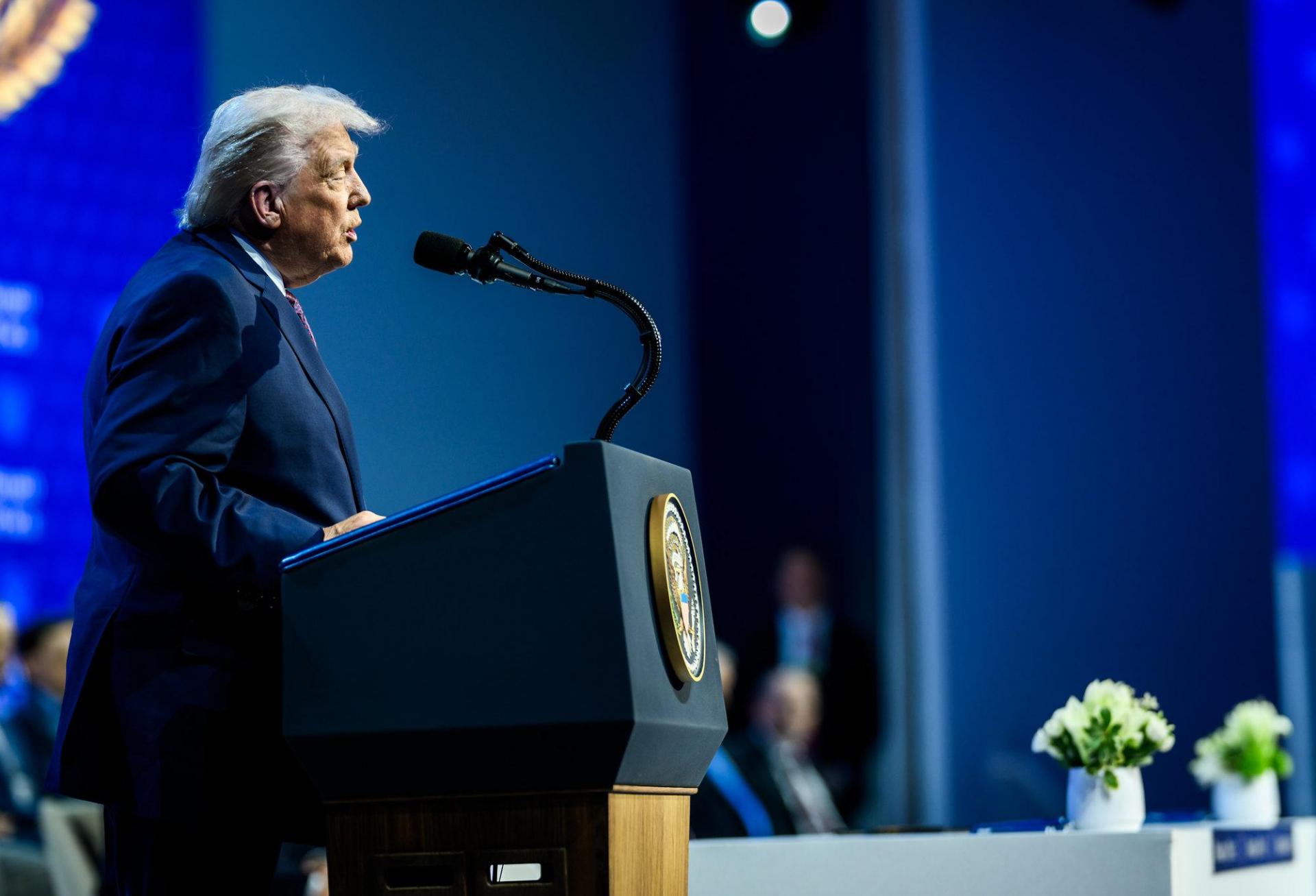
Trump appeared at the World Economic Forum in Davos, Switzerland, the day after releasing the order and told the gathered global elite it was “just not fair to the public” that institutional investors were buying single-family homes and promised that “America will not become a nation of renters.”
But the reach of an institutional SFR ban remains unclear. Just 2% of all investor-owned homes are held by a firm with at least 1,000 properties, and small investors with less than 10 properties make up more than 90% of owners, according to CNBC.
“I would be a lot more concerned if I was one of these groups that owns 30,000 houses, that goes and buys houses on the MLS every day,” Funk said, referencing the popular multiple listing service that real estate agents use to share listings. “That seems like what is ultimately being looked at.”
Homebuilders may stand to lose the most balance sheet flexibility as a result of the executive order. The pandemic-era construction boom has led to an oversupply in some markets, and builders have been tapping BTR operators to buy stock in bulk at discounted prices, Funk said.
The executive order could close that exit strategy by eliminating the corporate pool of buyers. That might help the White House bring down home prices in the near term, but Funk suspects the savings would be fleeting. Instead, the ban could hold back new supply from coming online.
“Ultimately, they're just going to regulate how many homes they build because they're not going to build homes at a loss,” he said.
)
)
)
)
)
)
)
)
)
)
)
)