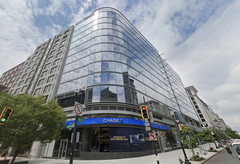
An executive order President Donald Trump signed Thursday is set to usher in a new era of older aesthetics in federal buildings.
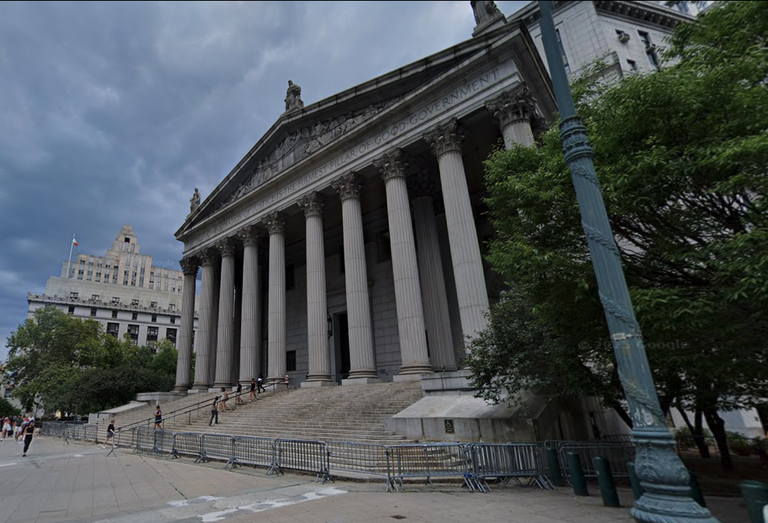
The order lays out a plan for federal buildings — from courthouses to agency offices — to move away from modernist and brutalist designs in favor of classical architectural styles like Greco-Roman, art deco, beaux-arts and Georgian.
The order, called Making Federal Architecture Beautiful Again, appoints a senior adviser to develop standards for the General Services Administration.
The mandate will likely result in a slew of visual changes for federal buildings set to undergo significant maintenance work or upgrades, but the requirements could tack on additional costs to construction projects — an approach that stands in contrast to Trump's stated goals of cutting government spending.
In addition to federal courthouses and agency headquarters, the executive order covers all federal public buildings in the National Capital Region, spanning parts of Virginia and Maryland as well as Washington, D.C., where the administration has been eyeing major redevelopments of underutilized federal offices.
The order also applies to any public federal buildings where the designing, building and finishing are projected to cost $50M or more. Some of the projects that may be affected include designs for courthouses in Hartford, Connecticut, and Chattanooga, Tennessee, The New York Times reported.
While the best-known federal buildings like the Capitol and Supreme Court have classical architecture, the brutalist and modernist styles were favored by the GSA for new buildings and renovation projects in the postwar period. Some of the largest federal office buildings in D.C. have brutalist architecture, such as the Department of Housing and Urban Development headquarters, which the government is looking to offload.
Now, the GSA is tasked with ensuring that architectural firms, designers and companies applying for government contracts to work on federal public buildings will also have to list their experiences with classical architecture design styles.
To meet those standards, the mandate orders the agency to appoint a senior adviser for architectural design specializing in classical design to advise the agency as it creates standards, according to the executive order. The senior adviser will also provide guidance during design evaluations.
The executive order also makes following classical architectural styles part of individual performance plans for employees at the GSA's Public Buildings Service reporting to the chief architect and involved in selecting building designs.
The agency is also tasked with making sure that any architects it employs to review, assist or approve architects or designs for federal buildings have similar specialized experience to the chief architect.
Trump last month appointed three members to the National Capital Planning Commission, a body that oversees development on federal land across the D.C. region.
Meanwhile, construction prices have continued lurching upward since the pandemic and are showing no sign of slowing down, Construction Dive reported in March.
By the end of June, prices were even higher, according to the Associated General Contractors of America, which analyzed a key inflation metric and found that nonresidential construction costs were up 2.3% year-over-year.
The cost of materials will likely increase further after tariffs went into effect for more than 90 countries at the start of August.