Nationwide, land values and density in urban areas are increasing as viable plots for parking lots and garages dwindle. City policymakers and residents often agree traditional above-ground parking, while necessary, is aesthetically displeasing; meanwhile, developers are finding subterranean garages increasingly expensive and logistically challenging to construct, especially in built-up areas.
The current demand for parking garages coupled with the resurgence in the automotive manufacturing industry signal that parking space scarcity, already a problem, could worsen. To better use the space allocated to parking, developers are turning to automated parking systems for the space conservation, affordability and versatility they offer.
1. Space Conservation
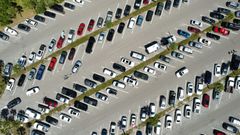
“An average garage requires three to six times more square feet than the actual dimension of a car to accommodate drive aisles, ramps and standard parking space dimensions,” CityLift CEO Scott Gable said.
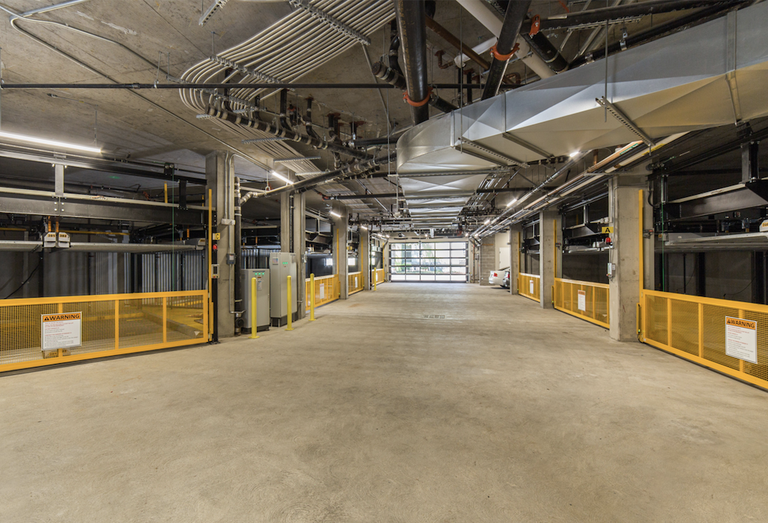
CityLift reduces the square footage needed per car by up to 80%, eliminating ramps, concrete slabs and, in some cases, drive aisles to use vertical space more efficiently. CityLift’s semi-automated parking systems, which Gable reports are getting the most traction, lift cars and slide them into place in a variety of puzzle-like configurations depending on how many stories the structure is. They have an average retrieval time of 33 seconds, flexibility to rise up to seven stories and a needed clear height of 12 feet for a two-level system.
2. Affordable
Above-ground parking structures can cost upward of $30K/space. Subterranean garages are costlier and can go up to $90K/space. Although it seems counterintuitive, considering the increased sophistication of machinery required, automated parking is less expensive, costing around $20K/space and sometimes less.
“Construction hard costs are saved by eliminating an entire floor of concrete, an elevator stop and ramps,” Gable said.
Since parking lifts are classified as equipment, they can be depreciated over seven years instead of the 29 for physical structures, providing an upfront tax incentive for developers.
3. Versatile
Automated parking is flexible and adaptive, meaning it can conveniently fit into spaces unsuitable for conventional parking garages or lots.
“If developers don’t include enough parking in their plans, the local community may actively resist the project, fearing the new influx of cars on their already cramped streets,” Gable said.
Systems also are sometimes movable, and if parking demand diminishes as autonomous vehicles, ride-sharing services and public transit receive heavier volume as projected, the space can be easily reallocated.
"One of the great benefits of automated parking is its adaptive reuse," Gable said. “You can disassemble the structure, move it out and regain square footage for amenities or possibly even more rentable space."
To learn more about this Bisnow content sponsor, which has installed more than 30,000 automated parking spaces, click here.