A new law intended to unmask the owners of limited liability corporations in an attempt to crack down on money launderers and slumlords could particularly impact Miami and New York, where shell companies are often used to obscure the owners of high-priced real estate.
Heretofore, companies could be set up with minimal paperwork, listing little more than an address (often a P.O. Box) and a registered agent, such as an attorney or a third party that collects mail. Going forward, such companies will be required to disclose specific details about who actually owns the company.
:no_upscale():quality(75))
The Corporate Transparency Act is part of the National Defense Authorization Act, aka the Defense Bill, which was vetoed by President Donald Trump but then passed by Congress on Jan. 1.
“This is a big step in combating money laundering,” Ville Rantala, an assistant professor of finance at the University of Miami Herbert Business School, told the Miami Herald.
Though LLCs have legitimate purposes, criminals can use them to buy real estate, or even art and jewelry, with ill-gotten gains. Investigators trying to trace terrorists following the Sept. 11, 2001, attacks hit dead ends because of LLCs. In 2016, an international consortium of journalists published the so-called Panama Papers, a trove of documents showing how anonymous shell companies were used to shuffle money around the world.
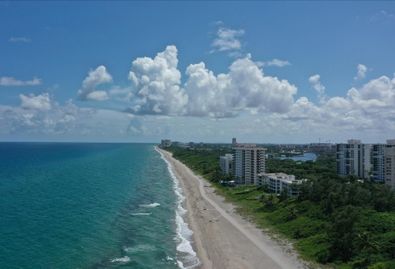
In Miami after the Great Recession, millions of dollars worth of Miami condos were being purchased through LLCs in all-cash transactions. At one point, corporate entities bought an average of $111M worth of homes per week with cash in Miami-Dade, the Miami Herald reported. In 2019, the FBI set up a special task force to combat money laundering in Miami.
Authorities have tried to crack down on suspicious transactions. In 2016, the Department of the Treasury ordered owners of LLCs purchasing high-end residential real estate to identify themselves to authorities. One study found that without anonymity, all-cash purchases by corporations fell to approximately 70%.
In 2018, it was found that Wynn Resorts CEO Steve Wynn used an LLC to conceal a $7.5M payout to a woman who accused the developer of sexual misconduct. Nearly three-quarters of the people who purchased properties from Trump's companies in 2017 did so through LLCs, according to USA Today.
Going forward, what must companies do to comply? It could take up to a year for the new regulations to be finalized, but the law requires certain companies to submit an “initial beneficial ownership statement” to the Department of the Treasury’s Financial Crimes Enforcement Network, or FinCEN.
The National Law Review explains that this requires the disclosure of the full legal name, address, birth date, and driver’s license or passport number for the company’s beneficial owners, which is defined to include those who exercise “substantial control over” the company or who own or control no less than 25% of its ownership interests.
Minors, people who inherited their interest in the company, and people acting as intermediaries or agents are exempt, as are already-regulated entities like publicly traded companies, banks, broker-dealers, investment advisers and private funds. The statement will have to be filed at the time the company is formed or, for existing companies, within two years once regulations are finalized. The disclosures will be held by FinCEN and can be shared with law enforcement or regulatory agencies but will not be otherwise publicly available.
There is still some wiggle room. For example, if a company’s ownership details change, it will have a year to update the statement. The new law also doesn't define who exerts “substantial control” over a company, nor does it explicitly specify whether these rules will apply to partnerships and trusts — a detail that will likely be hashed out this year.
People who intentionally fail to comply with the new law could be fined $500 per day, up to $10K, or face two years in prison.