Demand from younger renters for eco-friendly product that offers more privacy is driving a shift in the design of condos in Miami.
An effort to reduce energy load is leading to the implementation of a mix of outside-the-box and passive solutions, such as embracing organic architecture and evapotranspiration, architects said at Bisnow’s Architecture and Design Summit Aug. 30 at the JW Marriott Miami.
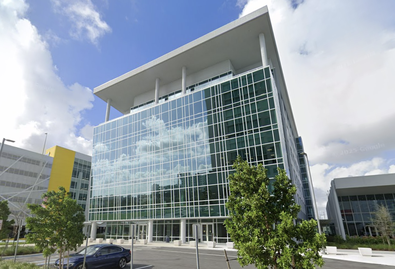
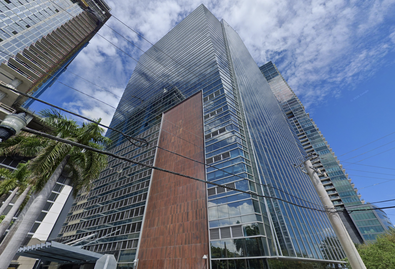
It could also mean a shift away from all-glass buildings, a strategy becoming more common in other cities, though some panelists said that just isn’t the Miami way.
:no_upscale():quality(75))
“If [the sun] hits the glass, then you have to cool,” OBMI senior designer Giovanni Medina told Bisnow. “Radiation goes into the building, then your AC goes off and you have this whole impact of energy.”
Glass-clad buildings have been the norm for years now — the U.S. Green Building Council said in 2017 that glass will cover 80% of the 15 million new buildings it expects to be built in the next few decades. But glass puts a higher strain on the energy load of a building because even highly insulated glass allows higher transference of heat than other materials, undercutting sustainability initiatives.
Architects on the panel from other metropolitan cities said up north the latest trend is getting away from glass condos altogether.
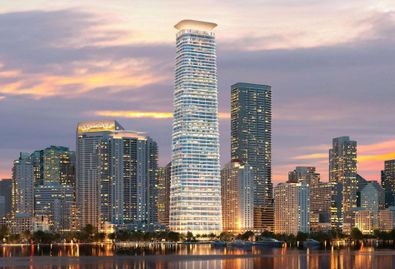
“In places like Toronto and Vancouver and other parts of the country there is more privacy. You feel more comfortable,” New York-based KPF Director Jonah Hansen said at the event. “The overlap of where design is going you are seeing more solidity on this side, getting away from the glass condos. You look at Miami and it is all glass condos. It is kind of boring, with a couple of exceptions.”
Other designers said that's unlikely to change in Miami, though.
“South Florida is all about the view of paradise,” said Reinaldo Borges, principal at Borges + Associates Architects.
There are alternatives to reducing glass to cut down heat load's impact on energy usage. One option is embracing organic architecture, a process where trees and urban forests cool down the building via strategic positioning to provide direct shade, thus reducing surface and air temperature, energy consumption and carbon emissions released into the environment.
Another is evapotranspiration, the combined processes when water evaporates, transpires and dissipates from the ground back into the atmosphere. Evapotranspiration can be used to cool buildings with much less energy consumption than traditional air conditioning.
Medina told Bisnow he instilled these creative solutions during the early phases of development of the LEED-accredited Miami Design District. The paving through the district is brick, which can filter water.
“You can have big corridors and walkways. Those are things you can do in a contemporary way to freshen it up but you still avoid the sun hitting the glass, which is a big part of the issue,” Medina said. “There is this idea of trees in the corner that shade the buildings to create passive cooling. If the light comes and hits the trees, which are above, then the light does not hit the glass. So, you are reducing the heat gains that the buildings are receiving.”
:no_upscale():quality(75))
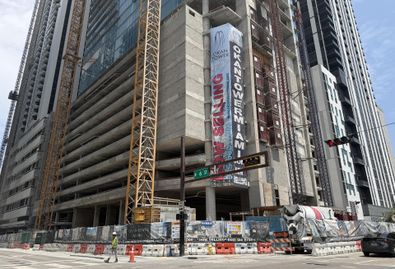
While statistics show that condo developments are on the rise, developers committed to improving the quality and longevity of upcoming projects say cost is by far the biggest challenge to developing luxury product that hits the trifecta — high quality, sustainable and able to be delivered quickly.
“We have to factor the valuation of the glass, we have to think about reshaping the glass and reducing the glare into these buildings,” Borges said. “It becomes not affordable.”
Kobi Karp, president of Kobi Karp Architecture & Interior Design, said that since architects have to spend money regardless, doing so upfront to reduce glare in condos is an investment that creates value.
“The more you can think of how this is a moneymaker it will make people get up and listen. I promote it [as] an opportunity for us to recycle,” Karp said.
He also emphasized that it creates economic development and educational opportunities that benefit younger renters because they want “to live a little bit longer on planet Earth.”
Speakers at the event said developers originally appeased demand for more sustainable and resilient products with greenwashing marketing techniques. But the coronavirus pandemic and a sharp increase in renters insurance premiums are forcing architects to reinvent highly efficient condo communities that align with the housing needs of an environmentally conscious society 100 years into the future.
“For Gen Z, the values that you [as an architect or developer] are representing are very important,” Medina said onstage. “If they are not aligned with their values, then they are not coming to your property.”
Between panels, Medina elaborated on why Gen Z is demanding sustainability and transparency.
“The younger generation really cares about the honesty of a project. Their generation had to grow up with financial burdens because of the recession,” Medina said. “So when it comes to sustainability, it is their responsibility at the end of the day, because their generation and their kids are the ones that are going to see the results. They are the ones getting screwed.”