Investors are cautiously optimistic and uncertain about the state of capital markets in commercial real estate, and divided about the availability of capital and the ease of investing.
The notable exception to the uncertainty is industrial real estate. Thanks to the massive shift in retail toward online ordering and delivery, demand for distribution centers is at an all-time high. Even with more construction planned every day, investment activity is strong in the sector, and shows no signs of slowing down. PGIM vice president Ian Christ called it “red-hot across the country.”
Beyond industrial and the solid self-storage market, little is clear about Philadelphia from an investment point of view. Its fundamentals remain very strong; PNC senior vice president Shari Reams cited a Green Street Advisors study showing Philly’s increase in job growth, from 2% in 2015 to 3.1% in 2016, was the largest among any major American city. Accordingly, demand for multifamily has remained high.
“The multifamily market is absorbing all of the new units that have been coming online,” Reams said. “We haven’t seen a marked increase in vacancy or a slowdown in rents.”
But Christ was quick to point out that nationwide, multifamily has a supply issue that has caused capitalization rates to flatten, with landlords forced to offer concessions to tenants. He cautioned about some of that potentially hitting Philadelphia, or at least affecting investor attitudes.
“We love everything that’s going on here,” Christ said. “We’re just cautious, because again, the depth of the buyer pool is just different from what it was in 2016, ‘15 or ‘14.”
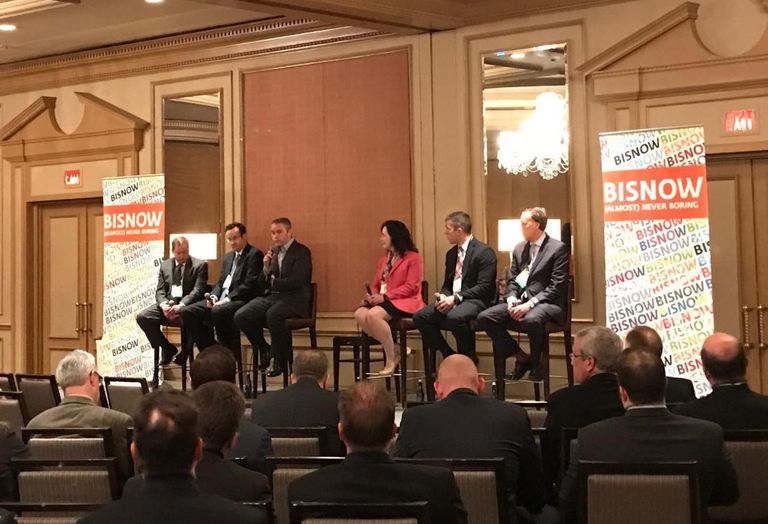
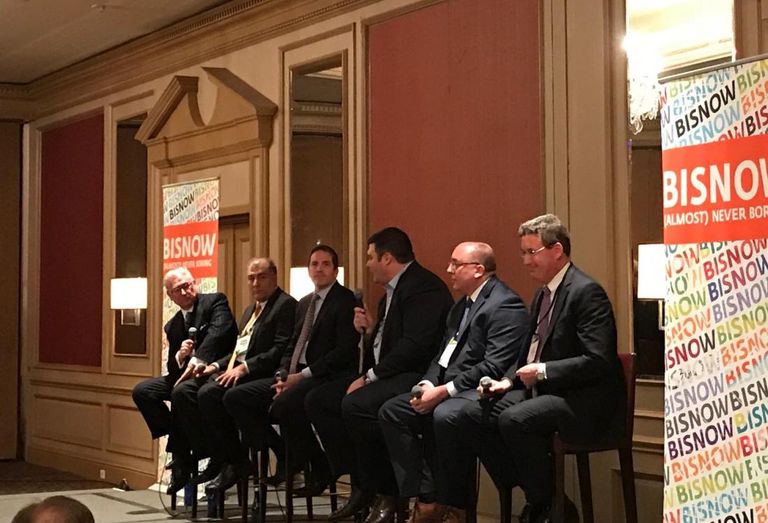
Caution was mentioned by nearly everyone on both panels at Bisnow's Philadelphia Capital Markets event this month, but not so much as to breed inaction. Increased involvement from foreign capital and entrepreneurial — rather than institutional — equity sources have kept the wheels turning, but everyone’s ears are perked for any major changes to the financial landscape.
“We’re just not smart enough to know if we should be buyers or sellers,” Korman Communities co-founder Brad Korman said. “Timing a market, that’s hard.”
Most speakers put the current cycle in the middle to late innings, unsure of the circumstances by which it would truly end.
“I think we’re right at expansion, heading into hyper-supply, and I think we’re going to be at that point for a while,” Ten-X senior director Ian Grusd said. “There’s enough stop valves in place to prevent a recession.”
Capital seems more readily available in Philadelphia’s central business district than its suburbs, although cap rates are substantially less favorable in the city. It offers an opportunity for those who can pull together the financing, as Rubenstein Partners director of finance Scott Whittle called debt availability for suburban assets “extremely challenging.”
“From the investor perspective, the spread of cap rates between value-add and core assets is historically wide right now, as much as 250 basis points, so that’s attractive for a value-add investor,” Whittle said. “It’s an attractive time for us to be investing in suburban value-add assets; we think there’s superior risk-adjusted returns there.”
Perhaps the biggest challenge across commercial real estate for some time now, in Philadelphia and beyond, has been the cost of construction. It has restricted the amount of new development, particularly in office, but construction loans seem to only be getting more challenging, meaning headaches for developers could get worse.
The slowdown in construction financing “is something that’s likely to continue,” Reams said. “Regulatory changes make it much more expensive for banks to do … It’s increased pricing on new construction loans and constrained availability, because the regulatory environment is just not clear.”
Some consider the cost of construction to be one of the crucial stop valves, as Grusd put it, which would prevent the end of the cycle from being disastrous.
“Where we are in the cycle, it may not be a bad thing that construction lending is more limited,” PGIM principal Justin Levitt said. “We’ve had so much supply in the multifamily space in the last several years, and we’ve had rents softening and interest rates rising, which is a dangerous combination.”
The paucity of debt available for construction, the maturing of CMBS loans from right before the recession that have been unable to refinance and the increased Libor rates are all situations that bear monitoring, and give some in the market pause. And yet, perhaps surprisingly, interest is still high — at least in Philadelphia.
“We’ve heard a lot from equity sources that there’s a tightening, that things are getting more difficult,” Cornerstone Tracy partner Donald Tracy II said. “That being said, I think we have a call with an equity source every other day asking us to bring them opportunities.”