Increasing natural disasters have made insuring commercial real estate properties a dicier exercise that warrants a new approach for both property owners and insurance companies.
Higher risks have also resulted in higher costs with renewal rates going up by 20% year-over-year according to Q3 data from Marsh’s Global Insurance Index, as reported by Forbes.
“Insurance buyers in the last 18 months are going through some of the most challenging insurance market conditions that have existed in 20 years,” Prologis Head of Global Risk Management Jeff Bray said.
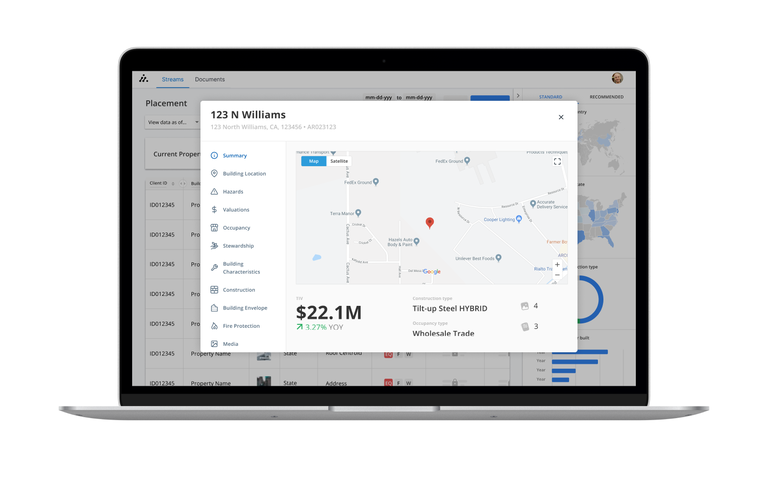
The complicated insurance environment has given rise to Archipelago, a data analytics company based on artificial intelligence that digitizes commercial property risk using machine learning and data verification with the goal of better insurance outcomes. The company announced this month raising $34M in Series B funding to expand the availability of its platform to brokers and insurers, according to a statement, with the platform currently serving over 330,000 commercial properties and a total insured value of $2.3 trillion.
“Large owners of commercial property continue to experience rising premiums, and risk volatility is increasingly driven by climate change and other factors,” Archipelago CEO Hemant Shah said in a statement. “By delivering AI at scale to digitize risk, we can enable more efficient insurance markets, and catalyze more resilient commercial properties, worldwide.”
Prologis utilizes Archipelago’s platform among other companies like JLL and Alexandria. In 2019, as part of its digital transformation initiative, Prologis worked as a foundational partner in the development of Archipelago to help better determine risk outcomes for the company’s thousands of properties and facilitate the underwriting process with about 40 different insurance companies.
Bray said that prior to this technology, the process of obtaining property insurance entailed management of a cumbersome Excel file and use of insurance models developed decades ago that while they still serve a purpose are limited in the amount of data utilized and insights generated.
“Property insurance is not profitable,” Bray said. “They've just succumbed to outsized industry losses — increased natural weather events caused by climate, wildfires, whatever you want to call it. The amount of events and the size of events hitting insurance companies has continued to increase. They're having a difficult time making a profit. They are hungry for data to make better underwriting decisions. So this was a perfect solution.”
In addition to helping alleviate pain points for insurance companies, Archipelago helps companies like Prologis identify risks in its portfolio and make better decisions on retrofits to mitigate risks, Bray said. It has also helped improve the quality of data and instilled trust in insurers as they can now more easily determine the sources of data points.
In addition to mitigating seismic risks for properties in California or sea-level rise in New Jersey, Archipelago has also been instrumental in analyzing risk from hail storms in places like the Midwest that can severely damage roofs. Prior to the platform’s launch, Prologis lacked a method to employ its wealth of data points about rooftops into the process to obtain insurance and make internal decisions. Now such data can be used in Archipelago yielding more nuanced risk assessments than before.
In terms of flooding from sea-level rise, Bray said Prologis has a track record of building above industry elevation standards to meet customer demands and gain a competitive advantage. However, older insurance modeling lacked a way to give the company credit for such measures in the underwriting process. Archipelago provides a place for such information.
“I'm very excited about the problems they're solving for all parties involved within the insurance transaction,” Bray said. “Insurance has never been a very innovative field, but I really think that this shows promise.”