Private real estate is especially vulnerable to climate-related events, such as hurricanes and flooding, according to a new report by MSCI. But not all real estate located near oceans or rivers is at a similar risk of loss due to climate change.
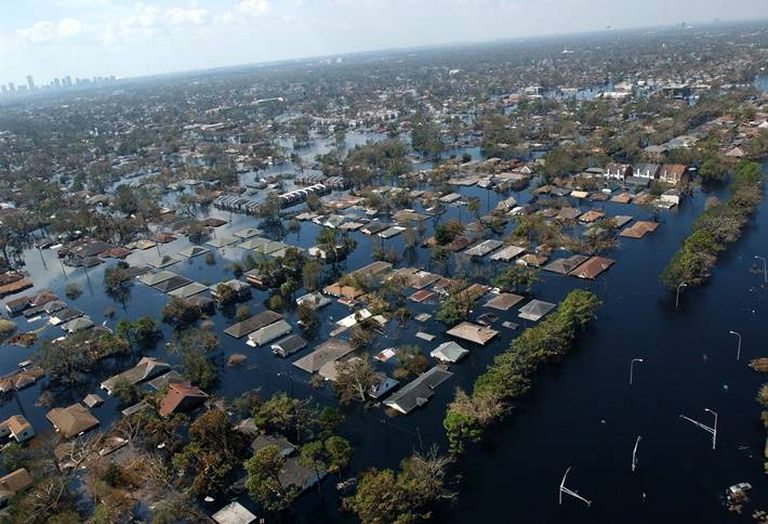
Much depends on a property's exact position — a new twist on how important location is in real estate — but also on whether mitigation efforts have been undertaken, or will be undertaken in the near future, MSCI explains.
Of the 23,771 real estate assets the report examined in five countries, 1,960 (8%), representing $158.3B of capital value, were situated in a tropical storm intensity zone and therefore exposed to the risk of hurricane damage. Of these, 79% were in the United States and 21% in Australia.
New York has the largest absolute capital value exposure, most of it located in New York City, which represented half of the assets at risk, the report says. However, South Carolina, Louisiana and Florida all had higher percentages of total capital value at risk.
The link between climate change and hurricanes isn't well understood, the report says, but the consensus among climate scientists is that while human activity may not be directly causing hurricanes, it is making them more intense. That is in large part because 90% of the heat that is trapped by greenhouse gases is stored within the ocean, and hurricanes feed on that energy.
Besides hurricanes, rising water levels pose flooding risk to properties. But in some parts of the world, even properties near an ocean or large river are relatively protected from that threat.
For example, very few assets in London are at risk of flooding thanks to the Thames Barrier, one of the world’s largest flood defense systems, the report says. Similar lines of defense in the Netherlands safeguard over 97% of the most at-risk assets examined.
In less protected places, the risk of flooding is rising, MSCI says. The number of floods experienced globally has quadrupled since 1980 and has doubled since 2004. According to National Oceanic and Atmospheric Administration estimates, natural disasters (floods, mudslides, wildfires) in the U.S. in 2017 cost more than $300B in damages, primarily to residential and commercial real estate.
For investors, the impact of climate change on commercial property presents a large range of risk, the report says. It might mean increased operational costs — for example, damage to the property or repair costs — but also the potential for higher insurance costs, property devaluation and, in some extreme cases, the complete loss of a property.
MSCI is an investment research firm that provides equity, fixed income and hedge fund market indexes. It is best known for benchmark indexes.