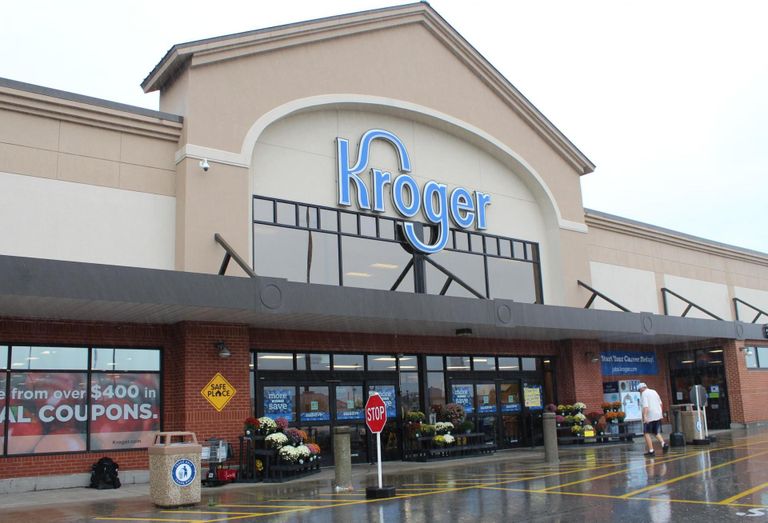
UPDATE, OCT. 14, 8:45 A.M. ET: Kroger said it is acquiring Albertsons for $24.6B. The deal is priced at $34.10 a share, and Kroger will assume about $4.7B of Albertsons’ debt. It will be one of the biggest mergers in the grocery space, the Wall Street Journal reported Friday morning.
Grocery chains Kroger and Albertsons are reportedly in merger discussions, a deal that would unite the two largest supermarket chains in the U.S.
A deal could be announced as early as the end of this week, according to The Wall Street Journal, which first reported the news Thursday.
The move would result in the creation of a new grocery giant and would likely be subject to antitrust review, given that both chains operate in many of the same markets, including Texas and Chicago, according to the WSJ.
Additionally, sources told the WSJ that the companies are planning to divest stores in markets that overlap as part of the deal, to better grease the wheels of regulatory approval.
Combined, the companies have a market value of $47B, with Kroger holding $33B and Albertsons $14B. Kroger operates 2,723 stores nationwide as of Q2 of this year, totaling 179M SF in supermarket space, according to financial filings.
As of 2021, Albertsons operated 2,200 stores nationwide, with 1,267 of those averaging more than 50K SF. The remaining 1,000-plus stores are on the smaller side at 30K SF to 50K SF, according to a 2021 Securities and Exchange Commission filing.
When Albertsons completed its 2015 merger with Safeway for $9.2B, the Federal Trade Commission required the two chains to sell 168 supermarkets to avoid being anticompetitive in several western states.
Albertsons attempted a takeover of pharmacy chain Rite Aid in 2017, but was unsuccessful.
A merger would come at a time when decreased competitiveness among grocers and high inflation have applied pricing pressure to consumers. Big grocers like Walmart and Costco have increased their market share in recent years, and Amazon's 2017 purchase of Whole Foods provided the Austin-based grocer with an infusion of capital and access to Amazon's distribution machine a few years before the pandemic supercharged the grocery delivery business.
Meanwhile, the Biden administration earlier this month released a plan aimed at alleviating hunger across the U.S. that would offer federal dollars to help develop grocery stores in food deserts.