The most common redevelopment use for a shuttered mall is some other kind of retail, according to a new survey by the National Association of Realtors. But that is hardly the only use.
The survey received responses from 2,684 NAR members between March 12 and March 23. It asked respondents to provide as many as five examples of mall redevelopment, and include such information as a source of financing, cap rates and rezoning requirements if possible.
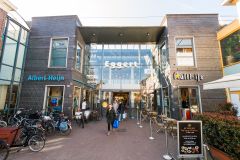
Nearly a third of the survey respondents (31%) said that they knew of a vacant mall that had been repurposed into a different kind of retail, such as conventional bricks-and-mortar or pop-ups.
The second-most-common kind of new use for a vacant mall is mixed-use, including residential, office and retail components, with 16% of respondents citing that.
Smaller percentages (less than 10%) of respondents cited warehouses, apartments, distribution centers, college campuses and healthcare facilities as the result of mall development, the survey found.
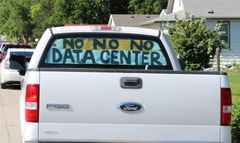
A few (1% of the respondents in each case) cited more unusual redevelopment uses, such as a call center, cannabis business, cricket stadium, data center, police facility or self-storage. The cricket stadium is a planned reuse for the site of the Gwinnett Place Mall in Gwinnett County, Georgia, in suburban Atlanta.
On average, according to the survey, vacant malls sell at a discount of 43%, but even so, repurposing large retail properties tends to require deep-pocketed investors and a willingness by public officials to help the process along, such as by providing infrastructure or other financial incentives.
The survey also detailed a number of case studies of mall redevelopment to illustrate a variety of possible reuses. Worcester Center Galleria in Worchester, Massachusetts, for instance, became the mixed-use CitySquare with investment of $470M in private financing and $95M in public financing.
Westside Pavilion in West Los Angeles, California, is becoming One Westside, a Class-A office development (fully leased by Google), with a private investment of more than $500M, and Euclid Square Mall in Euclid, Ohio, became an Amazon warehouse and fulfillment center with a $250M private investment and $1.3M in public money.
More malls promise to be redevelopment material in the years ahead. The long slide of many American malls into obsolescence, already a trend in the 2010s, has the potential to become a rout in the post-pandemic era, as ever more anchor department stores close and take malls with them.
Another metric that points to further mall closure? Retail employment is losing popularity. That kind of employment peaked at nearly 15.9 million in January 2017, but fell steadily afterward to 15.6 million by March 2020, according to Census Bureau data.
That represents a loss of nearly 300,000 jobs during the period, with an unknown number to be lost post-pandemic recovery.