Making good on a campaign promise to end the federal government's dealings with owners of private prisons, President Joe Biden signed an executive order on Jan. 26 directing the Department of Justice not to renew any contracts with privately operated prisons.
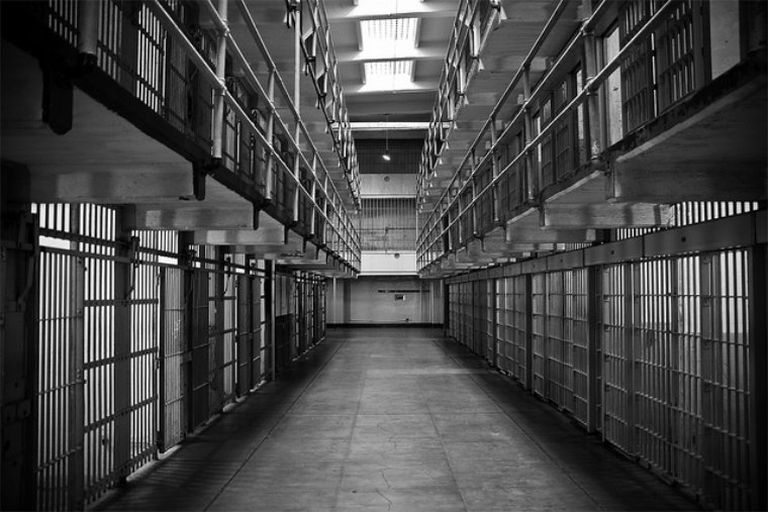
The move could have far-reaching impacts on private prisons, which represent a lesser-known real estate niche. The two largest prison REITs are CoreCivic and The GEO Group, according to Seeking Alpha. Together they own about 125 correctional facilities in the United States.
Biden's order takes direct aim at the industry.
"To decrease incarceration levels, we must reduce profit-based incentives to incarcerate by phasing out the Federal Government’s reliance on privately operated criminal detention facilities," it says.
The move doesn't abolish the government's association with private prisons immediately, however, since agencies such as U.S. Immigration and Customs Enforcement and the U.S. Marshals Service have some long-term contracts with private prison owners. But it does cast a long shadow on the future of private prisons, as do policies favored by the administration designed to reduce the number of Americans behind bars, Millionacres, a Motley Fool service reports.
"[The executive order] only directly affects the approximately 10% of all U.S. prisoners who are held in federal custody, but it has effects beyond that," David Fathi, director of the American Civil Liberties Union National Prison Project, told NPR.
"This will be a very serious blow to the private prison industry," Fathi said. "The federal government is their largest single customer. And also, the state prison systems tend to look to the federal system as a model, as a leader."
Altogether, the Federal Bureau of Prisons manages an inmate population of about 152,000. Of that total, about 14,100 inmates are in privately managed facilities, according to bureau data.
Private corrections facilities take in about $3.9B annually, with roughly 10% of that as profits to private prison companies, the Prison Policy Initiative reports. That too is a small fraction of money spent on mass incarceration, which totals more than $80B a year, including the cost of prisons, jails, parole and probation, to deal with a prison population of about 2.3 million. At 698 people for every 100,000 residents, the United States incarcerates more people than any other country.
Besides political pressure on the private prison model, the coronavirus pandemic has also put pressure on prison owners, as it has increased the cost of running facilities, cutting into bottom lines. At CoreCivic, for example, third-quarter 2020 revenue was $468M, a decline of 7.9% compared with Q3 2019.
Investors have been shying away from the two prison REITs recently. A year ago, CoreCivic traded at $15.95 a share. As of Friday, the company traded at $7.11 a share. As for GEO, it traded for $151 per share a year ago, and as of Friday, shares traded for $101.12.
"The claim that any one company or private sector providers are responsible for mass incarceration is blatantly false," The GEO Group wrote in a statement responding to the executive order. "... Policymakers should decide whether they want to score political points by targeting private sector providers that make up less than 8 percent of the prison system, or if they truly want to improve prison conditions and in turn the lives of those in their care and custody."