The U.S. apartment market experienced a reversal of fortune in July as rent growth returned to its highest level in two years and the pipeline of new units continued to shrink.
Asking rents from U.S. apartment landlords rose the most in two years last month, up $30 year-over-year to $1,790, according to real estate brokerage firm Redfin. The jump was the largest since January 2023 and was the second consecutive year-over-year increase after two years of flat or declining rents nationwide.
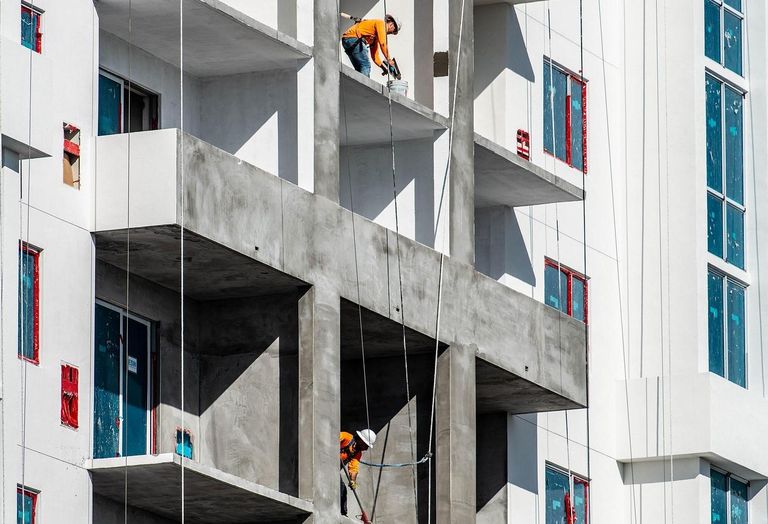
At the same time, new apartment development has fallen more than 23% since the pandemic building boom of 2020 to 2023, to 12.8 new units for every 10,000 people in the U.S., according to Redfin. The pace is also below the prepandemic average.
The onslaught of new apartment units in the U.S. over the past two years prompted landlords to drop rents and pile on renter incentives as they scrambled to fill vacant units. With historic levels of demand for rental units, that dynamic is starting to change.
“Asking rents may be climbing because shrinking apartment supply is coinciding with growing renter demand, which is being fueled by the high cost of homeownership,” Redfin Senior Economist Sheharyar Bokhari said in a statement. “But now a slowdown in apartment construction may be shifting the balance of power toward landlords.”
Median asking rents in San Jose, California, rose the fastest, at 8.8% year-over-year in July to $3,569 per month, followed by Chicago's 8.6% increase, Washington, D.C.'s 8.5% increase, Pittsburgh's 7.7% climb and Philadelphia's 7.5% increase, according to Redfin.
The overall multifamily vacancy rate in the second quarter dropped 70 basis points to 4.1%, the second-largest Q2 vacancy decrease on record, according to CBRE. Renters absorbed 188,200 units, 44% more than in the previous year.
Put another way, renters leased more than two apartments for every new completed unit in the second quarter, which was the highest Q2 net absorption on record and 44% above the prepandemic Q2 average, CBRE reported.
Higher interest rates and inflated housing prices continue to push potential homebuyers into the rental market. Existing-home sales fell 2.7% in June from the previous month as the median home price hit a record-high $435,300, The New York Times reported, citing National Association of Realtors data.
“Apartment fundamentals are past peak pain,” David Kirshenbaum, an assistant portfolio manager for Baron Real Estate Fund, told Barron’s in June. “As fundamentals improve, and as demand continues, many landlords are already talking about the possibility of additional rent spikes if we look out over the next 12 to 24 months.”