:no_upscale():quality(75))
American consumers have insatiable appetites, and even larger expectations when it comes to the purchase and delivery of merchandise—and the use of tech has only increased those demands.
This has resulted in big things for the industrial market—which manufactures, stores and distributes those goods. And no market has benefited more than the Inland Empire in Southern California, which Colliers International says is the strongest industrial market in the country.
Colliers senior EVP Steve Bellitti (below) tells Bisnow the Inland Empire is the strongest in the country thanks to its assortment of large distribution centers and its proximity to the Port of Long Beach—which traditionally receives about 40% to 45% of all imports into the states.
“One of the key drivers of the largest distribution centers is the movement of retail from brick-and-mortar to e-commerce,” Steve says. “And the second is corporate America’s continued consolidation of distribution centers.”
:no_upscale():quality(75))
The Inland Empire is a massive region that encompasses some of the nation’s largest counties, including San Bernardino and Riverside as well as a section within Los Angeles. Gross absorption of industrial space in the region reached more than 15M SF in the second quarter of this year.
When combined with Q1 numbers, total gross absorption for the first half of 2016 totaled 27.8M SF—record absorption levels in the history of California, according to Colliers.
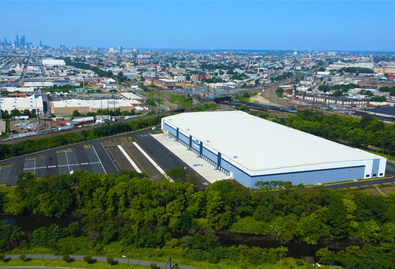
Another factor that sets the Inland Empire apart is the size of its industrial spaces. Some of the region's buildings have 850k to 1M SF under one roof—though average buildings range from 200k to 400k SF. Average rents in the region rose 50 cents/ SF on a triple net basis, a 10.9% leap year-over-year.
“These large distribution centers have also been a big boom for employment in local cities in San Bernardino and Riverside counties,” Steve says. “Historically these buildings have had low employment [needs], but with the transition of e-commerce and fulfillments, what once took 50 employees now requires about 1,000 to execute that fulfillment process.”