Despite an uptick in import volumes over the first half of 2025, demand for the industrial real estate surrounding the ports has declined to the point that landlords have had to start lowering rents, in some cases by more than 10%, according to a new report.
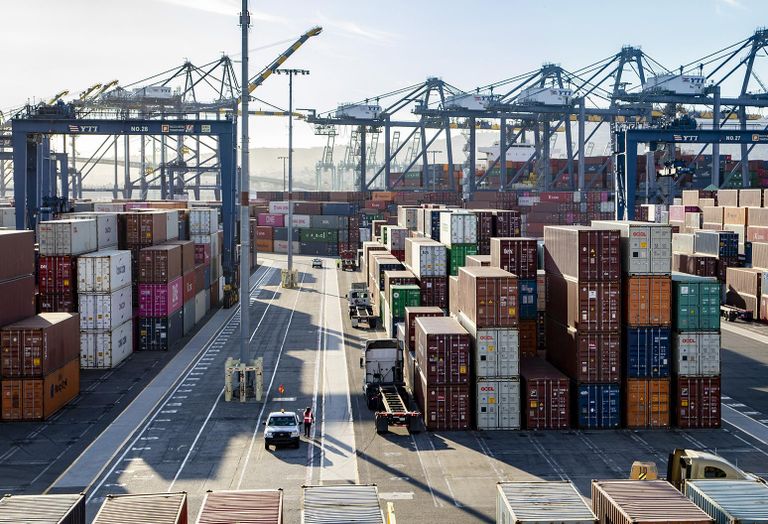
Amid economic volatility and cooling consumer demand, rents across the 4.2B SF of port-proximate industrial real estate tracked by Cushman & Wakefield are down 4.8% on average from last year.
The declines were especially acute in California, with properties in the Los Angeles markets seeking rents more than 20% below the rates of two years ago. Properties near major ports in New Jersey, Miami and Virginia also witnessed rent drops of roughly 3% or more.
The declines are coming despite the 10 busiest ports in the U.S. reporting a 3.5% year-over-year increase in volume over the first half of the year. Some ports reported significant growth, like the Ports of Long Beach and Savannah, climbing more than 5%, likely due to increased activity to avoid upcoming tariffs, according to Cushman. May and June important volumes were notably slower than the first four months of 2025.
But despite higher cargo volumes, the industrial market surrounding these ports is experiencing softer fundamentals, partly because of cooling consumer demand and broader economic volatility.
Port-proximate industrial tenants have still absorbed 2M SF so far this year, but that pales in comparison to the 27M SF of new deliveries and the 58M SF under construction, according to the report.
The rate of absorption is growing slowly or negative in half of the nation's top markets, the report said. Vacancy is expected to climb from its current 7.2% and peak around 8% in early 2026, according to Cushman.
Port-proximate industrial markets accounted for 21% of the nationwide absorption between 2019 and 2024. But in 2025, they have accounted for just 2.2% thus far, according to Cushman.
The consumer price index rose to 2.7% in June, according to the U.S. Bureau of Labor Statistics, while shifting tariff policies, first enacted under President Donald Trump’s administration in April, have added to broader economic uncertainty.
Inflationary pressures and economic volatility may dampen consumer spending moving forward, leading to a decline in activity for ports, Cushman researchers wrote.
The industrial market across the country has cooled as tariff uncertainty looms and shifts in supply and demand leave warehouses delivering vacant. National rent growth fell flat in the second quarter, growing just 0.1% — the weakest increase since 2020, according to Moody’s preliminary data.
Industrial absorption across the U.S. turned negative in the second quarter for the first time in 15 years, according to Newmark.