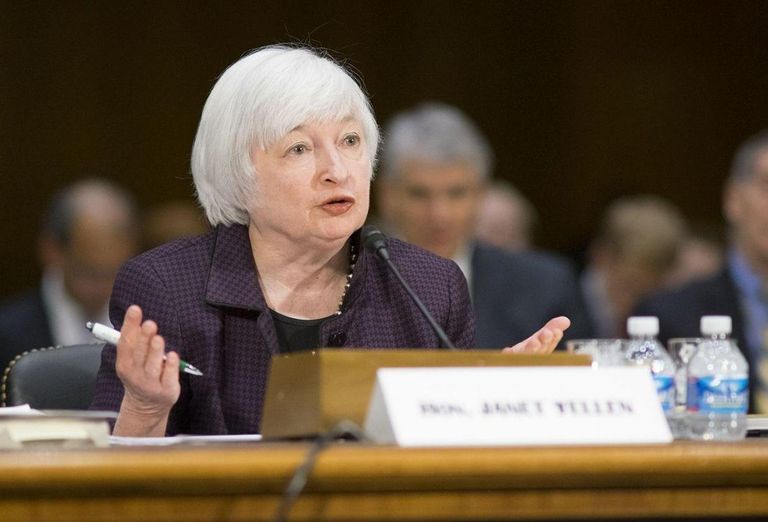
Federal Reserve Chair Janet Yellen gave an upbeat testimony regarding the economic outlook at her meeting with the Senate Tuesday, but it was during the Q&A that she dove into several economic factors likely to impact the commercial real estate industry.

Yellen noted solid job growth, rising inflation and healthy wage gains as reasons she may recommend another rate hike, and though she did not pin down a definite date, she did say the Fed would discuss moving rates during its March meeting. As senators tossed out questions, Yellen tackled topics including bank lending and deregulation, President Donald Trump’s plans to overhaul Dodd-Frank, possible fiscal stimulus and much more.
Fed Won’t Be Swayed By Fiscal Stimulus Speculation
Yellen made a point to clarify that any future moves made by the Fed would be influenced by economic trends alone, not speculation on fiscal stimulus.
Investors and commercial real estate firms have been boosting their economic forecasts for the year based on Trump’s plans for corporate tax cuts, financial deregulation, and increased fiscal stimulus by cutting through the bureaucratic red tape in Washington to boost jobs and wages. Should the president’s proposed policies propel the economy forward as investors are betting on, central bankers are prepared to respond with two or three quarter-point moves this year, and if need be, at a quicker pace than expected. But Yellen cautioned against planning to raise rates in anticipation of a burst of growth.
Banking Capital Readily Available

Sen. Elizabeth Warren (pictured) prompted a discussion on bank lending, dissecting Trump’s claims that capital is not readily available for businesses in need of funding — a claim that is powering the president’s move to dismantle Dodd-Frank and deregulate Wall Street. Yellen replied that both commercial and industrial loans have surpassed those made available during the 2008 peak, according to recent data. Yellen also said there has been a decline in demand from U.S. institutions as companies have grown increasingly conservative in their borrowing habits post-crisis.
Though there has been some tightening from banks since the financial crisis — which was exacerbated last year as new risk retention rules took effect, requiring lenders to keep more capital on the books — debt, foreign investment and rising interest from institutional investors have kept funding for commercial projects available.
In addition, according to Federal Reserve data, bank credit in the form of loans and leases reached $9.1 trillion as of Nov. 2 — up 25% compared with 2013 and surpassing the financial crisis peak of roughly $7.3 trillion. Commercial and industrial loans have been on the rise as well, increasing by an average rate of 10.6% a month over the past five years.
Remarks On Immigration
Fed officials are increasingly voicing their support of immigration and immigrant workers' contribution to the labor market and overall gross domestic product. During her testimony, Yellen said limiting immigration could slow the national economy. “Immigration has been an important source of labor force growth,” she said.
Other Fed governors are increasingly speaking out in support of immigration. Though officials are treading lightly, being certain not to pointedly mention Trump’s deportation plans or his intention to build a wall bordering Mexico, both the Philadelphia and Chicago Fed presidents have made comments at separate events noting the role immigrants play in fueling the workforce and spurring economic expansion.
Markets Close At Record High
Though stocks retreated prior to and during Yellen’s testimony, markets closed strong with the Dow Jones industrial average climbing to its sixth record high this year thanks to a bank stock rally. This boost suggests a return in investors’ confidence toward the economy’s ability to withstand a short-term interest rate move should the Fed raise rates in March.
Goldman Sachs’ stock price, which was one of the driving forces behind the Dow surpassing its 20,000-point record last month, logged record highs not seen since 2007. The investment banker closed the day up 1.5% to $247.52, the Wall Street Journal reports. Yellen’s positive economic outlook also led investors to swap bonds for stocks, pushing the 10-year Treasury up 2.47% as prices fell.