According to new research by the U.S. Geological Survey, about $150B in coastal real estate in California alone is at risk of flooding caused by rising sea levels, in combination with storms, by the end of the 21st century.
Sea-level rise is often thought of as a creeping problem — slow enough to give property owners time to take protective steps — but the report points out that even small increases in sea level, combined with storms, could have sudden, devastating impacts.
“It’s not just sea-level rise that we need to consider when assessing the impacts of climate change, but also the combination of sea-level rise with storms and every daily high tide we experience along the coast,” writes USGS research geologist Patrick Barnard, lead author of the paper.
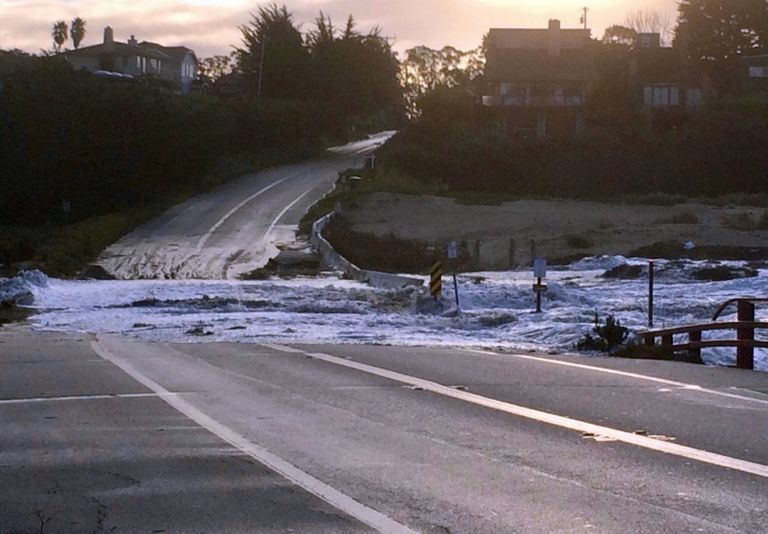
In recent months, winter storms eroded Capistrano Beach in Dana Point, California, enough to make a boardwalk collapse, and in Imperial Beach, large waves and high tides sent water flowing past seawalls, flooding roads and garages, the Los Angeles Times reports.
The upshot of the USGS report is to expect more of this kind of damage as sea levels rise and storms hit — either the kind of storms that regularly hit California, or stronger storms formed in a warmer ocean.
This is the first study to examine a combination of the effects related to climate change on the California coast, positing impacts for a variety of scenarios.
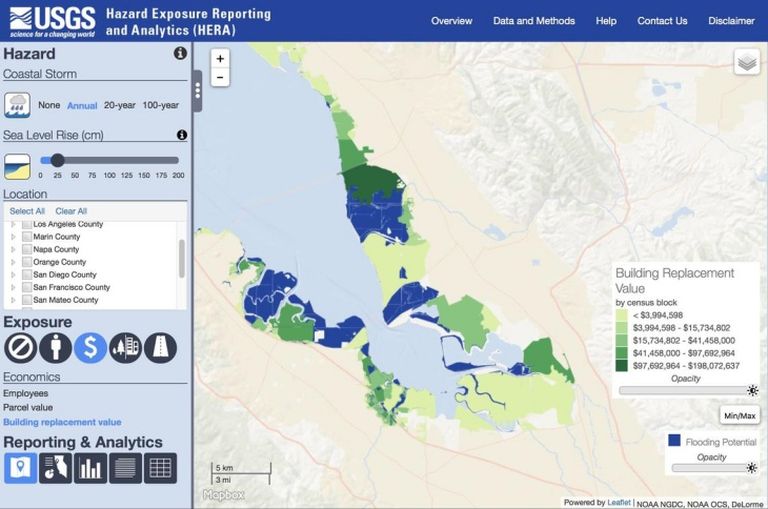
Those scenarios include sea-level rises of as much as 2 meters (about six-and-a-half feet), as well as an extreme 5-meter sea level rise (more than 16 feet).
The possible sea-level rise values were then combined with four different storm scenarios: average daily conditions, annual storm, 20-year storm, 100-year storm.
The study is only the latest to estimate the risk to property posed by climate change. Late last year, several federal agencies, including the U.S. Global Change Research Program, delivered a report about climate-change risks to U.S. cities, infrastructure, the wider economy, tourism and more.
Moody’s Investors Service has said that cities on the coasts will need to take climate change into account if they do not want to lose access to cheap credit.
Also last year, the Union of Concerned Scientists reported that by the end of the century, homes and commercial properties currently worth more than $1 trillion could be at risk nationwide. That includes as many as 2.4 million homes that are now collectively valued at about $912B.