Despite signs late last year that supply chain troubles and bottlenecks were easing, a survey used to measure supply chain constraints in the U.S. found pressures have hit a record high while warehousing capacity has reached a record low.
“Continued inventory congestion has driven inventory costs, warehousing prices, and overall aggregate logistics costs to all-time high levels,” according to the Logistics Managers’ Index March report.
The monthly survey asks logistics managers about inventory, warehouse usage and transportation, Bloomberg reports. March’s results were the third month in a row that the index saw an increase, rising from 75.2 in February to 76.2 last month. A 50 on the LMI scale would indicate a static logistics industry, with anything higher indicating growth and anything lower indicating contraction.
The continued congestion and resultant cost increases are “putting even more pressure on already-constrained capacity,” according to the report.
“The first three months of 2022 have been marked by high levels of inventory, and insufficient capacity to deal with it,” the report's authors said. “This influx, combined with a cool-down in consumer demand due to the move away from goods and back towards services with easing COVID restrictions, as well as price pressure due to burgeoning inflation, has left firms with more inventory than they know what to do with.”
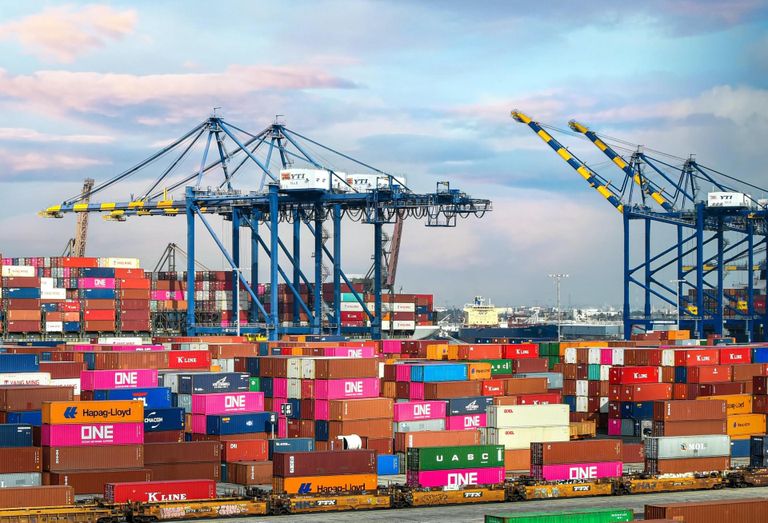
Warehousing capacity was at a record low in March, the report said, and port-adjacent industrial space across the country has seen the effects.
In Houston, industrial rents have hit record highs as freight volume coming into its port has increased by 40%. Industrial vacancy near the Ports of Los Angeles and Long Beach was at 1.4% in the first quarter of this year, a Savills report released this month found. In Boston, industrial asking rents increased by 21.8% from the end of 2020 to the end of 2021, rising to $12.55 per SF.
The kinks in the global supply chain seemed to be getting smoothed out late last year, as wait times to offload ships at the Port of Long Beach and the Port of Los Angeles, critical ports for imports from Asia, decreased. The price of shipping containers also declined significantly. But earlier this year, experts cautioned against expecting a return to pre-pandemic norms in 2022, noting that major investments and other fixes aimed at streamlining the flow of goods through ports would take time to implement.
The LMI report didn't mention another possible hurdle for the supply chain's return to normalcy: a potential dockworker strike at more than a dozen ports along the West Coast, including Los Angeles and Long Beach.