Just months after being founded by three former Trump administration officials, modular data center startup Mavria has already reached a billion-dollar valuation as investors bet on its solution for the industry's supply chain woes: factory-built data centers.
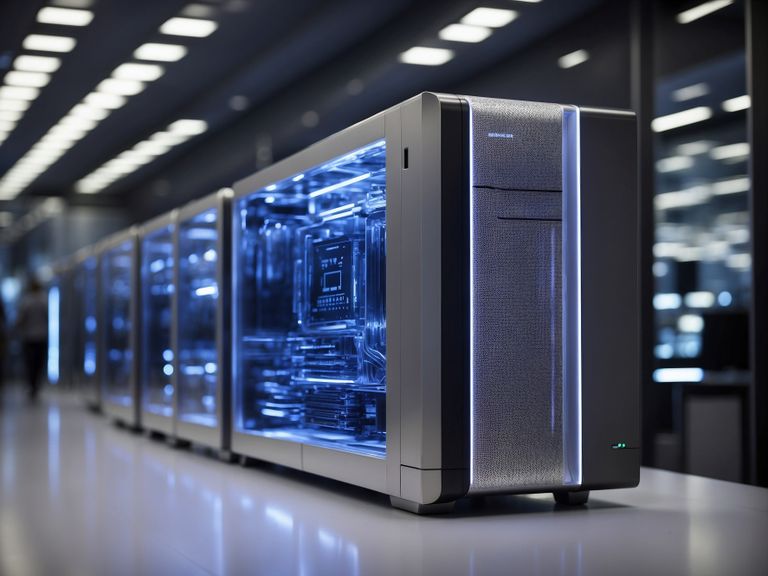
The Texas-based company intends to mass-produce 5-megawatt modular data center units that are built in factories and delivered by truck. Although the first units are still months away from production, Mavria has already raised $130M at a $1B valuation, The Wall Street Journal reported.
Its investors include Paradigm, Liquid 2 and Critical Frontier, as well as public benefit corporation AMP.
Mavria was founded this summer by Adam Blake, Nick Poradek and Seth Cohen, who met while working at the U.S. Department of Energy, where they focused on nuclear power. While at the department, the three say they identified a “strategic vulnerability” in the U.S.’s digital infrastructure build-out: strained supply chains, manufacturing capacity constraints and limited access to large blocks of power.
Mavria’s business model is centered on the idea of addressing that problem through standardized, factory-built data centers. Its founders say this strategy can ease some of the physical supply chain bottlenecks that have contributed to data center construction continuing to trail significantly behind demand for these facilities.
“Our power infrastructure, manufacturing capacity and supply chains are nowhere near ready to meet the demand from AI,” Blake told The Wall Street Journal.
Mavria's modular product, which is branded as Terrain, consists of 5 MW units with power distribution, liquid cooling, control systems and server racks already integrated. The company describes Terrain as an effective plug-and-play data center system that can either be clustered with other modules to create a larger facility or be deployed individually to take advantage of locations where smaller pockets of grid capacity are available.
The 35-employee startup is not yet producing units at scale. Its first units are being built at the company’s Houston factory, with plans to begin testing in 2027 before ramping up production later in the year. Mavria intends to pursue two business lines: selling the units directly and developing sites where Terrain systems could be deployed and operated.
Beyond helping bypass supply chain constraints, its business model is appealing to investors because it can avoid the community opposition and political headwinds that are constraining large-scale data center development across the U.S. Paradigm Managing Director Alana Palmedo told The Wall Street Journal that while communities are pushing back against "mega projects," these modular units are less intrusive and can be deployed wherever small pockets of power are available.
Mavria isn't the first firm to pursue modular solutions to the data center supply chain pinch.
Modular, prefabricated components and off-site manufacturing have become essential strategies when building large-scale data centers, and an entire ecosystem of firms has emerged that manufacture shipping-container-sized, standalone data centers that can be deployed individually or grouped in larger installations. It’s a space that includes smaller edge specialists like Duos Edge AI and CenCore and major data center equipment manufacturers like Vertiv, Schneider Electric and Eaton Corp.