Anthropic is cutting out the cloud middleman and moving to become a major direct player in the data center market, with plans to lease dedicated data centers at significant scale as the company’s computing needs surge in advance of its highly anticipated public offering.
The shift was disclosed Monday in the Claude maker's S-1 filing that sparked reports of a possibly record-setting IPO and marks a significant strategic change for Anthropic. The company has relied almost entirely on cloud providers like Amazon, Google and Microsoft for its computing power.
But under an initiative the company is calling Anthropic Direct, leased data centers under Anthropic’s control will account for a growing share of the $542B to $567B the company plans to spend on computing infrastructure in the coming years.
While the move comes with a significant set of risks, it will also immediately establish Anthropic as one of the digital infrastructure ecosystem’s largest drivers of demand for data center capacity.
"As our compute requirements have scaled, we have transitioned to a hybrid model in which, in addition to purchasing compute as a cloud service, we also procure specialized AI accelerators directly and operate this hardware in dedicated data center facilities leased and operated on our behalf, to our specification," the company wrote in its SEC filing.
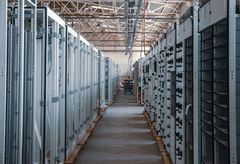
Anthropic Direct will not see the company build its own data centers. Rather, Anthropic plans to rely on third-party providers to secure sites and power, build facilities to its specifications and manage them on an ongoing basis, a model often used by hyperscalers.
The initiative is already moving beyond the planning stage, with Anthropic recently entering into purchase and lease agreements for Anthropic Direct, according to its SEC filing.
While this will be Anthropic’s first time pursuing large-scale data center tenancy, the company has been integral to data center development deals in the past. Last November, Anthropic announced a $50B infrastructure investment through which neocloud Fluidstack would develop data centers in Texas and New York to provide the company with computing capacity. Anthropic Direct represents a step further in controlling the physical infrastructure underpinning its artificial intelligence models.
Until now, Anthropic has purchased nearly all its computing capacity as a service from outside cloud providers. The bulk of that capacity has come from Amazon, Google and Microsoft, while the company has signed smaller deals with SpaceX and a number of neoclouds, among them Fluidstack and Lambda. The firm’s S-1 filing offers new insight into the scale of these commitments: By the end of 2025, Anthropic inked $417B in compute deals with various providers.
Yet Anthropic itself identifies this dependence on cloud firms as a significant source of risk. The filing describes its relationship with the major cloud providers as “multifaceted and complex” because many of the same companies supplying Anthropic with compute are also direct competitors, operating AI labs and developing products that compete with Claude. These cloud providers, the filing says, could “prioritize their own computing needs” over Anthropic’s or “gain insight” into Anthropic’s infrastructure and computing requirements that “could inform their competitive strategies.”
Anthropic Direct reduces some of that dependence, but it also introduces a new set of risks identified in its S-1 filing. Leasing and deploying data center infrastructure directly requires more capital up front, potentially impacting the firm’s available liquidity. It also leaves Anthropic more directly exposed to the development risks facing the broader data center sector, particularly project delays from community opposition, supply chain constraints and power shortages.
“If we are unable to successfully execute on our data center infrastructure initiatives, experience significant delays or cost overruns, or find that the infrastructure we lease, deploy, or build does not meet our evolving needs, we may not realize the expected benefits of these investments, which could adversely affect our business, financial condition, and results of operation,” the filing says.