Leading banks and lenders could withstand a recession that includes heavy losses on commercial and industrial loans as well as overall CRE values, according to results from an annual stress test conducted by the Federal Reserve.
The Fed announced Wednesday that most of the nation’s largest banks could remain open and lend to customers if a recession became reality.
The agency’s annual stress test results measured 31 bank or lender balance sheets across names like American Express, JPMorgan Chase and Goldman Sachs. It found that large banks could withstand a scenario in which commercial and industrial loans account for 21% of total losses, or $142B.
The test also looked at a hypothetical major recession that would include a 40% drop in commercial real estate prices, a 36% drop in home values, a 10% overall unemployment rate and a 55% decrease in equities.
“This year’s results show that under our stress scenario, large banks would take nearly $685B in total hypothetical losses, yet still have considerably more capital than their minimum common equity requirements,” Federal Reserve Board Vice Chair for Supervision Michael Barr said, according to CNBC.
But the forecast is still cloudy for CRE, according to the Fed test.
Lenders, including Capital One, RBC Bank and Northern Trust, still face high projected commercial loan losses on their books, ranging from 13% to 16% each.
The Fed noted that commercial office remains a major stressor. Some $929B of the $4.7T of outstanding commercial office mortgages held by lenders and investors will come due by the end of this year, according to Mortgage Bankers Association data cited by Reuters.
And while major lenders remain robust, regional banks have not proved as much mettle over the last two years, with some being absorbed by major banks when they couldn't cover withdrawals by customers. At the end of 2023, the regional banks that folded had $548.7B in total combined assets, according to the Federal Deposit Insurance Corporation, the largest total ever in a year.
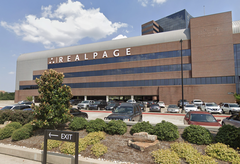
Those banks are not included in the Fed’s stress tests. And their collapses haven't stopped. In April, regulators seized Philadelphia-based Republic First Bank, which had $1.7B in CRE loans on its books, Bisnow reported at the time.
“While banks are well-positioned to withstand the specific hypothetical recession we tested them against, the stress test also confirmed that there are some areas to watch,” Barr said, according to CNBC. “The financial system and its risks are always evolving, and we learned in the Great Recession the cost of failing to acknowledge shifting risks.”