
Bisnow’s First Draft Live is a weekly series featuring live conversations about the critical stories impacting CRE right now — from market volatility and economic uncertainty to the growing influence of artificial intelligence. First Draft Live is a companion to The First Draft, Bisnow’s daily, flagship CRE newsletter. Register here to get The First Draft in your inbox. Subscribe to First Draft Live on Apple and Spotify, or scroll down to view in your browser.
Twenty percent, or roughly $957B, of outstanding commercial mortgages held by lenders and investors will mature in 2025. This includes 14% of mortgages backed by multifamily properties.
This is all happening in the middle of great uncertainty surrounding the future of Fannie Mae and Freddie Mac, which are under conservatorship but could go public as soon as this year. Meanwhile, sweeping reforms under the One Big Beautiful Bill Act are breathing new life into the Low-Income Housing Tax Credit program.
All of this could have serious consequences for America’s housing market, which is straining under the weight of an affordability crisis and high interest rates that are not expected to ease significantly this year.
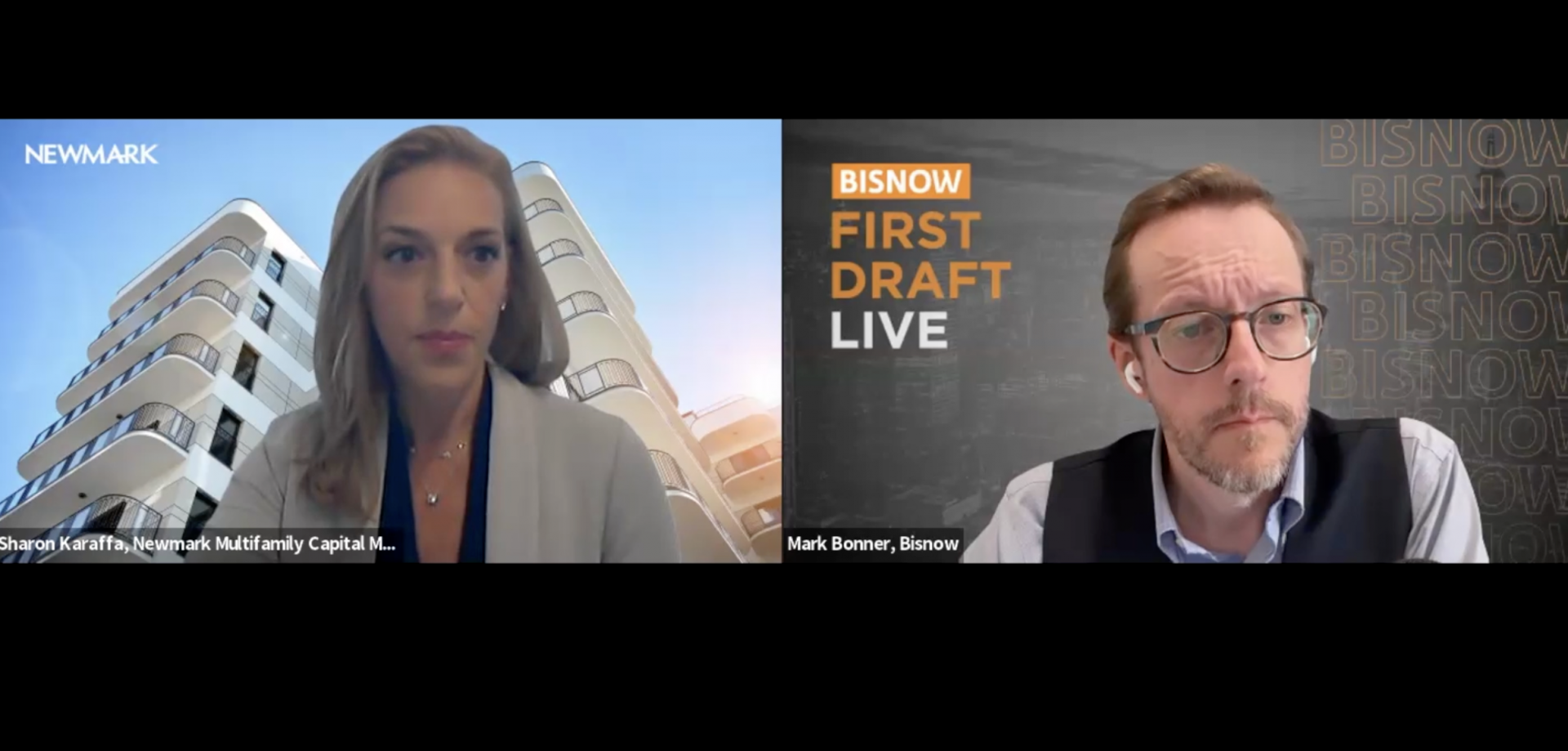
Bisnow Editor-in-Chief Mark Bonner sat down with Sharon Karaffa, president of multifamily debt and structured finance at Newmark, on this week’s First Draft Live to break down the challenges, opportunities and what 2025 means for multifamily investors and the country’s rental housing supply.
Karaffa said the method by which the federal government ends the conservatorship of Fannie Mae and Freddie Mac will determine how disruptive it will be on the market.
She said it is critical that the privatized organizations have a line to the Treasury to maintain affordability, that a strict regulatory framework is put in place to avoid the mess of the Global Financial Crisis and that the agencies are not combined — the market needs both to keep competition alive.
On a positive note, Karaffa said liquidity is up across the board, spanning lender types and metros. That's largely because fundamentals are strong.
“Absorption has been very high and vacancies are very low. Most of the supply wave is behind us,” she said. “So we think we’re on the upswing.”
Watch the full conversation below:
)
)
)
)
)
)
)
)
)
)
)
)