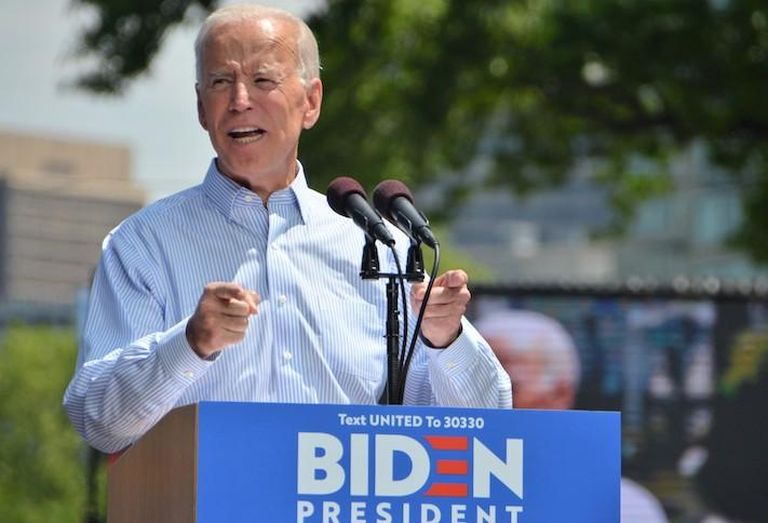
Presumptive Democratic nominee Joe Biden has released a policy proposal that would provide $775B in federal spending over 10 years to support caregiver programs for children, the elderly and people with disabilities.
The campaign didn't provide exact details on the funding mechanism for the proposal, but did note that the plan “will be paid for by rolling back unproductive and unequal tax breaks for real estate investors with incomes over $400K and taking steps to increase tax compliance for high-income earners.”
More specifically, Bloomberg reports that a member of Biden's staff said that as president, Biden would "take aim at so-called like-kind exchanges," implying that the tax break offered by 1031 exchanges would be modified or phased out, at least for investors whose incomes exceed $400K per year.
The 1031 industry is already wary of a potential Biden administration. In a letter to the campaign in May, the Federation of Exchange Accommodators urged the candidate to rethink his position on like-kind exchanges.
"We are troubled by the Tax Policy Center’s March 5, 2020 analysis of your campaign’s tax proposal, which assumes your proposal 'repeals the deferral of capital gains from like-kind exchanges,'" the letter said.
The organization went on to assert that like-kind exchanges benefit a spectrum of taxpayers, including small and midsized businesses, that the tax break stimulates the economy, and that it encourages capital formation.
The last major change in the 1031 program came with the Tax Cuts and Jobs Act of 2017, which preserved like-kind exchanges for real estate, but repealed exchanges for personal property assets, such as construction or farm equipment, airplanes, and artwork and collectibles. The law reaffirmed the 45-day identification period and the 180-day exchange period for 1031 exchanges.
As described by the campaign, the Biden plan would offer preschool for all 3- and 4-year-old children, and subsidize child care for families earning less than 1.5 times state median income. The plan would also pay for the development of child care facilities.
The plan would also include $450B for home care and congregate care for the elderly, fund the hiring of 150,000 healthcare workers, and provide an $8K tax credit for families with a single child and $16K for two or more children, provided household income is less than $125K per year.
In a conference call about the plan on Monday, the Biden campaign said that caregiving subsidies would help make the U.S. economy more globally competitive since they would spur labor force participation among people for whom child care expenses now outweigh the amount they would make at a job. Other industrialized countries offer various kinds of child care and caregiver subsidies.