Absenteeism costs UK companies £16B per year, and most of those absences were due to mental and muscular problems rooted in work habits. The body was not meant to sit for nine hours a day hunched over a workstation, breathing recycled air, blinking in overhead fluorescent lights and a too-bright monitor.
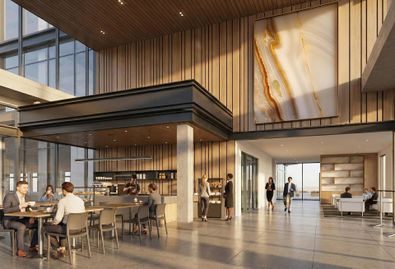
Developers are no longer concerned with only the impact of their buildings on the environment; they are turning their focus to creating healthy environments that activate, support, soothe and stimulate creativity in the people who inhabit them.
Stephen Marks, a partner in Trowers & Hamlins’ real estate practice, said the cost of not understanding how buildings impact human health is too high.
A UK government white paper published in 2011 showed that when employees took part in wellness initiatives, absenteeism was reduced by 20%. Wellness initiatives drive an even bigger agenda: how to attract and retain talent.
We all have a choice where to work, Marks said, and most people want to work in places that can activate and connect us. He cited a study that showed 73% of Millennials are searching for social cohesion at their workplace. They long for open spaces and social amenity space, which could explain in part the stratospheric rise in co-working spaces over the last five years.
Air, light, water, nourishment, comfort, fitness and mind are the tent poles of wellness, and smart developers are approaching each principle earnestly. To ensure employees’ comfort, for instance, companies are providing ergonomic furniture, standing desks and sound insulation. To care for employees’ mental well-being, some companies are providing wellness libraries, and surveys to find out what they could be doing to improve the work environment.
Companies are also testing out biophilia — a hypothesis that states humans possess an innate desire to seek out nature and other forms of life. To stimulate that feeling, companies might have a water feature, for instance.
Every detail of the corporate world is now subject to re-examination — what chemicals are in the cleaning materials, whether there is a filter on the vacuum cleaner, whether the water has been surveyed for chemicals. Some companies have gone farther and installed lighting systems that adjust to circadian rhythms.
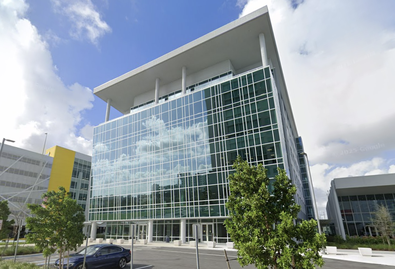
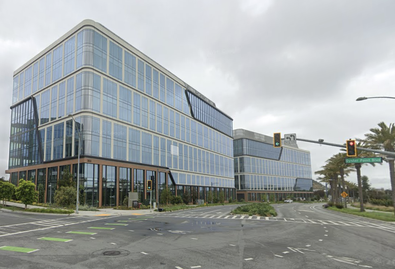
Air freshening systems and water fresh as an Alpine stream are undeniably attractive traits in a building, but the cost is exorbitant. Marks said developers approach wellness initiatives more readily than occupiers. The CRE industry is leading by example, Marks said. He points to The Edge building in Amsterdam, the cleanest, greenest building in the world, and CBRE’s building in Los Angeles, the first building to ever achieve WELL Building Certification.
CRE companies are also acutely aware of the embedded cost, or the cost of the consequences if you do not spend the money. Employers will not attract the best talent, and companies risk looking out of touch. Most offices these days at least have a few plants and energy-efficient lightbulbs. Those meagre steps toward wellness and efficiency are the grudging acquiescence to the fact that the tide is changing.
Investors are keen to have buildings in their portfolio that are BREEAM and LEED certified, and most councils in the UK will not grant planning permission for a new building that does not strive for an excellent rating. Marks said that in the EU by 2023, it will be possible for tenants to legally terminate leases in buildings with less than a G rating.
BREEAM, Leed and now the WELL building standard do have measurable benefits, Marks said. A study found that buildings rated ‘excellent’ by BREEAM had six fewer sick days on average than buildings that were not certified excellent — and those buildings could charge higher rent.
Delos is now moving into certifying hotels. “More is required from offices because you go there every day, but hotels still have vast opportunity to tap into the wellness movement,” Marks said, noting that Marriott has already introduced its own certification program at its hotels.
Certifying hotels might be slower going because there are more barriers to entry. In urban locations, where most business hotels are located, the buildings are older with shallow floor plates and some have tall staircases; it could be physically difficult to do a complete refurbishment in order to achieve a high WELL building rating. But with hotels being an extension of the workplace, employees will soon expect the same well-being initatives there that they experience at the office.