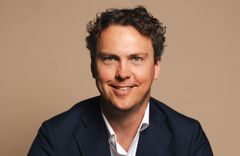
Boxer Property president Justin Segal (we snapped our panelist with OfficeConnect.net’s Bill Futral) is glad he had to take intro to sociology in college—being a landlord lately has made him feel like an amateur sociologist. He’s been spending a lot of time studying tenants and determining how to create an emotional connection with his buildings. That’s more important than gratifying tenants’ desires, he says, and it’s driving him to focus on the soft side of the business. Boxer is also looking at providing short-term solutions—Justin’s working with Liquid Space to implement a program that would provide project space. (For example, giving a group 3k SF of furnished space to use for three months.)
Entrance Software CEO Nate Richards (with Renaud Sero Advisors’ Candace Renaud) says corporate culture in general is dropping its formality—ties have disappeared from most industries. That extends into timing--there’s no longer a strict working vs on break differentiation (the space has no one break room, fun areas are throughout the office). Nate says having fun is one of his company’s values. Another is wellness. He says people want to belong to a place that makes them better versions of themselves. For him, that meant finding an office space on a park with a locker room so he could go for a run now and then.
There are healthy living guidelines for offices (similar to LEED), says our moderator Kirksey EVP Brian Malarkey, and he believes they’ll start taking off. Here’s Brian with fellow panelist Cameron Management president Dougal Cameron, who’s also big into health—all his properties have bike rooms. He says listening to tenants is important, but he’s also started pushing back sometimes to guide them into new ways to use their space, rely on transportation and enjoy their surroundings. Dougal’s been working hard to make buildings function as a whole, and is using WeWork as an example (but implementing it on a much larger scale).
The workplace of the future is all about flexibility. ConocoPhillips project manager Tim Bensman says it’s impossible to perfectly figure out trends and demand, so he future-proofs his spaces by having a set of fixed rules and spaces and making everything else scalable and movable. DE Harvey Builders VP Dennis Kikolla (left, with Architectural Fabric Systems’ Maryan Tinney and Cody Tinney and FMG’s Jamie Moritz) pointed out that there’s sometimes a long time from first planning an office to occupancy. (It feels like Exxon's been planning their new HQ since before the dinosaurs died.) So it’s important to be flexible, but you need keep in mind the physicality of how it will work, down to tiny details like not using glass somewhere that you might move cables to when reworking office layouts.