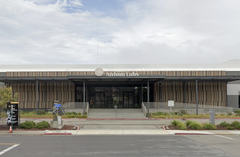
Despite the Galleria’s popularity for energy and professional services firms, the neighborhood may start weakening, according to a new white paper published by JLL.
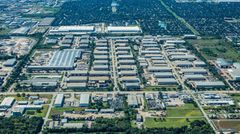
The Galleria is one of the most desirable suburban office submarkets in Houston, with nearly 22M SF of Class-A and B office space. Yet leasing has slowed, sublease space has increased, and several large move-outs have resulted in negative net absorption.
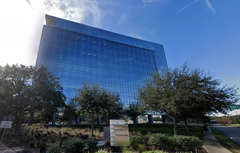
Companies departing for shiny new bespoke towers are leaving a vacuum. BHP Billiton is vacating 200k SF as it moves into its new 600k SF tower next door. Amegy is upgrading to a new 282k SF headquarters in 2017, resulting in a net occupancy gain of 142k SF.
Air Liquide is leaving the area for a new complex in Memorial that will consist of a 20-story, 452k SF tower and a 145k SF tower along the Katy Freeway. TeleCheck is also leaving.
In good times, this shuffling might have been viewed as the normal consequences of growth. But now the shine on the Galleria is starting to look a little dull.
Some of the Galleria’s real estate pinch is part of the overall slowdown in the economy. But some of it can be attributed to the fact that despite its sleek and modern appeal, Galleria buildings are, on average, 30 years old. Newer buildings have attracted larger numbers of tenants, making up 42% of the last 10 years’ of net absorption totals despite being only 5% of inventory.
JLL VP Beau Bellow is still optimistic, however. Prior to the recent downturn, companies were competing for top talent largely through the quality of their office space and amenities, with things like fitness centers, cafés and child care. But Beau says all that comes at a cost, and he thinks most tenants will be much more cognizant of that price in the near future.
He says a lot of Galleria building owners have invested in upgrading their lobbies and amenities over the last few years to compete with new construction. Now those owners can offer a comparable amenity package at a rate that is discounted to new construction. He tells us, "the takeaway is that moving forward recruiting and retention will continue to be a key driver but cost will play a bigger role.”
The diversity of the tenant base—energy, legal, tech, medical—has protected the Galleria from the ups and downs of the price of oil." The Galleria is not energy heavy,” says Beau; it's still very much a desired location for professional services companies.
JLL laid out three possible scenarios for the submarket: the base case (status quo), the growth case and the reversal case. In all three, the supply side is assumed the same while the demand side varies. That means tenants have the power to decide whether the Galleria booms or fizzles.