"If the Alamo was in Houston, it would have already been torn down."
That long-running joke hit extra hard this week.
Despite protests and a permitting issue, property owners demolished the city's historic Kirby Mansion, likely to make way for a new-build convenience store or gas station.
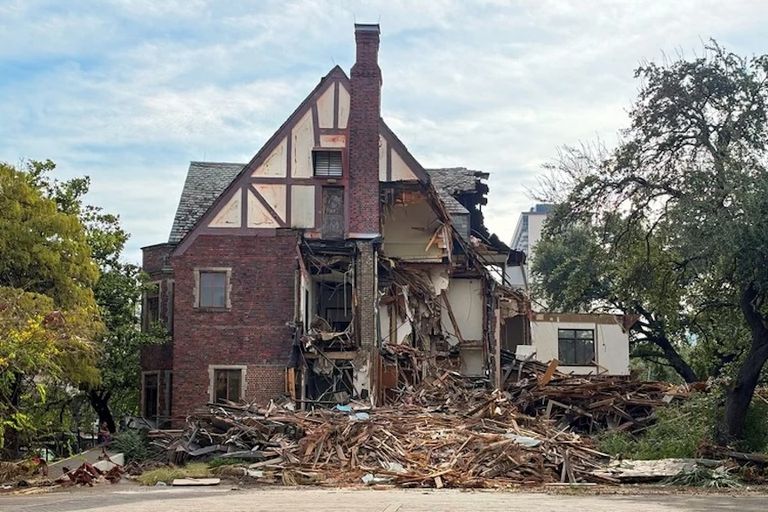
The Tudor revival structure dates to the 1890s but had no historic landmark protections.
This project exemplifies a trend that complicates the mission of revitalizing Downtown Houston: The city’s older buildings are often neglected and not considered worthy of investment.
But older buildings hold potential, as well as sentimental value and nostalgia that can entice tenants, panelists said at Bisnow’s Downtown Houston’s Next Chapter event at the Marriott Marquis Houston on Tuesday. Houston just needs more institutional knowledge, and perhaps a city employee fully dedicated to the mission of preserving and utilizing its aging buildings.
“We need to be considering things like that, and we also need to be considering how we prevent such a disaster as what has gone down this past week with losing that beautiful structure,” said Ori Batagower, new development and acquisitions director for The Deal Co.
State filings detail a $2M project called Braketime Smith Road with a 13K SF one-story C-store to be built at 530 Pierce St. within the boundaries of the Kirby Mansion property. The owners of the property are an entity tied to brothers Omair and Usman Bashir, who own the Brake Time gas station chain, the Houston Chronicle reported.
“You cannot convince me that that was the only site where that particular use should have worked and that there's some greater benefit,” Batagower said. “We have to preserve structures like that. We can't allow something like that to just go by the way of a wrecking ball.”
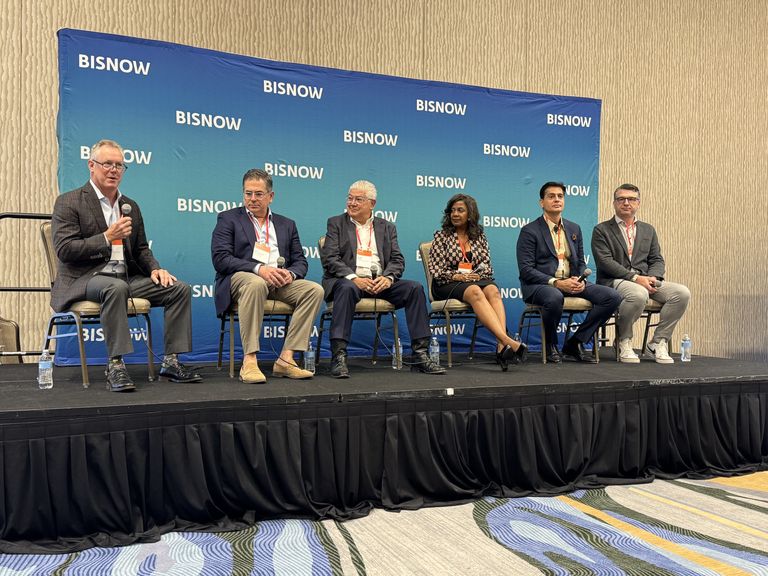
While there was sadness to see what happened to the Kirby Mansion, the city got involved too late, Houston Chief Economic Development Officer Gwendolyn Tillotson-Bell said. That is why staffers are now talking to those in the private sector about layering incentives and potentially bringing in equity sources that hadn’t been thought of before to make conversion projects possible, she said.
But for many years, it has been cheaper and more feasible to build new structures in Houston, especially since the metro has so much undeveloped land and can grow by expanding. The market doesn’t have the muscle memory of utilizing existing facilities, unlike other cities with more historic buildings, LeVass Ventures founder Ryan LeVasseur said.
He added that The Deal Co. does a great job with its projects like Sawyer Yards and the mixed-use development featuring Meow Wolf in the Fifth Ward, but it is an anomaly in the marketplace.
“We need more know-how in how to reuse these buildings,” he said. “If the city had an entity … that could hold the hands of the developers to help them understand how to go through the process of permitting, through the process of getting a building designated as historic, that would potentially unlock some of the value of these buildings.”
Texas is one of the best states for using historic tax credits, LeVasseur said, since 25% of the qualifying value is eligible, with no cap, like some other states have. These credits can also be stacked with the federal historic preservation tax incentive program.
Many of Downtown Houston’s buildings are nearing 50 years old, and while there is no hard limit to qualify for historic tax credits, more structures are becoming outmoded and eligible, LaVasseur said.
Downtown Houston+ commissioned an office conversion feasibility study in 2023 that found that the city’s office stock is unusually difficult to convert due to large buildings, sprawling floor plates, persistent tenants and the majority of buildings being too new for historic tax credits.
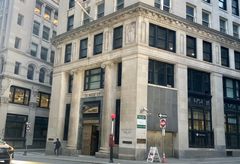
There are developers making it work, though. One City Centre at 1021 Main St. is being converted by Chicago-based 3L Real Estate. The $26.5M project will turn the 780K SF office building into an apartment and corporate suites-hotel hybrid.
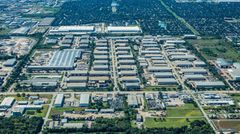
Another ongoing project is the conversion of a Folgers Coffee Plant in the East End into Frank Liu Jr. Academy of Music and Arts, a tuition-free public charter school.
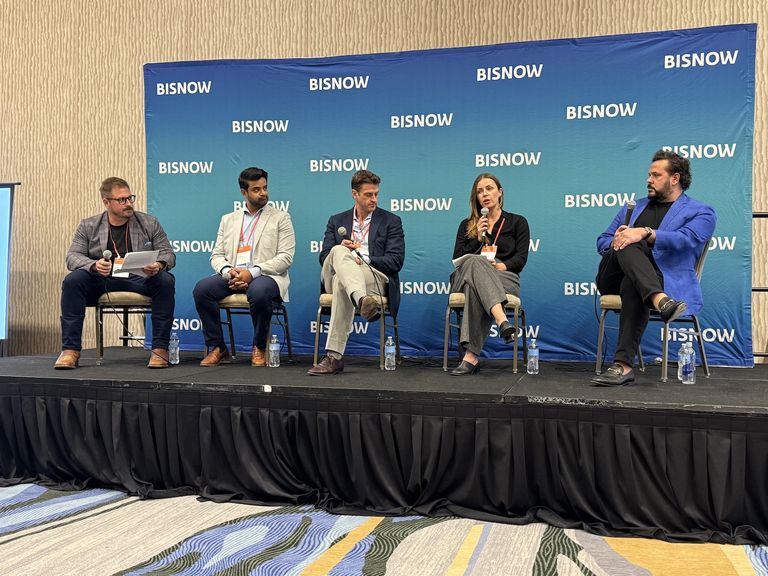
Converting is also much better for the environment, emitting about 70% less carbon dioxide than knocking down and building new, Lone Star PACE Chief Operating Officer Glenn Silva said. Young renters have cited sustainability as a top priority when choosing a home, he said.
While new developments also have a place in the market, some people want to live and work in older buildings because of the experience and sense of nostalgia they provide, panelists said.
“People want more than just going into a big box or standard office development,” Silva said. “They want to walk in and see character. They want to see that old-school charm, that craftsmanship.”
While the city is already having conversations and helping developers initiate projects that align with their community, like the adaptive reuse of East End, panelists said the staff would benefit from more support.
“The city could use what we call the historic preservation and adaptive reuse czar,” LaVasseur said. “Someone who is very smart in both the realm of historic tax credits and adaptive reuse.”