Building the capital stack for office-to-residential conversion projects has been a difficult task for developers in Boston, but the city is looking to make the process easier in a section of downtown.
Many of the properties planned for conversion in the city are historic buildings in the Financial District, which come with a set of challenges. Some developers have utilized historic tax credits to fill in financing gaps to make these projects pencil, but that comes with extra time filling out applications to make sure buildings are eligible and then securing the credits.
In September, the Massachusetts Historical Commission approved an 18-acre district known as the Exchange District, which developers and the city hope will cut out some of the uncertainty and time it takes to lock down these historic tax credits.
"That will make it so much easier for developers who want historic tax credits for their buildings within this district," Dinosaur Capital Partners Managing Partner Scott Oran said Tuesday during Bisnow's Boston Building Upgrades and Conversions Summit at The Westin Boston Seaport District.
The historic district was approved at a Sept. 9 Massachusetts Historical Commission meeting after the city's Office of Historic Preservation advanced and drafted the district. The zone has now been transferred to the National Park Service, where it awaits final review.
To receive historic tax credits, a project must be listed or eligible for listing in the National Register of Historic Places. Properties within the boundaries of this district would already be eligible, saving some of the time and money needed to go through that process individually.
In addition to helping already proposed projects get financing, the district could attract new developers who are scared to pull the trigger on a project because of the complexities of locking down these credits.
"We knew that we would get better projects, and we'd have retention of a lot of the historic fabric," Elizabeth Sherva, deputy director of the Boston Office of Historic Preservation, said at the event.
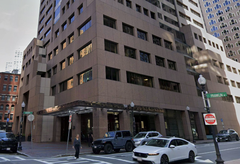
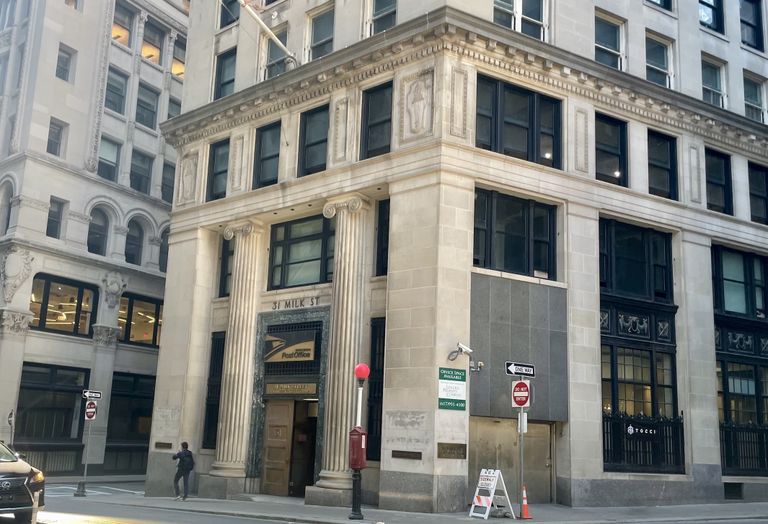
At least eight conversion projects are in the district, including 31 Milk St., 50 Congress St. and 1 State St., according to Bisnow's analysis.

Oran and his team are in the middle of converting the 11-story office building at 31 Milk St. into 110 housing units. His team secured historic tax credits on its own, which he said took more time because it had to register the building with the National Register of Historic Places.
"We had pursued — before the district existed — our own individual listing, which comes with its own cost and expense and time and complexity," Oran said.
Oran worked with Dorfman Capital to secure all of the pieces necessary for the capital stack, which was a longer, more drawn-out process than regular developments. Oran said the team secured at least seven different equity and financing components, including historic tax credits.
"You go through a long, detailed process," Dorfman Capital Vice President Josh Kasten said. "There's a lot of coordination between the architect, the developer, the historic consultant, the city, the state and the federal government. A lot goes into actually being able to utilize credits as a source of financing, and then therefore be able to actually get these deals done."

Since Boston's tax incentive program for office-to-residential conversions launched in 2023, 28 applications have been filed for the conversion of 35 buildings across the city. More than 2,400 units have been proposed, comprising 2M SF of former office space taken out of the market.
In recent months, the program has scaled considerably, with several proposed projects of more than 100 units, including New York-based Vanbarton Group's 476-unit conversion at 31 St. James Ave. and Synergy's 258-unit 294 Washington St. project.
"We actually look at St. James as an interior fit-out because that's really what it is," Vanbarton Project Manager Nicolas Giannone said. "When we go out and raise capital, that's kind of what our pitch was like. This is a much more simplified process."

Although there are now more projects in the pipeline, the majority of them haven't started construction, as developers are trying to line up financing for projects.
For developers still working to fill gaps in their financing, state and federal historic rehabilitation tax credits can be worth up to 20% of qualified rehab expenditures.
Although a building may be listed in the new district, it doesn't guarantee a developer will be awarded the historic tax credit, as these credits are still capped and highly competitive.
"I think even as you're beginning your planning, you need to know if tax credits are even going to be viable," Sherva said. "Not every adaptive reuse project is going to be a tax credit, a historic tax credit candidate."