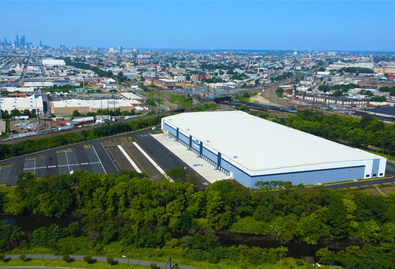
A growing number of industrial developers are going green, but some fear a setback could be in store as companies mired in economic turmoil seek to protect their bottom lines.
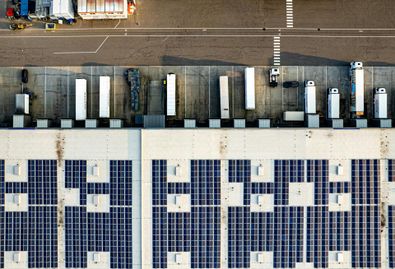
Rising energy costs are prompting a desire for more efficient buildings, especially in the industrial sector, which on its own accounts for about 31% of energy consumption in the U.S., according to Xcel Energy. As a result, the incorporation of renewable energy as well as infrastructure to support electric trucks have become more common.
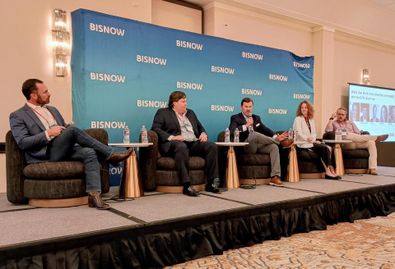
But whether those improvements are actually worthwhile is a question that will be highly scrutinized over the next year or two, Stream Senior Vice President Sarah Ozanne said at a Nov. 15 Bisnow event held at The Westin Dallas Downtown.
:no_upscale():quality(75))
“If the world changes in the way that we think it will, and everyone starts looking at costs more closely … people are really going to really prove up the value,” she said, adding that at the moment, the feel-good aspect "is all you need to quantify it.”
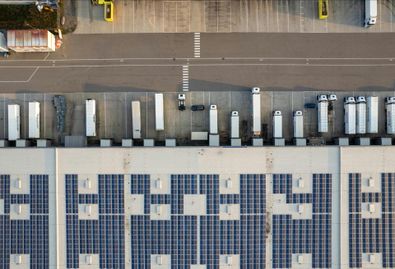
Earlier this year, Trammell Crow Co. announced it would partner with Altus Energy to bring solar panels, battery storage and electric charging stations to 35M SF worth of industrial assets in its pipeline.
Dalfen Industrial looks to add solar panels to all of its projects, and Prologis, one of the largest owners of industrial properties in the world, has an entire team dedicated to sustainability and future-proofing, Prologis Senior Vice President and Head of Operations for the Central Region Jacob Milligan said.
:no_upscale():quality(75))
These examples are hardly one-offs, Xcel Energy Corporate Economic Development Manager Marie Pflipsen said. Five years ago, she estimated about 1 in 5 of Xcel’s customers would ask where their power was coming from.
Today, she said, that statistic has grown to 9 out of 10. The interest is driven in large part by the widespread adoption of environmental, social and governance strategies.
“There’s a lot of them wanting 100% renewable, not just 100% carbon-free,” Pflipsen said. “Customers are asking about on-site solar and if they can build that into their consumption.”
Going green costs money, but advocates argue the investment translates to a windfall of savings down the road. In some cases, adding solar panels can be revenue-producing. Companies like Trammell Crow and Dalfen use roof-lease agreements to maximize their solar investment.
:no_upscale():quality(75))
Still, sustainability upgrades are often one of the first things to be left on the cutting-room floor. It can be more difficult to make the math work on a brownfield site, for example, simply due to the outsized cost relative to greenfield projects, At Home Chief Supply Chain Officer Willis Weirich said.
Those who plan to pass the buck along to consumers may also be in for a rude awakening, he added.
“Consumers are still not willing to pay extra — especially in a hyperinflation market—for ESG, so you have to factor that into your business model and the decisions you make,” Weirich said. “We’re choosing as retailers to obviously implement ESG where we can, but I think it will be a bit softer if things get tighter economically, which we are forecasting.”
:no_upscale():quality(75))
Rising interest rates, inflation and freeze-up of debt markets is already having a pronounced effect on industrial.
Dalfen said his firm has paused roughly $4B worth of divestments it planned for this year. Meanwhile, the company’s ability to buy assets has also been limited by uncertainty around where cap rates are heading.
In Dalfen’s view, though, the pinnacle of market turbulence is still to come.
“What I’m waiting for personally is for the other shoe to drop,” Dalfen said. “When you have inflation with what it is today, and you have macroeconomic instability, you’re going to have pain in the consumer sector. That’s what you need to bring markets in order. I just don’t think we’ve seen it yet.”
The trailing impacts of the Federal Reserve’s approach to curbing inflation, which Milligan described as taking a sniper’s approach with a blunt-force object, have yet to be seen.
:no_upscale():quality(75))
But a slump of activity in the housing market is an early indicator of how industrial will perform in the coming months, Hillwood Properties Executive Vice President Bill Burton said.
“We have never seen the Fed create demand destruction like they are at this point in time,” he said. “Residential will hit an air pocket here pretty soon … that does have an impact on everything we do on this panel.”
In the meantime, ESG continues to be a priority as the industrial sector enjoys historic rent growth and low vacancy. Even if momentum were to slow in the short term, its influence on decision-making will weather the storm, especially among larger companies backed by ESG investors, Saxum Real Estate Managing Principal Anthony Rinaldi said.
“It’s really case by case,” he said. “But ultimately, in the long run, these trends are clearly here to stay.”