The coronavirus pandemic has given a boost to telehealth every bit as strong as it has for Zoom and other videoconferencing platforms, but the long-term use of the technology is still uncertain — along with its impact on healthcare real estate.
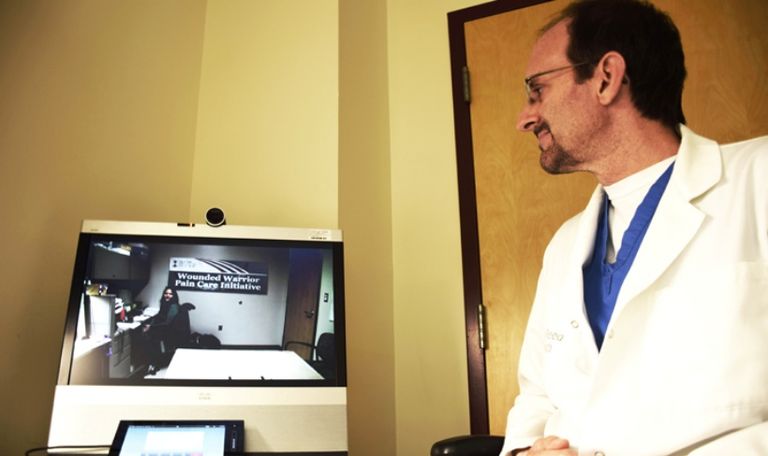
"We had a system in place before the pandemic, and that was overrun quickly with all the physicians pivoting to it," Spaulding Rehabilitation Network Senior Vice President of Outpatient Services Rob Welch said on Bisnow's Telehealth Deep Dive webinar this week.
Before the pandemic, Spaulding had about 200 telehealth conferences a year, Welch said. Since the pandemic began, there have been about 500 conferences a week.
"It's been a challenge," he said. "We had to set up a different system and train the physicians, and then inform the patients about how to use the system."
"We were using telehealth very little, frankly, pre-COVID," said Partners Continuing Care & Spaulding Rehabilitation Network President David Storto, a situation that changed completely with the coming of the pandemic.
His organizations began using remote video technology not only for every kind of provider-patient interaction that can be done that way — perhaps as much as 20% of visits that were previously done in person — but also for family visits to patients who are isolated, Storto said.
Welch said the platform has clear limitations that throw into question how much its adoption will stick around long-term.
"Obviously many procedures need to be done in person, but it's more than that. You need a personal touch, and in-person visits are better for getting patients' questions answered," Welch said. "Telehealth should be considered complementary to in-person care, not a substitute for it."

Another consideration is getting patients used to remote healthcare delivery. Before the pandemic, that was an ongoing challenge, Harvard Pilgrim Health Care Director of Health Engagement Tami Ireland said.
The pandemic has changed that.
"We've had a lot of interest in solutions for people to manage pain or therapeutic yoga in the home," she said. "Our clients were looking for it, and now people are starting to prefer it."
Eventually, the speakers said, the health emergency will pass, but the use of telehealth platforms will probably stay at a much higher level than before the pandemic, though it isn't clear how much just yet.
Even so, the rise in telehealth will probably impact healthcare space in the long run. The industry is already moving toward a hub-and-spoke model, Welch noted, and telehealth will have a place in that model.
"Hubs deliver a wide variety of services, and the smaller centers in the communities reach more people," Welch said. "I could see telehealth becoming one of these spokes. So instead of having to build a small clinic in western Massachusettes, we could [do] that telehealth-wise, and bring in patients only for needed face-to-face treatment."
Dealing with increased demand for telehealth over the short- and long-term will mean technical challenges for hospital systems, Strategic Venue Partners Vice President of Business Development Eric Dahl said.
"The pandemic has led to pressure on the IT systems that can't handle the spike, in terms of beds and bandwidth," Dahl said.
With a strong enough IT structure, hospitals will be able to handle a higher volume of telehealth, not only for doctor-patient consultation but also augmented and virtual reality, data analysis and large file transfers, such as radiological images, Dahl said, adding that when it is finalized, 5G will be an important component in supporting telehealth.