
The U.S. population grew by just 0.5% last year, a weak showing against the country’s already historically low growth rate.
A single-year drop is likely to cause ripple effects for slower-growth markets, but if the trend persists, the demographic shift could upend larger apartment markets, exacerbate turmoil in the multifamily sector and rebalance where investors direct development dollars.
“There's going to be an effect, certainly in the gateway cities, and the size of that effect will be bigger the longer this new trend holds,” said Ken Johnson, a housing economist and the real estate chair at the University of Mississippi. “If we get in this pattern for two or three years, you're going to see pretty significant downward pressure on home prices and rents.”
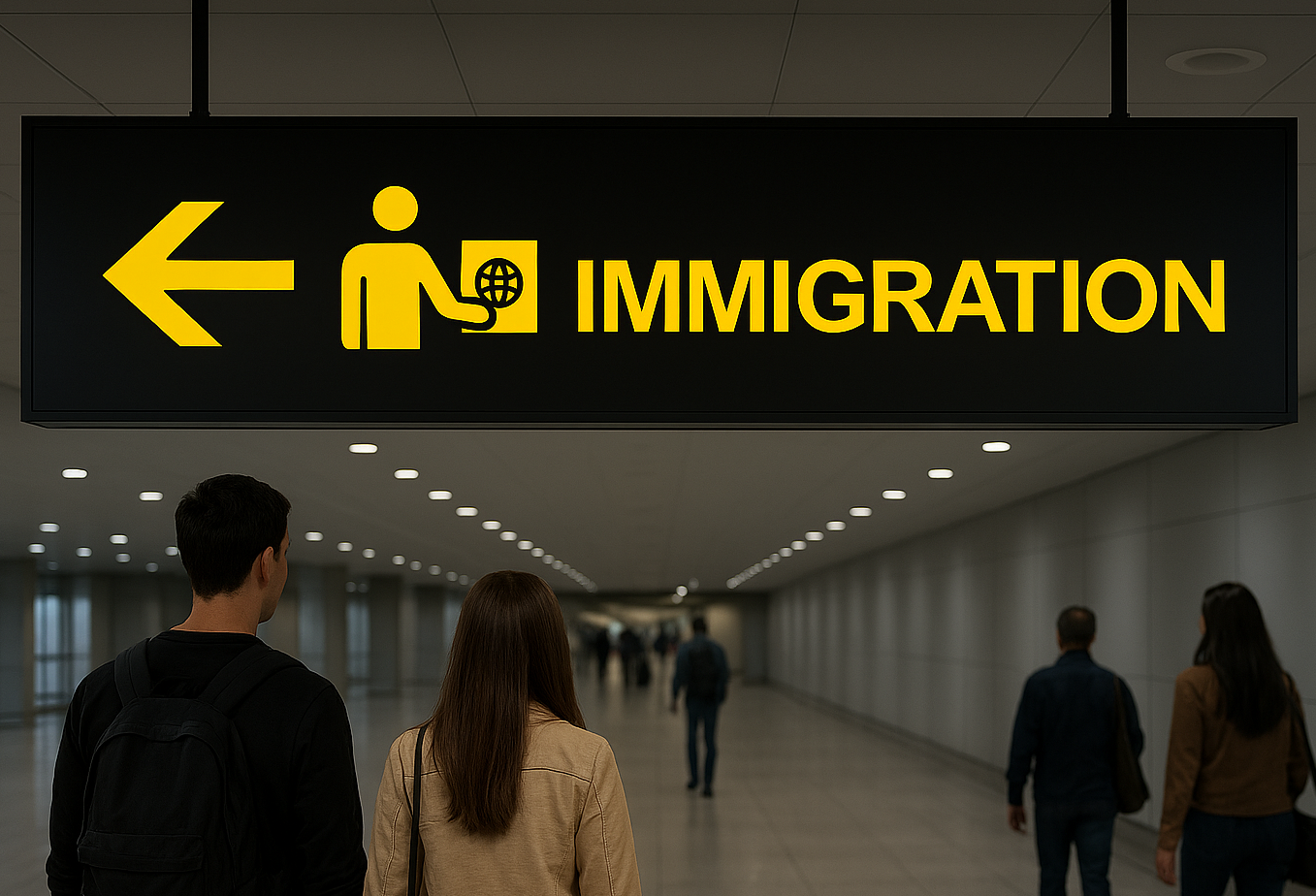
The United States grew by 1.8 million people in the year that ended on July 1, half the prior year's growth rate, recently released U.S. Census Bureau data shows. The data does not break out city-level demographic changes.
International migration fell from 2.7 million people in 2024 to 1.3 million new arrivals last year, which the agency said drove the overall slowdown in growth. The country's fertility rate also fell to a record low in 2024.
Property owners in markets with large immigrant populations are being forced to recalibrate demand forecasts even if the impact of a single year’s shift will be less measurable at a national scale.
The demand-side strain from the shift in population growth arrives at the same time that supply-side dynamics are adapting market-to-market to a deluge of new construction driven by pandemic-era demand.
More than half a million new apartments delivered in the first half of 2025, well above long-term averages, but the pace of inventory growth fell by more than 20 basis points for the first time in 15 years in the second quarter, according to RealPage.
As the wave of construction crests nationally, so too has rent growth. The national average monthly rent for a one-bedroom apartment in January was $1,625, up just 0.4% year-over-year after enjoying explosive growth during the pandemic, Apartments.com found.
But national developers are operating on an uneven playing field where local supply-and-demand dynamics vary widely. Many of the same major cities that attracted pandemic-era development rely heavily on immigrants to grow, and cutting off that supply will test the forecasts used to win financing for new projects.
Immigration is the quiet engine of population growth across huge swaths of the country, accounting for at least 80% of net migration to 20 states over the last five years and at least half of migration in 27 states over the same period, according to census data.
“This is an immediate problem for low- or stagnant-growth areas,” said Tracy Hadden Loh, a fellow at Brookings Institution focused on commercial real estate, infrastructure, racial justice, and governance. “Many of the areas that have historically lost population or are not growing actually have housing surpluses, and immigrants have been a key force in stabilizing those housing markets.”
But President Donald Trump's mass deportation strategy has resulted in the removal of more than 500,000 people in the first year of his second presidency, The New York Times found. Others have self-deported, and people abroad are increasingly rethinking a move to the U.S.
Since July 1, when the Census Bureau data ends, the Department of Homeland Security has received an additional $165B and has started building infrastructure to further ramp up deportations.
Regional differences in immigration gains are amplified by interstate population shifts, which are settling after the spate of relocations fueled by the pandemic.
The fastest-growing states in 2025 were a mix of popular real estate investment markets, such as Texas, Arizona and the Carolinas, but also states that haven’t traditionally been magnets for development, like Idaho, Utah, Delaware and Washington.
Most of those states were also among the fastest-growing in 2024, but Florida slipped from second to 13th, with the Sunshine State’s ability to attract domestic movers waning as corporate giants find success pulling employees back to regional hubs and whittling away at work-from-home policies.
Apartment developers poured into South Florida over the past few years, and asking rents in Miami fell by around 6% over 2025 as new developments come online in an increasingly competitive market.
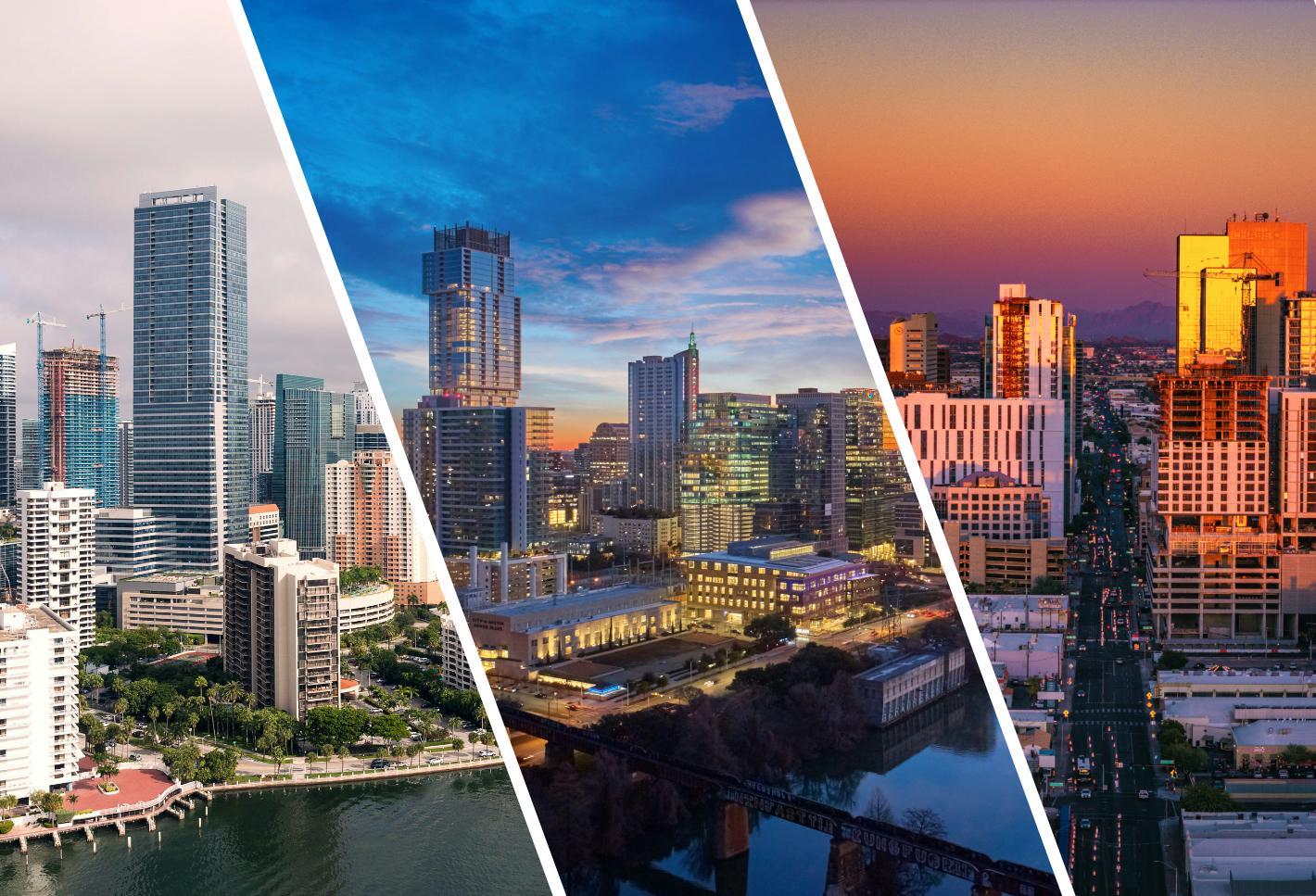
Rents in Phoenix, another development darling of the last five years, are nearly 10% below where historical trends suggest they should be.
Austin is another market where a wave of new apartment inventory is weighing on rent growth at the same time its population expansion slows down. Texas is still one of the fastest-growing states, but the pace of growth declined 60 basis points year-over-year to 1.2% in 2025.
“Developers are feeling differently about building projects across many of the Sun Belt states,” Johnson said.
But the largest cities have historically faced a housing shortage that even a prolonged slowdown in population growth is unlikely to erase.
Rents in major cities like New York and Chicago have attracted the highest premiums from where they should be for years and these cities continue to be among the most competitive markets, according to the Waller, Weeks and Johnson Rental Index.
The monthly readout uses historical data to project how much rent should cost in a given city and compares that against current pricing. Chicago ranks first, with rents 4% above historical trends, and New York ranks fifth.
“Some areas have substantial amounts of pent-up demand — huge amounts of overcrowding, huge amounts of people living in essentially illegal housing who, if they could find somewhere to live, would do so,” Loh said. “The New Yorks and the LAs of the world are going to feel this at a different pace than the St. Louises of the world.”
)
)
)
)
)
)
)
)
)
)
)
)